
Explore
Intelligence
Essential Planning Guide
Lamkhaga Pass Expedition — Complete Guide (2026)
Vibe & Scenery
The Experience
Introduction
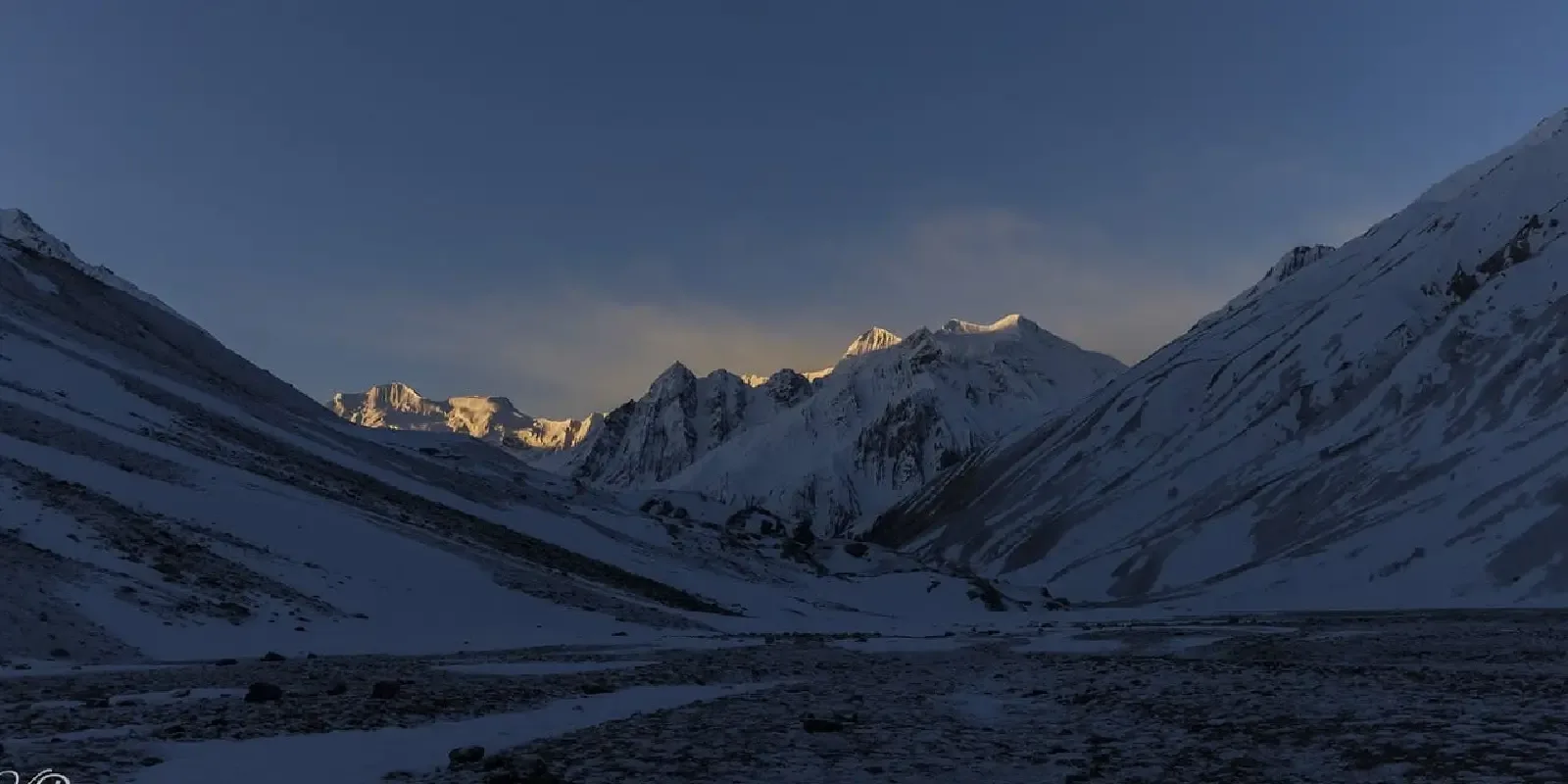
Lamkhaga Pass forms one of the highest and most challenging historic crossings between Garhwal and Kinnaur, linking the lush Harsil Valley with the remote Baspa Valley across approximately 17,336 ft. The expedition traverses dense forests, alpine meadows, expansive glaciers, and rugged moraine landscapes before reaching the high pass.
Above the treeline, teams negotiate crevassed glaciers, steep snow slopes, unstable scree, and rapidly changing mountain weather. The crossing concludes with a remarkable transition from the green valleys of Uttarakhand to the dry alpine landscapes of Kinnaur.
Suitable only for experienced mountaineers and expedition trekkers, Lamkhaga Pass offers one of the most complete wilderness traverses in the Indian Himalayas.
Quick Facts
Duration
Max Altitude
Difficulty
Best Time
Trek Distance
Trail Atmosphere
Scent Profile
Vertigo Factor
5 / 10
Iconic Spots
Nelang Valley Overlook
The Chitkul Wall
Environment
Nature & Culture
Flora & Fauna
Flora
Fauna
Local shepherds believe the pass belongs to the ''Van-Devi'' (Forest Goddess) and a small prayer at Rani Kanda is essential for safe passage.
— Local folklore
Spiritual & Cultural Significance
🕐 Shrine Timings: N/A
Temple Protocols
- •Respect border post protocols
- •Don''t photograph ITBP installations
Technical Details
Challenge & Preparation
Primarily a cardio demand challenge
A demanding expedition dominated by extreme cardio demand.
Personal Readiness
Am I ready?
Planning
Logistics & Trail Intel
Getting There
Route to Base
Drive from Uttarkashi (UK) or Shimla (HP)
Base Village
Harsil / Chitkul
8,400 ft
Nearest Railhead
Chandigarh Railway Station (IXC)
Nearest Airport
Kullu-Manali Airport, Bhuntar (KUU) / Chandigarh (IXC)
Last ATM
Bhatwari (UK) or Sangla (HP).
Nearest Medical Facility
Government Hospital Uttarkashi or Reckong Peo.
Mobile Signal
Jio Airtel till Harsil only,BSNL in Harsil and Chitkul village
Water Sources
Glacier melt streams (purification mandatory), Filtered supply at Kyarkoti
Charging
Zero on trail. Solar chargers essential for expedition electronics.
For Drivers
Trail Culinary & Diet
The Content & Remote Hub
No DronesVideo Calls
none
UPI Reliability
1/10
Permits and Regulations
Special Inner Line Permits (ILP) and Forest Permits are required from both the Uttarkashi (UK) and Kinnaur (HP) administrations. Every trekker must sign a risk-waiver and register at ITBP posts at Nelang/Harsil and Chitkul. Professional expedition guides are mandatory.
Learn more about how we vet operators and ensure transparency on our why MountRoutes page.
Packing List
Technical Hardware (Mandatory)
- Crampons or high-quality Microspikes
- Assorted rope / Slings (for group safety on glacier)
- Sturdy mountaineering boots (Grade B3)
- Technical ice axe (one per group guide is mandatory)
- Category 4 Glacier Goggles (UV Protection essential)
Clothing
- Expedition-grade down jacket (-25°C rated)
- Gore-Tex outer shell (Wind and Waterproof)
- 4 pairs of technical mountaineering socks
- Insulated Balaclava and buff
- Waterproof and windproof technical gloves (2 pairs)
Deep Dives
Explore Further
Editor's Notes
The wind on top of Lamkhaga is so strong it can push a full-grown trekker off their feet. Stay low and use your ice axe for stability on the summit ridge.
Explore In Detail
Day by Day Itinerary
10-day route reaching 17,329ft. Covers 78km of varied terrain.
→ See full itinerary with altitude profileDifficulty & Fitness
Rated challenging. Moving over highly unstable moraine and crevassed glaciers. The final 300m climb to the pass is a 60-degree ice/snow incline.
→ See difficulty breakdown and fitness guideCost & Pricing
Packages range from ₹25,000 – ₹40,000. Inclusions and hidden costs vary by operator tier.
→ See full cost breakdownFrequently Asked Questions
Is there any phone network on the pass?
Absolutely zero. The last network is at Harsil and the next one at Chitkul. You are out of contact for 7-8 days. A satellite phone (legal permitting) or VHF radio is highly recommended for expedition groups.
Can beginners attempt this?
No. This is an expert-only trek. You must have prior experience in 16,000+ ft pass crossings and basic understanding of glacier movement.
Are ropes and crampons really necessary?
Yes, absolutely. You will be traversing the Jalandhari glacier and climbing a 60-degree ice wall to the pass. Attempting this without technical gear and a roped team is extremely dangerous.
How hard is the river crossing?
The river crossings, especially the Baspa river on the descent towards Chitkul, can be deadly. They must be crossed early in the morning before the glacial melt swells the water level.
How difficult is the Lamkhaga Pass trek compared to other high-altitude passes?
The Lamkhaga Pass is considered one of the most difficult and challenging passes in the Indian Himalayas. It is tougher than popular passes like Roopkund or Buran Ghati due to its extreme isolation, crevasse-ridden glaciers, and technical descents.
What is the best time to do the Lamkhaga Pass expedition?
The brief windows for safely crossing the Lamkhaga Pass are from mid-May to June and from September to early October. Outside these periods, heavy snowfall and treacherous weather make the pass impassable.
Do I need prior trekking experience for Lamkhaga Pass?
Yes, extensive prior high-altitude trekking experience is mandatory. Trekkers should have completed multiple treks above 4,500 meters and must be comfortable walking on snow, ice, and loose scree.
What permits are required for crossing the Lamkhaga Pass?
Since it crosses from Himachal Pradesh into Uttarakhand near the Indo-Tibetan border, you require an Inner Line Permit (ILP) and forest permits. These must be obtained from the district administration in Reckong Peo or Uttarkashi.
What are the biggest challenges on the Lamkhaga Pass route?
The primary challenges are the steep and icy ascent to the pass, navigating the crevasses of the glacier, the near-vertical descent on the Garhwal side, and unpredictable weather that can cause whiteouts.
Are there river crossings involved in the Lamkhaga Pass trek?
Yes, there are several hazardous river crossings, particularly the crossing of the Baspa River. Water levels can be dangerously high, requiring ropes and careful teamwork to cross safely.
Still deciding?
Compare routes side-by-side to find the perfect match for your fitness, dates, and budget.
Everything you need to know, in one place. Someone else in your group needs to see this.
Planning Lamkhaga Pass Expedition?
Get route conditions, operator updates, and season windows before booking.
Don't miss out! Follow us for route updates@mountroutes|LinkedIn
No spam. Only useful trek updates.
Ready to walk this route?
You’ve read the guide, now find the perfect local team to take you there. Compare our verified list of operators.
Compare verified operators