We are currently vetting local partners for Lamkhaga Pass Expedition to ensure the highest safety standards. Be the first to know when it's open for booking.
Are you a local operator?
Join our platform to list your verified packages for Lamkhaga Pass Expedition and reach thousands of climbers directly.
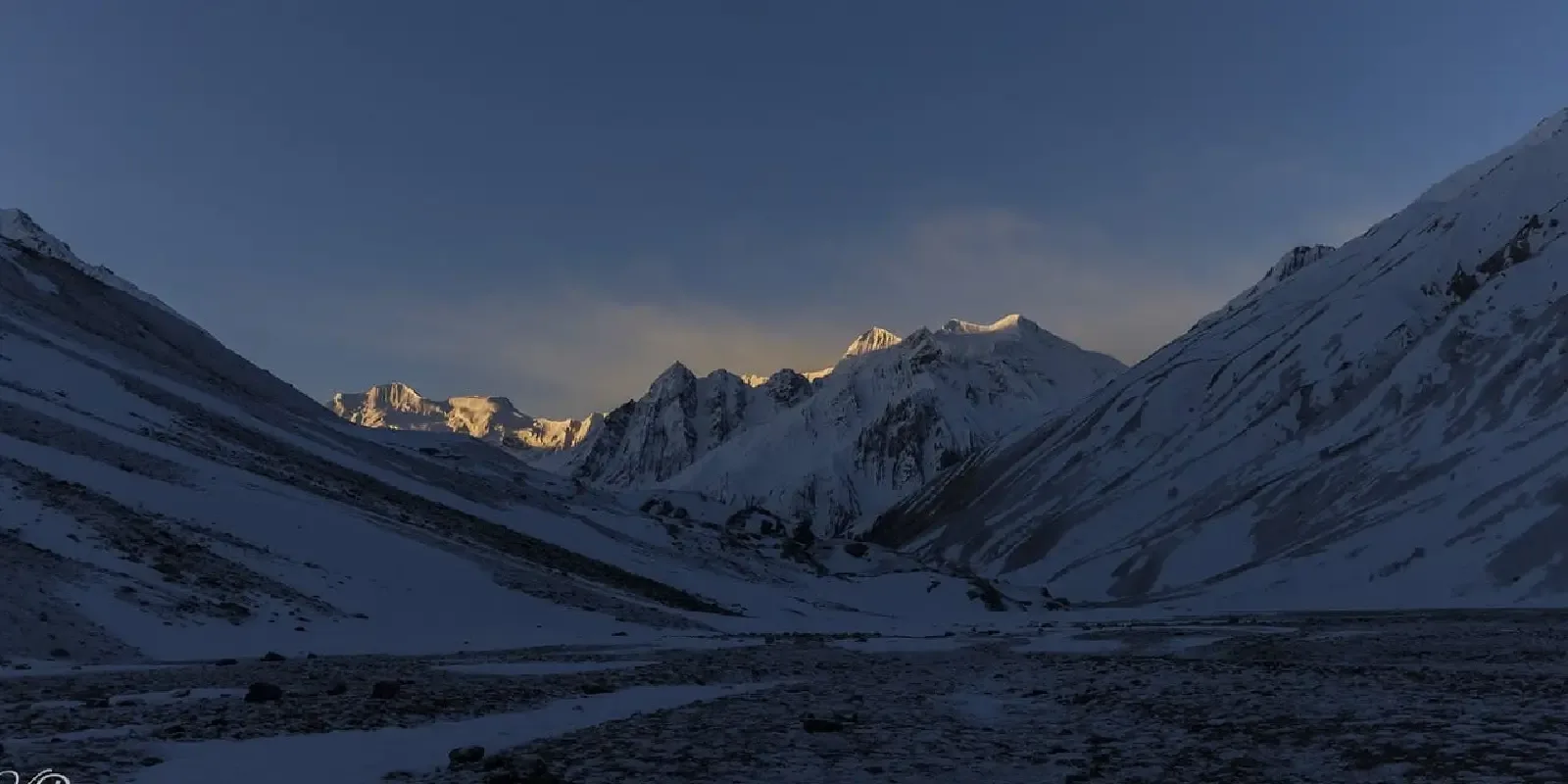
The Lamkhaga Pass Expedition is a demanding trans-Himalayan traverse connecting Uttarakhand's Harsil Valley with Himachal Pradesh's Baspa Valley. Crossing extensive glaciers and a 17,300 ft high pass, it is one of the Indian Himalayas' premier expedition-grade crossings.
Expedition Highlights
Nelang Valley Overlook
Seeing the forbidden Nelang valley from the high ridge.
The Chitkul Wall
The massive granite spires of Kinnaur seen for the first time as you crest the pass.
Most common bailout point: Advance Base Camp (ABC)
Bad weather or altitude sickness before the pass
Common Questions
Is there any phone network on the pass?
Absolutely zero. The last network is at Harsil and the next one at Chitkul. You are out of contact for 7-8 days. A satellite phone (legal permitting) or VHF radio is highly recommended for expedition groups.
Can beginners attempt this?
No. This is an expert-only trek. You must have prior experience in 16,000+ ft pass crossings and basic understanding of glacier movement.
Are ropes and crampons really necessary?
Yes, absolutely. You will be traversing the Jalandhari glacier and climbing a 60-degree ice wall to the pass. Attempting this without technical gear and a roped team is extremely dangerous.
How hard is the river crossing?
The river crossings, especially the Baspa river on the descent towards Chitkul, can be deadly. They must be crossed early in the morning before the glacial melt swells the water level.
How difficult is the Lamkhaga Pass trek compared to other high-altitude passes?
The Lamkhaga Pass is considered one of the most difficult and challenging passes in the Indian Himalayas. It is tougher than popular passes like Roopkund or Buran Ghati due to its extreme isolation, crevasse-ridden glaciers, and technical descents.
What is the best time to do the Lamkhaga Pass expedition?
The brief windows for safely crossing the Lamkhaga Pass are from mid-May to June and from September to early October. Outside these periods, heavy snowfall and treacherous weather make the pass impassable.
Do I need prior trekking experience for Lamkhaga Pass?
Yes, extensive prior high-altitude trekking experience is mandatory. Trekkers should have completed multiple treks above 4,500 meters and must be comfortable walking on snow, ice, and loose scree.
What permits are required for crossing the Lamkhaga Pass?
Since it crosses from Himachal Pradesh into Uttarakhand near the Indo-Tibetan border, you require an Inner Line Permit (ILP) and forest permits. These must be obtained from the district administration in Reckong Peo or Uttarkashi.
What are the biggest challenges on the Lamkhaga Pass route?
The primary challenges are the steep and icy ascent to the pass, navigating the crevasses of the glacier, the near-vertical descent on the Garhwal side, and unpredictable weather that can cause whiteouts.
Are there river crossings involved in the Lamkhaga Pass trek?
Yes, there are several hazardous river crossings, particularly the crossing of the Baspa River. Water levels can be dangerously high, requiring ropes and careful teamwork to cross safely.
Is there any phone network on the pass?
Absolutely zero. The last network is at Harsil and the next one at Chitkul. You are out of contact for 7-8 days. A satellite phone (legal permitting) or VHF radio is highly recommended for expedition groups.
Can beginners attempt this?
No. This is an expert-only trek. You must have prior experience in 16,000+ ft pass crossings and basic understanding of glacier movement.
Are ropes and crampons really necessary?
Yes, absolutely. You will be traversing the Jalandhari glacier and climbing a 60-degree ice wall to the pass. Attempting this without technical gear and a roped team is extremely dangerous.
How hard is the river crossing?
The river crossings, especially the Baspa river on the descent towards Chitkul, can be deadly. They must be crossed early in the morning before the glacial melt swells the water level.
How difficult is the Lamkhaga Pass trek compared to other high-altitude passes?
The Lamkhaga Pass is considered one of the most difficult and challenging passes in the Indian Himalayas. It is tougher than popular passes like Roopkund or Buran Ghati due to its extreme isolation, crevasse-ridden glaciers, and technical descents.
What is the best time to do the Lamkhaga Pass expedition?
The brief windows for safely crossing the Lamkhaga Pass are from mid-May to June and from September to early October. Outside these periods, heavy snowfall and treacherous weather make the pass impassable.
Do I need prior trekking experience for Lamkhaga Pass?
Yes, extensive prior high-altitude trekking experience is mandatory. Trekkers should have completed multiple treks above 4,500 meters and must be comfortable walking on snow, ice, and loose scree.
What permits are required for crossing the Lamkhaga Pass?
Since it crosses from Himachal Pradesh into Uttarakhand near the Indo-Tibetan border, you require an Inner Line Permit (ILP) and forest permits. These must be obtained from the district administration in Reckong Peo or Uttarkashi.
What are the biggest challenges on the Lamkhaga Pass route?
The primary challenges are the steep and icy ascent to the pass, navigating the crevasses of the glacier, the near-vertical descent on the Garhwal side, and unpredictable weather that can cause whiteouts.
Are there river crossings involved in the Lamkhaga Pass trek?
Yes, there are several hazardous river crossings, particularly the crossing of the Baspa River. Water levels can be dangerously high, requiring ropes and careful teamwork to cross safely.
Are you a local operator?
Join our platform to list your verified packages for this expedition.