
Explore
Intelligence
Season & Weather Guide
Best Time for Lamkhaga Pass Expedition — Month-by-Month Guide
Mid-May to June and September to October. Avoid the monsoon entirely due to lethal river swells.
Pass Window
When is it climbable?
Pass Crossing Window
Early Start
02:00 AM – 10:00 AM
Glacier becomes unstable, serac fall risk increases, and river crossings swell post-noon.
Forecast Source
Meteoblue / Mountain Forecast (interpolated)
Forecasts are highly unreliable at the pass. Rely on barometric drops and cloud formations.
Conditions by Month
May
Jun
Oct
Sep
Lightning Risk
July & August
May to June and September to October. The pass is often blocked by avalanches until late June.
Season at a Glance
Editor's Notes
September offers the clearest views and the most stable weather, but be prepared for the glacier to be fully exposed with visible crevasses requiring careful navigation.
Absolutely avoid the monsoon months (July-August). The glacier becomes dangerously unpredictable, and the approach valleys are prone to severe landslides.
Month by Month
What each month looks like
January
Pass ClosedConditions
Deep winter. The high pass is completely buried and impassable.
Crowds
none
Impassable winter snowpack.
Closed. Extreme winter conditions.
February
Pass ClosedConditions
Deep winter. The high pass is completely buried and impassable.
Crowds
none
Impassable winter snowpack.
Closed. Extreme winter conditions.
March
Pass ClosedConditions
Deep winter. The high pass is completely buried and impassable.
Crowds
none
Impassable winter snowpack.
Early season. Deep snow accumulations.
April
Pass ClosedConditions
Shoulder season. Highly unstable snow conditions and narrow weather windows.
Crowds
low
Unstable snow conditions.
Early season. Deep snow accumulations.
May
Pass OpenConditions
Crowds
low
Prime pre-monsoon window. Good snow stability.
June
Pass OpenConditions
High snow content. Easier to walk on snow than loose scree. Clear mornings.
Crowds
low
Prime pre-monsoon window. Good snow stability.
July
Conditions
Monsoon season. Extreme objective hazards including rockfall, avalanches, and swollen rivers.
Crowds
low
Severe monsoon hazards.
Monsoon danger. Landslides and severe rains.
August
Conditions
Monsoon season. Extreme objective hazards including rockfall, avalanches, and swollen rivers.
Crowds
none
Severe monsoon hazards.
Monsoon danger. Landslides and severe rains.
September
Pass OpenConditions
Glacier is exposed. Crevasses are visible. Cold and crisp views.
Crowds
low
Crystal clear skies. Best visibility of the year.
October
Pass OpenConditions
Very stable weather but extreme cold. Night temps can hit -20°C.
Crowds
low
Crystal clear skies. Best visibility of the year.
November
Pass ClosedConditions
Shoulder season. Highly unstable snow conditions and narrow weather windows.
Crowds
none
Unstable snow conditions.
Winter setting in. Sub-zero temperatures rapid.
December
Pass ClosedConditions
Deep winter. The high pass is completely buried and impassable.
Crowds
none
Impassable winter snowpack.
Closed. Extreme winter conditions.
Photography & Light Conditions
Sunrise Spot
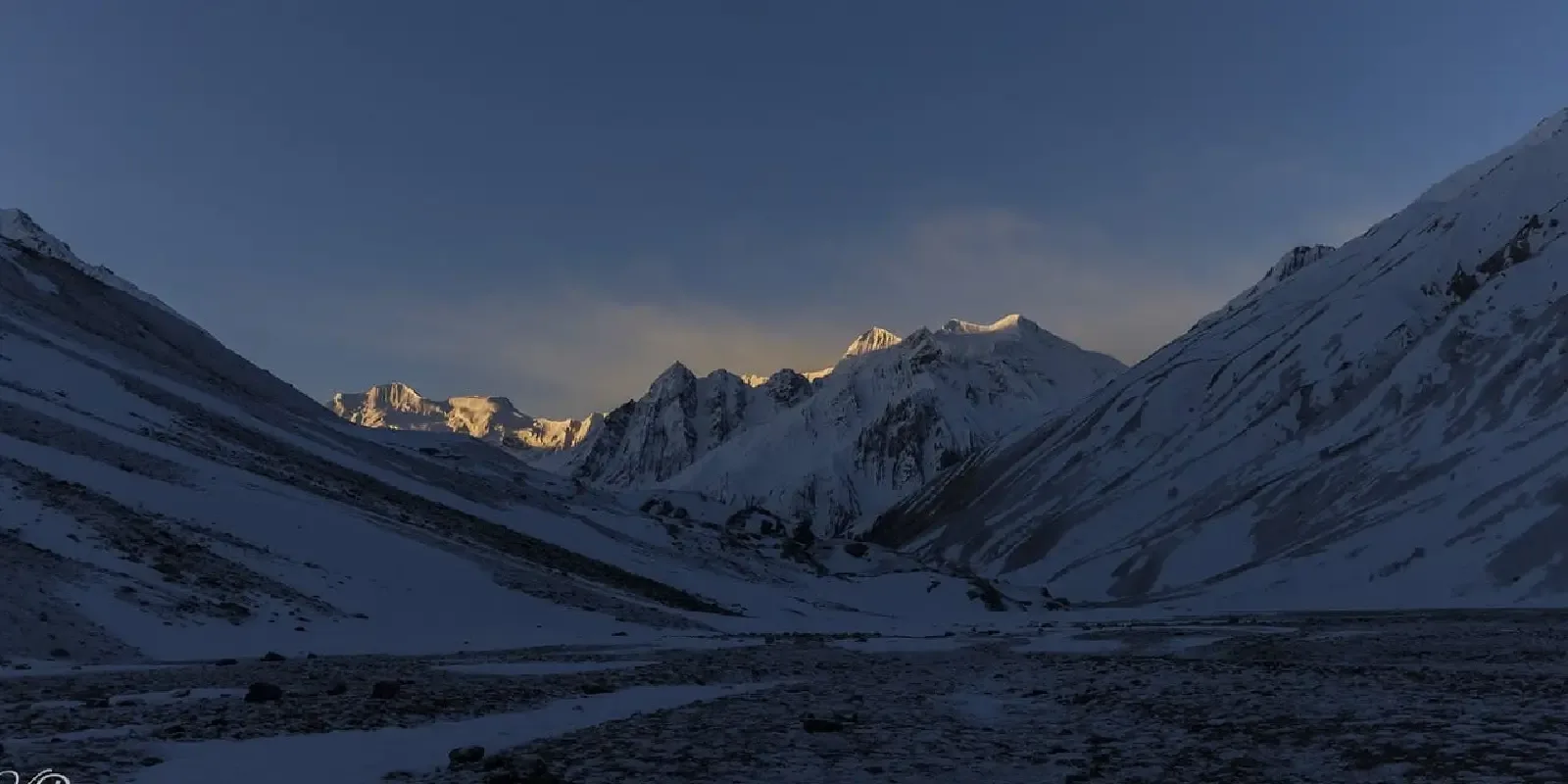
High Camp looking back at Garhwal peaks
Recommended Lenses
Astrophotography
Drones not permitted
Strictly prohibited due to Indo-Tibet border proximity.
Extreme cold drains batteries instantly. Keep phones in inner jacket pockets.
Plan Your Expedition:
Still deciding?
Compare routes side-by-side to find the perfect match for your fitness, dates, and budget.
Timing makes or breaks a trek. Send this to your group before you decide.
Step 3: Route Intelligence
You've chosen a season.
Now see exactly how the route unfolds day by day, including terrain types and daily altitude profiles.
Explore the Itinerary