
Explore
Intelligence
Essential Planning Guide
Burfu–Martoli Heritage Hike Trek — Complete Guide (2026)
Vibe & Scenery
The Experience
Introduction
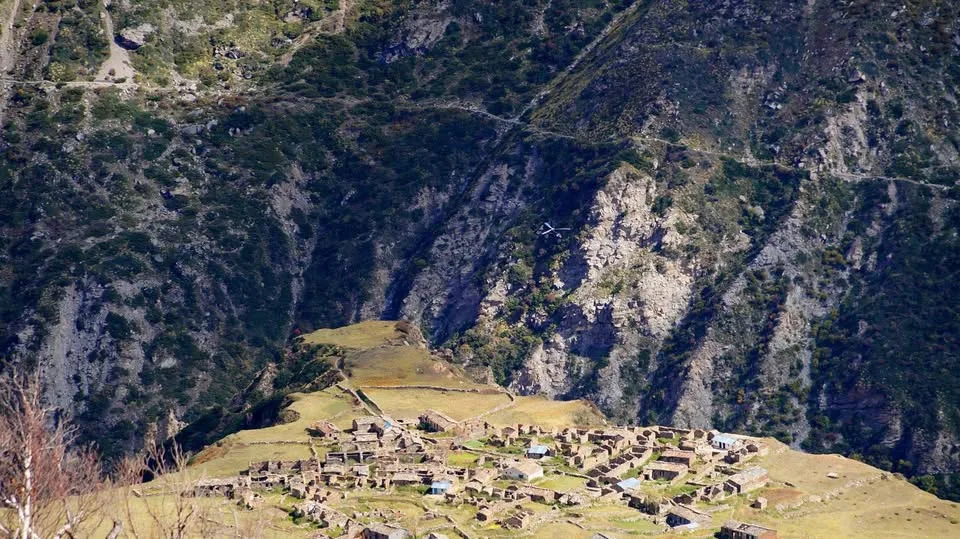
The Burfu–Martoli Hike follows the historic Johar Valley beyond Munsiyari to the traditional Shauka villages of Burfu and Martoli. Once thriving centers of Indo-Tibetan trade, these settlements preserve distinctive stone architecture, ancient temples, and a rich cultural legacy that shaped life in the high Himalayas for centuries.
Walking through seasonal villages and open alpine landscapes, trekkers enjoy exceptional views of Nanda Devi East, Hardeol, Nanda Kot, and the surrounding glaciers. The combination of mountain scenery, historic trade routes, and living Himalayan heritage makes this one of the most culturally significant walks in Kumaon.
Suitable for trekkers interested in both history and mountain landscapes, the Burfu–Martoli Hike offers a unique journey through one of the Himalayas' most fascinating high-altitude cultural regions.
Quick Facts
Duration
Max Altitude
Difficulty
Best Time
Trek Distance
Trail Atmosphere
Stargazing
Class 1 Dark Sky
Scent Profile
Silence Level
~16 dB
Vertigo Factor
2 / 10
Iconic Spots
Martoli Ridge Temple — Pre-Dawn Alpenglow
Eastern Himal Cluster — Lakhori Doorframes
Milky Way over Nanda Devi East — October New Moon
Environment
Nature & Culture
Flora & Fauna
Flora
Fauna
The Martoli Nanda Devi temple is the sacred anchor of the entire Johar Valley's religious identity. According to Shauka oral tradition, it was the priestesses of this specific Nanda Devi temple (not the main Nanda Devi Raj Jat pilgrimage temples of Chamoli district) who conducted the pre-trade-season blessings for the Johari merchant caravans heading to Tibet. The specific alignment of the temple with the direct sight-line to Nanda Devi East's summit through a natural gap in the ridge is considered intentional by Shauka elders — the temple was sited precisely so that the goddess's face (the peak) was visible from her own shrine.
— Local folklore
Spiritual & Cultural Significance
The Nanda Devi temple at Martoli is considered one of the primary Nanda Devi shrines of Kumaon — distinct from the better-known Nanda Devi temples of Almora and Chamoli. The Shauka trading community maintained this temple as the spiritual patron of their Tibet trade voyages. The annual Nanda Devi Raj Jat pilgrimage route historically connected the Johar Valley shrines to the main pilgrimage circuit.
🕐 Shrine Timings: Dawn and dusk worship by resident families when in season (October). Temple door is open during daylight.
Temple Protocols
- •Remove footwear before entering the temple courtyard
- •Circumambulate clockwise
- •Photography inside the inner sanctum by permission only — ask the caretaker family
Festivals & Dates
Technical Details
Challenge & Preparation
Primarily a cumulative fatigue challenge
A welcoming route that balances cumulative fatigue and cardio demand.
Personal Readiness
Am I ready?
Planning
Logistics & Trail Intel
Getting There
Route to Base
Kathgodam (railhead) → Pithoragarh (4 hrs) → Munsiyari (4-5 hrs)
Total from Kathgodam: 8-9 hrs
Direct road from Delhi is 480 km (12 hrs)
Naini Saini Airport (Pithoragarh) has helicopter service from Pant Nagar — reduces Kathgodam to Munsiyari journey to 2 hrs
Base Village
Munsiyari (7,200 ft), Pithoragarh District
7,200 ft
Last ATM
Munsiyari (SBI and UCO Bank ATMs). No ATM or digital payment past this point.
Nearest Medical Facility
Munsiyari Community Health Centre (basic). Pithoragarh District Hospital (50 km, 2 hrs from Munsiyari — nearest ICU).
Mobile Signal
Munsiyari: Jio and BSNL 4G. Lilam: fading Jio. Rilkot: limited BSNL. Burfu and Martoli: zero mobile signal. Emergency communication via ITBP at Lilam only.
Water Sources
Gori Ganga river (treat before drinking — glacially sourced). Village springs at Rilkot, Burfu, and Martoli (piped spring water, generally potable — treat as precaution). Carry 2L minimum at all times on walking days.
Charging
Munsiyari: full grid electricity. Burfu: limited solar. Martoli: small solar panel at 2-3 homestays (limited — 1 device charge per day possible). Carry 20,000 mAh as primary.
For Drivers
Road Condition
Kathgodam to Munsiyari: 8-9 hours (National Highway section to Pithoragarh, then mountain road). Munsiyari to Burfu: 5 hours on a BRO-maintained single-lane road — well-constructed but narrow with passing points. Gorge sections have guard rails in most places.
Munsiyari (fuel station on the main road)
Trail Culinary & Diet
Don't miss the Jambu-tempered buckwheat rotis (local called 'phapar ki roti') — buckwheat flour flatbreads tempered with jambu (a high-altitude allium, related to garlic but with a milder, more floral flavor, endemic to the Kumaon-Nepal alpine zone). Served with ghee and black dal. The combination of buckwheat's natural earthiness, jambu's delicate allium note, and the high-altitude ghee is a flavor profile exclusive to the Johar-Darma valley zone.
Buy specialized diet items at Munsiyari (adequate restaurant options including North Indian and basic South Indian). Burfu and Martoli: homestay food only — dal, rice, rotis, local vegetables (arbi, radish, wild greens).
The Content & Remote Hub
Top Vlog Spots
Video Calls
none
Est. 0 Mbps
UPI Reliability
0/10
Permits and Regulations
Indian nationals: basic registration at Lilam or Munsiyari ITBP post (name, ID, destination). Foreign nationals: check current ILP requirements at SDM Munsiyari (Martoli itself is generally open; Milam and pass areas require ILP). Respect all private property in Martoli — no entry to occupied Himals without family invitation. No open fires near any wooden lakhori structure. Temple protocols: remove footwear at the Nanda Devi temple, circumambulate clockwise.
Learn more about how we vet operators and ensure transparency on our why MountRoutes page.
Packing List
Heritage Photography
- Wide-angle lens 16-24mm equivalent (for interior mansion corridors and the full Martoli plateau-with-Nanda-Devi composition)
- Macro or standard prime lens (for 'lakhori' woodcarving close-up documentation — the carved panels have extraordinary detail)
- Tripod (mandatory for Milky Way and alpenglow shots — Martoli has Bortle Class 1 darkness with Nanda Devi East directly in frame)
- Circular polarizer (the October blue sky above Nanda Devi East is exceptional with polarization)
Village Comfort
- Lightweight trekking shoes with basic ankle support (trails to Martoli are established village paths, not technical terrain)
- Down jacket or heavy fleece (Martoli at 11,000 ft drops to 2-5C at night in October despite warm days)
- Sleeping bag liner (Martoli homestays provide wool blankets — a liner adds warmth and personal hygiene comfort)
- Full cash from Munsiyari (last ATM) — Martoli has zero payment infrastructure
Cultural Interaction
- Small gift items from Munsiyari (biscuits, tea, basic stationery for children) — welcomed by Martoli families as gesture of respect
- Notebook for guide's architectural notes — the history of specific mansions is complex and worth recording
- Offline Kumaoni phrase guide or translation app downloaded (the older Martoli residents have limited Hindi)
Deep Dives
Explore Further
Editor's Notes
Every specific Himal (mansion) in Martoli belongs to one of eight original trader-family lineages. The head of each lineage still holds the key to their ancestral home — some returning annually to tend to the structure, others having left permanently but preserving ownership. A well-connected Martoli guide (ideally himself from a Johar Shauka family) can unlock the interior of specific mansions, introduce you to the current family matriarch over tea, and explain exactly which trading voyage paid for which carved panel. The difference between Martoli with and without this guide is the difference between visiting a museum and meeting the living descendant of the museum's subjects.
Explore In Detail
Day by Day Itinerary
5-day route reaching 11,200ft. Covers 67km of varied terrain.
→ See full itinerary with altitude profileDifficulty & Fitness
Rated accessible. Not technically demanding. Days 1, 4, 5 are road drives. Days 2 and 3 and part of 4 are on well-worn Shauka village paths — the steepest section is the 800 ft climb from the suspension bridge to the Martoli plateau on Day 2 (1.5 hours, moderate incline on a clear path). Day 3 temple ridge is a gentle 200m gain on grass and stone.
→ See difficulty breakdown and fitness guideCost & Pricing
Packages range from ₹12,000 to ₹22,000. Inclusions and hidden costs vary by operator tier.
→ See full cost breakdownFrequently Asked Questions
Are the Martoli mansions open for entry or only external viewing?
The occupied mansions (those with families in residence May–October) are the private property of the Shauka families — enter only with explicit invitation. The abandoned mansions (uninhabited for decades) are technically open but structurally unstable in parts — some upper floors have visible floor-joist degradation. A local guide who knows which structures are safe for interior exploration is essential. The most photogenic 'Himal' interiors (with intact carved panels) are usually accessible with the guide's facilitation.
Who are the Shauka people and how is the Martoli Shauka community different from the Darma Valley Rung?
Both communities are broadly classified as 'Bhotiya' in administrative language, but are distinct ethnic and linguistic groups. The Johar Valley Shauka (centered on Martoli and Milam) historically spoke Rang Boli / Johari, a distinct Tibeto-Burman language, while the Darma and Vyas valley communities speak Rongkad. The Johar Shauka were primarily traders (the richest wool-and-grain merchants of Kumaon), while the Darma Rung were more mixed agro-pastoral. The Martoli Shauka's material wealth — manifested in their elaborate stone mansions — reflects this trade wealth accumulation over 200+ years.
What is the 'lakhori' wood carving tradition and where can it best be seen in Martoli?
Lakhori refers to the intricate carved hardwood panels (typically walnut or deodar) used for door frames, window screens, and interior wall panels in Shauka Himal architecture. The motifs include lotus flower patterns, peacock pairs, mythological figures (typically Ganesh and Nanda Devi), and interlocking geometric borders. The quality at Martoli rivals and in some panels surpasses the famous Kumaoni carved architecture of Almora's town core. The best surviving lakhori doorframes are on three specific Himals in the eastern cluster of Martoli village — your guide will identify them.
Is there a permit requirement for Martoli?
As of 2025, Indian nationals require only a basic registration at the Lilam ITBP post (or Munsiyari outpost if doing pre-registration). This involves providing Aadhar/Passport copy and destination details — takes 20 minutes. Foreign nationals may require an Inner Line Permit if they plan to proceed beyond Martoli toward Milam or the high passes — check current status with SDM Munsiyari before departure.
What is the road and walking situation from Munsiyari to Burfu?
The BRO jeep road extends from Munsiyari northward through the Gori Ganga gorge. The road has been progressively extended — as of 2025, seasonal jeep access reaches Burfu (or very close to it). From Burfu, the suspension bridge over the Gori Ganga and 6 km walking trail to Martoli is a non-motorized path and will likely remain so (the terrain above the bridge is a vertical-sided hanging valley). The Munsiyari–Burfu jeep drive is 50 km / 4-5 hours on a mountain road.
How is the view of Nanda Devi East compared to other viewpoints?
Martoli provides the most complete eastern-face view of Nanda Devi East (7,434m) of any accessible (non-technical) location in India. From Munsiyari (the other famous viewpoint), Nanda Devi East is seen at medium distance with the Milam range foothills intervening. From Martoli's ridge at 11,200 ft, you are looking directly up the Lwanl Gad valley toward the east face — the entire height of the mountain from valley floor to summit is visible in a single composition, with the connecting ridge to Nanda Devi Main (7,816m) also visible. The alpenglow on the eastern face at sunset (5:30–6:30 PM in October) is considered among the finest peak-alpenglow experiences in the Kumaon Himalaya.
When do the Martoli Shauka families leave for winter?
Migration typically begins in the first week of November. By November 15 in most years, Martoli is completely deserted. The return each spring is around May 15–June 1, depending on snow conditions on the approach road. The optimal visit window to see the village inhabited is May 20 – October 31.
What is the historical significance of Martoli village?
Martoli was a thriving trade hub on the ancient Indo-Tibet trade route. After the 1962 war, the trade stopped, leaving behind beautiful, hand-carved heritage stone houses that feel like a living museum.
Do we need restricted area permits for Burfu and Martoli?
Yes, since the trail lies in the sensitive Johar Valley near the border zone, an Inner Line Permit (ILP) issued by the SDM office in Dharchula or Munsiyari is mandatory.
Is the Burfu-Martoli trail suitable for beginners?
Yes, the trail is relatively moderate compared to the glacier crossings. It involves well-defined pathways along the Goriganga river, making it ideal for fit beginners.
What is the mobile network status in Martoli?
There is no mobile signal or internet connection beyond Lilam village. BSNL satellite phones are occasionally available in army posts for emergencies.
Where do we get water along the hike?
Fresh, clean mountain streams are abundant along the trail. However, always use water purification tablets or portable filters before drinking.
What is the unique architecture of houses in Martoli?
Houses in Martoli feature massive wooden doors and windows intricately carved with Tibetan and Kumaoni motifs, built to withstand heavy winter snow.
Are there medical facilities available on this route?
The nearest medical clinic is in Munsiyari. Army posts along the route can provide basic first aid and emergency radio contact.
Still deciding?
Compare routes side-by-side to find the perfect match for your fitness, dates, and budget.
Everything you need to know, in one place. Someone else in your group needs to see this.
Planning Burfu–Martoli Heritage Hike?
Get route conditions, operator updates, and season windows before booking.
Don't miss out! Follow us for route updates@mountroutes|LinkedIn
No spam. Only useful trek updates.
Ready to walk this route?
You’ve read the guide, now find the perfect local team to take you there. Compare our verified list of operators.
Compare verified operators