We are currently vetting local partners for Burfu–Martoli Heritage Hike to ensure the highest safety standards. Be the first to know when it's open for booking.
Are you a local operator?
Join our platform to list your verified packages for Burfu–Martoli Heritage Hike and reach thousands of trekkers directly.
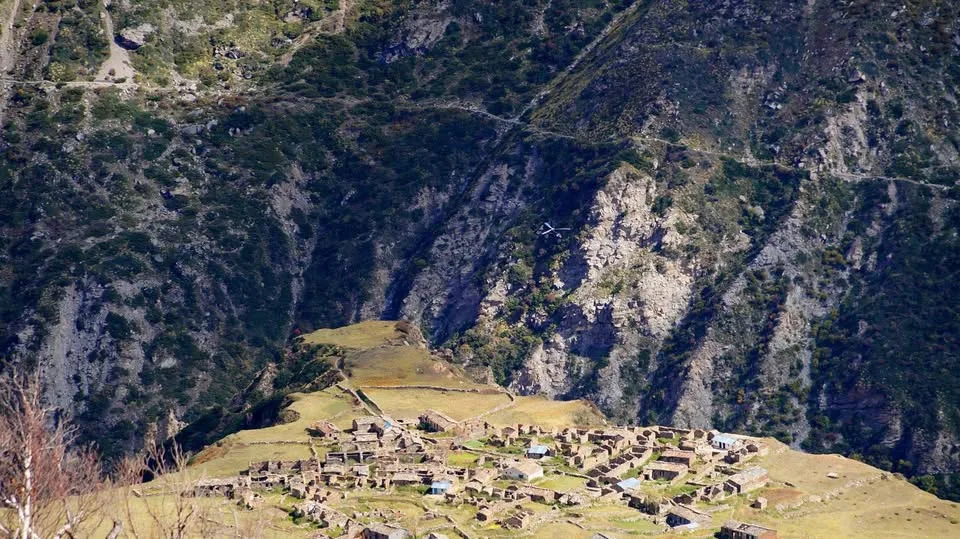
The Burfu–Martoli Hike explores the historic Johar Valley through traditional Shauka settlements beneath the towering Nanda Devi East massif. Combining Himalayan culture, trade-route history, and spectacular mountain scenery, it is one of Kumaon's finest heritage walks.
Trek Highlights
Martoli Ridge Temple — Pre-Dawn Alpenglow
The Nanda Devi temple on the eastern rim of Martoli plateau at 11,200 ft with Nanda Devi East (7,434m) directly behind, in pre-sunrise alpenglow light (October 6:10-6:50am). The first rose-to-gold cycle of mountain light on a 7,000m peak seen from a 19th-century trading village temple is the definitive Johar Valley photograph — visually unlike any other peak-alpenglow scene in Kumaon due to the cultural-architectural foreground.
Eastern Himal Cluster — Lakhori Doorframes
The three adjacent 'Himal' mansions in the eastern cluster of Martoli village share a common courtyard and represent the finest surviving concentration of Shauka lakhori wood carving in the Johar Valley. The carved walnut doorframes show peacock pairs, lotus fields, and serpent-border motifs to a technical standard that architectural historians have compared to the best inland carved wood architecture of the Kashmir valley.
Milky Way over Nanda Devi East — October New Moon
Martoli is at Bortle Class 1 darkness (the darkest category) with Nanda Devi East as the southern horizon anchor. On new moon nights in October (midnight clarity after the moonset), the Milky Way appears directly over the peak — the galactic core rising above the eastern face creates an astrophotography composition that has begun attracting dedicated astronomy photographers to Martoli. Foreground illumination: the dark stone silhouettes of the Himal rooftops against the star field.
Are the Martoli mansions open for entry or only external viewing?
The occupied mansions (those with families in residence May–October) are the private property of the Shauka families — enter only with explicit invitation. The abandoned mansions (uninhabited for decades) are technically open but structurally unstable in parts — some upper floors have visible floor-joist degradation. A local guide who knows which structures are safe for interior exploration is essential. The most photogenic 'Himal' interiors (with intact carved panels) are usually accessible with the guide's facilitation.
Who are the Shauka people and how is the Martoli Shauka community different from the Darma Valley Rung?
Both communities are broadly classified as 'Bhotiya' in administrative language, but are distinct ethnic and linguistic groups. The Johar Valley Shauka (centered on Martoli and Milam) historically spoke Rang Boli / Johari, a distinct Tibeto-Burman language, while the Darma and Vyas valley communities speak Rongkad. The Johar Shauka were primarily traders (the richest wool-and-grain merchants of Kumaon), while the Darma Rung were more mixed agro-pastoral. The Martoli Shauka's material wealth — manifested in their elaborate stone mansions — reflects this trade wealth accumulation over 200+ years.
What is the 'lakhori' wood carving tradition and where can it best be seen in Martoli?
Lakhori refers to the intricate carved hardwood panels (typically walnut or deodar) used for door frames, window screens, and interior wall panels in Shauka Himal architecture. The motifs include lotus flower patterns, peacock pairs, mythological figures (typically Ganesh and Nanda Devi), and interlocking geometric borders. The quality at Martoli rivals and in some panels surpasses the famous Kumaoni carved architecture of Almora's town core. The best surviving lakhori doorframes are on three specific Himals in the eastern cluster of Martoli village — your guide will identify them.
Is there a permit requirement for Martoli?
As of 2025, Indian nationals require only a basic registration at the Lilam ITBP post (or Munsiyari outpost if doing pre-registration). This involves providing Aadhar/Passport copy and destination details — takes 20 minutes. Foreign nationals may require an Inner Line Permit if they plan to proceed beyond Martoli toward Milam or the high passes — check current status with SDM Munsiyari before departure.
What is the road and walking situation from Munsiyari to Burfu?
The BRO jeep road extends from Munsiyari northward through the Gori Ganga gorge. The road has been progressively extended — as of 2025, seasonal jeep access reaches Burfu (or very close to it). From Burfu, the suspension bridge over the Gori Ganga and 6 km walking trail to Martoli is a non-motorized path and will likely remain so (the terrain above the bridge is a vertical-sided hanging valley). The Munsiyari–Burfu jeep drive is 50 km / 4-5 hours on a mountain road.
How is the view of Nanda Devi East compared to other viewpoints?
Martoli provides the most complete eastern-face view of Nanda Devi East (7,434m) of any accessible (non-technical) location in India. From Munsiyari (the other famous viewpoint), Nanda Devi East is seen at medium distance with the Milam range foothills intervening. From Martoli's ridge at 11,200 ft, you are looking directly up the Lwanl Gad valley toward the east face — the entire height of the mountain from valley floor to summit is visible in a single composition, with the connecting ridge to Nanda Devi Main (7,816m) also visible. The alpenglow on the eastern face at sunset (5:30–6:30 PM in October) is considered among the finest peak-alpenglow experiences in the Kumaon Himalaya.
When do the Martoli Shauka families leave for winter?
Migration typically begins in the first week of November. By November 15 in most years, Martoli is completely deserted. The return each spring is around May 15–June 1, depending on snow conditions on the approach road. The optimal visit window to see the village inhabited is May 20 – October 31.
What is the historical significance of Martoli village?
Martoli was a thriving trade hub on the ancient Indo-Tibet trade route. After the 1962 war, the trade stopped, leaving behind beautiful, hand-carved heritage stone houses that feel like a living museum.
Do we need restricted area permits for Burfu and Martoli?
Yes, since the trail lies in the sensitive Johar Valley near the border zone, an Inner Line Permit (ILP) issued by the SDM office in Dharchula or Munsiyari is mandatory.
Is the Burfu-Martoli trail suitable for beginners?
Yes, the trail is relatively moderate compared to the glacier crossings. It involves well-defined pathways along the Goriganga river, making it ideal for fit beginners.
What is the mobile network status in Martoli?
There is no mobile signal or internet connection beyond Lilam village. BSNL satellite phones are occasionally available in army posts for emergencies.
Where do we get water along the hike?
Fresh, clean mountain streams are abundant along the trail. However, always use water purification tablets or portable filters before drinking.
What is the unique architecture of houses in Martoli?
Houses in Martoli feature massive wooden doors and windows intricately carved with Tibetan and Kumaoni motifs, built to withstand heavy winter snow.
Are there medical facilities available on this route?
The nearest medical clinic is in Munsiyari. Army posts along the route can provide basic first aid and emergency radio contact.
Are the Martoli mansions open for entry or only external viewing?
The occupied mansions (those with families in residence May–October) are the private property of the Shauka families — enter only with explicit invitation. The abandoned mansions (uninhabited for decades) are technically open but structurally unstable in parts — some upper floors have visible floor-joist degradation. A local guide who knows which structures are safe for interior exploration is essential. The most photogenic 'Himal' interiors (with intact carved panels) are usually accessible with the guide's facilitation.
Who are the Shauka people and how is the Martoli Shauka community different from the Darma Valley Rung?
Both communities are broadly classified as 'Bhotiya' in administrative language, but are distinct ethnic and linguistic groups. The Johar Valley Shauka (centered on Martoli and Milam) historically spoke Rang Boli / Johari, a distinct Tibeto-Burman language, while the Darma and Vyas valley communities speak Rongkad. The Johar Shauka were primarily traders (the richest wool-and-grain merchants of Kumaon), while the Darma Rung were more mixed agro-pastoral. The Martoli Shauka's material wealth — manifested in their elaborate stone mansions — reflects this trade wealth accumulation over 200+ years.
What is the 'lakhori' wood carving tradition and where can it best be seen in Martoli?
Lakhori refers to the intricate carved hardwood panels (typically walnut or deodar) used for door frames, window screens, and interior wall panels in Shauka Himal architecture. The motifs include lotus flower patterns, peacock pairs, mythological figures (typically Ganesh and Nanda Devi), and interlocking geometric borders. The quality at Martoli rivals and in some panels surpasses the famous Kumaoni carved architecture of Almora's town core. The best surviving lakhori doorframes are on three specific Himals in the eastern cluster of Martoli village — your guide will identify them.
Is there a permit requirement for Martoli?
As of 2025, Indian nationals require only a basic registration at the Lilam ITBP post (or Munsiyari outpost if doing pre-registration). This involves providing Aadhar/Passport copy and destination details — takes 20 minutes. Foreign nationals may require an Inner Line Permit if they plan to proceed beyond Martoli toward Milam or the high passes — check current status with SDM Munsiyari before departure.
What is the road and walking situation from Munsiyari to Burfu?
The BRO jeep road extends from Munsiyari northward through the Gori Ganga gorge. The road has been progressively extended — as of 2025, seasonal jeep access reaches Burfu (or very close to it). From Burfu, the suspension bridge over the Gori Ganga and 6 km walking trail to Martoli is a non-motorized path and will likely remain so (the terrain above the bridge is a vertical-sided hanging valley). The Munsiyari–Burfu jeep drive is 50 km / 4-5 hours on a mountain road.
How is the view of Nanda Devi East compared to other viewpoints?
Martoli provides the most complete eastern-face view of Nanda Devi East (7,434m) of any accessible (non-technical) location in India. From Munsiyari (the other famous viewpoint), Nanda Devi East is seen at medium distance with the Milam range foothills intervening. From Martoli's ridge at 11,200 ft, you are looking directly up the Lwanl Gad valley toward the east face — the entire height of the mountain from valley floor to summit is visible in a single composition, with the connecting ridge to Nanda Devi Main (7,816m) also visible. The alpenglow on the eastern face at sunset (5:30–6:30 PM in October) is considered among the finest peak-alpenglow experiences in the Kumaon Himalaya.
When do the Martoli Shauka families leave for winter?
Migration typically begins in the first week of November. By November 15 in most years, Martoli is completely deserted. The return each spring is around May 15–June 1, depending on snow conditions on the approach road. The optimal visit window to see the village inhabited is May 20 – October 31.
What is the historical significance of Martoli village?
Martoli was a thriving trade hub on the ancient Indo-Tibet trade route. After the 1962 war, the trade stopped, leaving behind beautiful, hand-carved heritage stone houses that feel like a living museum.
Do we need restricted area permits for Burfu and Martoli?
Yes, since the trail lies in the sensitive Johar Valley near the border zone, an Inner Line Permit (ILP) issued by the SDM office in Dharchula or Munsiyari is mandatory.
Is the Burfu-Martoli trail suitable for beginners?
Yes, the trail is relatively moderate compared to the glacier crossings. It involves well-defined pathways along the Goriganga river, making it ideal for fit beginners.
What is the mobile network status in Martoli?
There is no mobile signal or internet connection beyond Lilam village. BSNL satellite phones are occasionally available in army posts for emergencies.
Where do we get water along the hike?
Fresh, clean mountain streams are abundant along the trail. However, always use water purification tablets or portable filters before drinking.
What is the unique architecture of houses in Martoli?
Houses in Martoli feature massive wooden doors and windows intricately carved with Tibetan and Kumaoni motifs, built to withstand heavy winter snow.
Are there medical facilities available on this route?
The nearest medical clinic is in Munsiyari. Army posts along the route can provide basic first aid and emergency radio contact.
Are you a local operator?
Join our platform to list your verified packages for this trek.