
Explore
Intelligence
Essential Planning Guide
Bara Bhangal Trek — Complete Guide (2026)
Vibe & Scenery
The Experience
Introduction
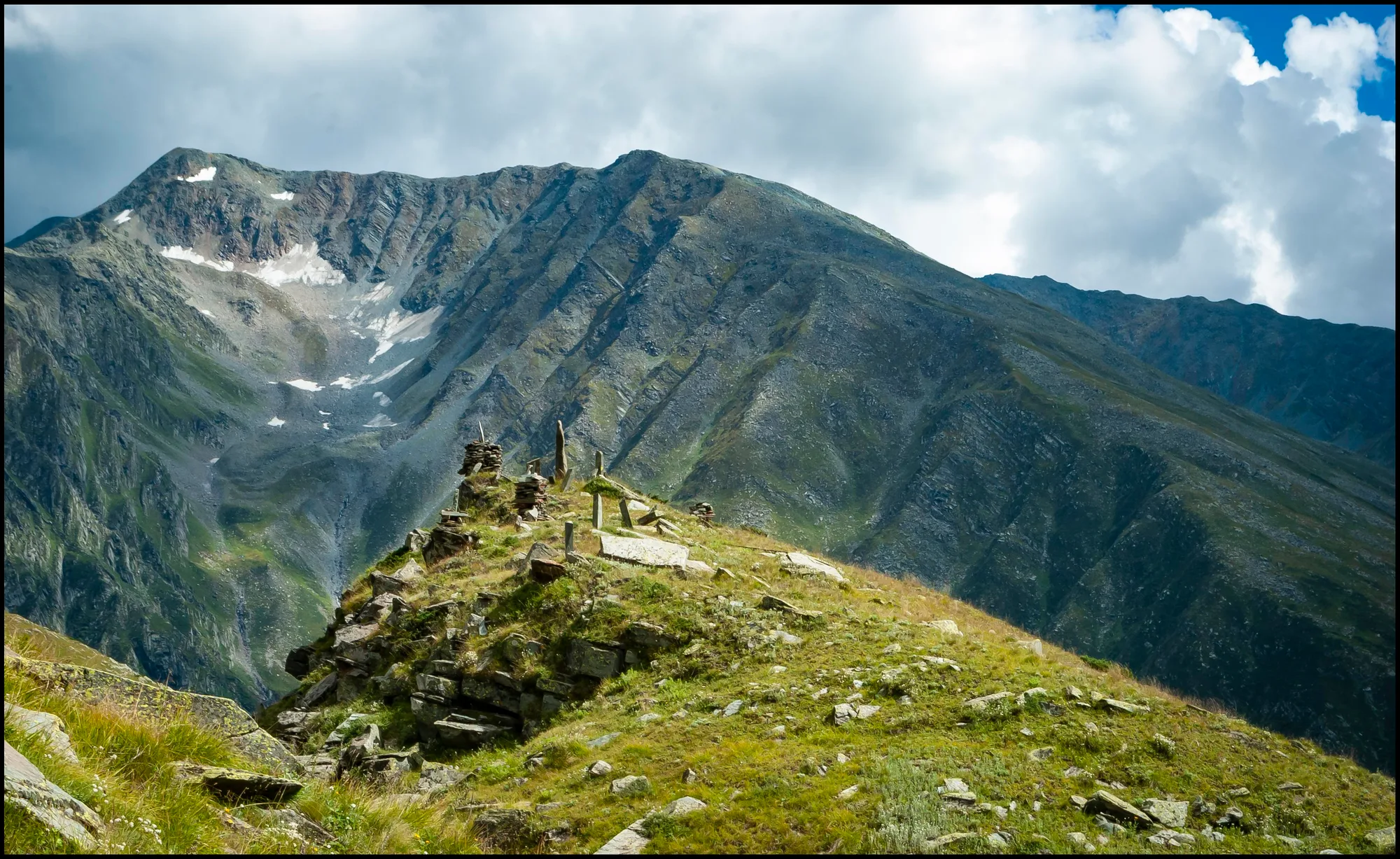
The Bara Bhangal Trek reaches one of Himachal Pradesh's most remote permanently inhabited villages, nestled between the Dhauladhar and Pir Panjal ranges. With no road access, the village remains connected to the outside world primarily through ancient mountain trails that have served local communities for generations.
Depending on the itinerary, the expedition crosses formidable passes such as Thamsar Pass or Kalihani Pass while traversing alpine meadows, glacial valleys, and traditional Gaddi shepherd routes. The combination of long trekking days, remote camps, and minimal infrastructure makes it one of Himachal's most demanding wilderness experiences.
Suitable only for experienced trekkers with strong endurance, Bara Bhangal offers an authentic journey into one of the Himalayas' last truly isolated mountain communities.
Quick Facts
Duration
Max Altitude
Difficulty
Best Time
Trek Distance
Trail Atmosphere
Stargazing
Class 1 Dark Sky
Scent Profile
Silence Level
~20 dB
Vertigo Factor
4 / 10
Iconic Spots
Thamsar Pass (15,748 ft)
Bara Bhangal Village
Uhl River Source
Environment
Nature & Culture
Flora & Fauna
Flora
Fauna
Bara Bhangal is one of the most remote inhabited villages in India, accessible only by crossing the 15,748ft Thamsar Pass. Residents are descendants of ancient nomadic shepherds who chose isolation for centuries.
— Local folklore
Spiritual & Cultural Significance
Isolated Himalayan village lifestyle traditions.
🕐 Shrine Timings: N/A
Temple Protocols
Technical Details
Challenge & Preparation
Primarily a joint & muscle impact and cardio demand challenge
A demanding expedition with extreme joint & muscle impact and cardio demand.
Personal Readiness
Am I ready?
Planning
Logistics & Trail Intel
Getting There
Route to Base
Bir: 10 hours from Delhi, 1 hour from Dharamshala
Base Village
Bir (Start) / Manali (End)
Nearest Railhead
Rishikesh
Nearest Airport
Jollygrant Airport
Last ATM
Bir.
Nearest Medical Facility
Bir PHC / Baijnath Civil Hospital
Mobile Signal
Zero signal for 6-8 days. Satellite phones mandatory for professional expeditions.
Water Sources
Uhl river and its numerous high-altitude tributaries follow the main valley. High purity glacial water available throughout. Filter required for village stretches.
Charging
Electricity only at Bir/Manali roadheads. Bara Bhangal village has limited solar lighting; no public charging.
For Drivers
Road Condition
Good road from Palampur to Bir Colony. Trailhead starts at Billing.
Palampur / Bir
Trail Culinary & Diet
Don't miss the Native village grains
Buy specialized diet items at Bir / Palampur
The Content & Remote Hub
Top Vlog Spots
Video Calls
none
Est. 0 Mbps
UPI Reliability
1/10
Base WiFi Available
Permits and Regulations
Forest permits required from the Bir/Baijnath Forest Division (Dhauladhar side) and the Kullu Forest Division (Pir Panjal side). Inner Line Permit is NOT required but border proximity means ITBP may ask for identification. Groups need prior intimation to the Bara Bhangal panchayat. Waste management is critical — this is one of the cleanest wilderness corridors in HP. No permanent camps allowed; tent-only.
Learn more about how we vet operators and ensure transparency on our why MountRoutes page.
Packing List
Layered Clothing
- High-quality thermal inner wear (merino wool preferred)
- Heavyweight fleece pull-over or jacket
- Windproof and waterproof outer shell jacket and trousers
- High-loft down jacket (rated to -10°C comfort)
Footwear & Traction
- Sturdy high-ankle trekking boots with vibram sole (fully broken in)
- 4 pairs of thick merino wool trekking socks
- Trekking microspikes or crampons for crossing Thamsar glacier ice wall
Technical & Personal Safety
- UV category 4 glacier sunglasses (to prevent snow-blindness)
- Certified headlamp with extra rechargeable lithium battery packs
- 10L personal dry bag for keeping clothing electronics safe
Deep Dives
Explore Further
Editor's Notes
Bara Bhangal is the last village in Himachal Pradesh without a road. In winter, the only way out is on foot over a 14,500ft pass. The people here live with a resilience that is humbling.
At Thamsar Pass, you stand on the watershed between the Ravi and Beas — the two rivers that define the geography of northwestern India.
Explore In Detail
Day by Day Itinerary
7-day route reaching 15,800ft. Covers 65km of varied terrain.
→ See full itinerary with altitude profileDifficulty & Fitness
Rated challenging. Forest, alpine meadow, snow pass, river trail. Extremely varied. The Thamsar Pass is the crux — 14,500ft with a 6,000ft descent in one day.
→ See difficulty breakdown and fitness guideCost & Pricing
Packages range from ₹20,000 – ₹40,000. Inclusions and hidden costs vary by operator tier.
→ See full cost breakdownFrequently Asked Questions
How remote is the village of Bara Bhangal?
It is one of the most isolated human settlements in the Indian Himalayas. It is reachable only by a 4-5 day trek over 15,000+ ft passes. There are no roads or mobile networks.
Do I need technical gear for the passes?
Thamsar and Kalihani passes can be tricky; while not purely technical, ice axes and gaiters are often needed for crossing the glacier sections in early summer.
Where do we get drinking water?
Water is sourced from glacial streams; however, after crossing Thamsar Pass, the water points are very specific. Your logistics team will carry extra.
Is it possible to see the Gaddi shepherds?
Yes, this is their traditional route. In summer, you will see thousands of sheep being moved across the passes to the high pastures.
What is the highest point reached?
Thamsar Pass at 15,748 ft and Kalihani Pass at 15,500 ft are the two major high points.
Is there any emergency rescue available?
Due to extreme remoteness, medical help is days away. Only satellite phones (group leaders) or heli-evacuation are options in critical cases.
Can we hire mules in the village?
No, all logistics must be fully catered from the start point (Baijnath or Manali).
What is the best month?
September is the gold standard for Bara Bhangal — clear skies and the crossing is traditionally safer.
Does the trek cross into a different district?
Yes, you cross from the Kangra district (Baijnath side) into the Kullu district (Manali side).
Still deciding?
Compare routes side-by-side to find the perfect match for your fitness, dates, and budget.
Everything you need to know, in one place. Someone else in your group needs to see this.
Planning Bara Bhangal Trek?
Get route conditions, operator updates, and season windows before booking.
Don't miss out! Follow us for route updates@mountroutes|LinkedIn
No spam. Only useful trek updates.
Ready to walk this route?
You’ve read the guide, now find the perfect local team to take you there. Compare our verified list of operators.
Compare verified operators