
Explore
Intelligence
Difficulty & Readiness Guide
Is Burfu–Martoli Heritage Hike Trek Difficult? — Fitness & Altitude Guide
A moderate high-altitude Himalayan trek reaching a maximum altitude of 11,200 ft. It involves steady, steep ridge climbs and daily hiking durations of 5 to 7 hours. Recommended for fit beginners and experienced hikers looking for excellent Himalayan peak panoramas.
The Question
Can I do this trek?
Preparation Required
Entry Level
Prior Experience
None required. Suitable for first-time trekkers.
Expert Verdict
Highly technical trek requiring physical and mental preparation.
Route Knowledge
Why is it difficult?
Exertion Index
Primary Challenge
Route Identity
Endurance-focused route with significant physical taxation across a trek featuring loose moraine.
Primary Drivers
- Maximum sleeping altitude of 11,000 ft
- 3 consecutive high-output trekking days
View Full Route Analysis
Physiological Demand
Comfortable pacing with good recovery options.
Comfortable pacing with moderate daily distances.
Well-defined, stable trails with no technical maneuvers required.
Below the major effects of altitude sickness. Air remains relatively dense.
Terrain Breakdown
Not technically demanding. Days 1, 4, 5 are road drives. Days 2 and 3 and part of 4 are on well-worn Shauka village paths — the steepest section is the 800 ft climb from the suspension bridge to the Martoli plateau on Day 2 (1.5 hours, moderate incline on a clear path). Day 3 temple ridge is a gentle 200m gain on grass and stone.
Summit Day Notes
No summit day in technical sense. The Martoli Ridge temple at 11,200 ft is the high point and the primary photography destination.
The Descent
Day 4 descent from Martoli to Burfu is the mirror of Day 2 — straightforward, 3 hours. The suspension bridge crossing requires care on wet wooden planks after rain.
Altitude Profile
Munsiyari (7,200 ft) to Burfu (10,200 ft) in one drive day. Then Burfu to Martoli (11,000 ft) is a single 800 ft gain — well within the range of gradual acclimatization. No AMS concern in this altitude band for normally healthy individuals.
Run AMS Risk Audit →Trail Performance Data
Max Gradient
25%
Hydration
0.3L per km recommended
Loose Surface Sections
- •Suspension bridge approach path (wet wooden planks after rain)
- •Upper Martoli ridge path (grassy slope, slightly slippery in early morning frost)
Personal Readiness
Am I ready?
What this route demands
People who feel comfortable on this route can usually:
Who Can Do This Trek?
Min Age
10+
Max Age
68
Western Toilets at Base
Yes
Solo Female Travelers
Very safe. The Munsiyari–Gori Ganga corridor has a history of responsible tourism with multiple established operators and an active ITBP presence. The Shauka communities are known for hospitality and the Martoli homestay families are experienced with solo and small-group travelers. Standard travel awareness precautions apply for the Munsiyari town evening.
Hazard Profile
What goes wrong?
Common Mistakes on Burfu–Martoli Heritage Hike
Most injuries and failures on this trail can be avoided by making smarter decisions early on.
Not spending a full Day 3 at Martoli — the most common regret. The late afternoon alpenglow on Nanda Devi East (5pm-6pm) and the next morning sunrise (6am) are separated by one overnight. Compressing to avoid the overnight means missing at least one of the two best photography windows.
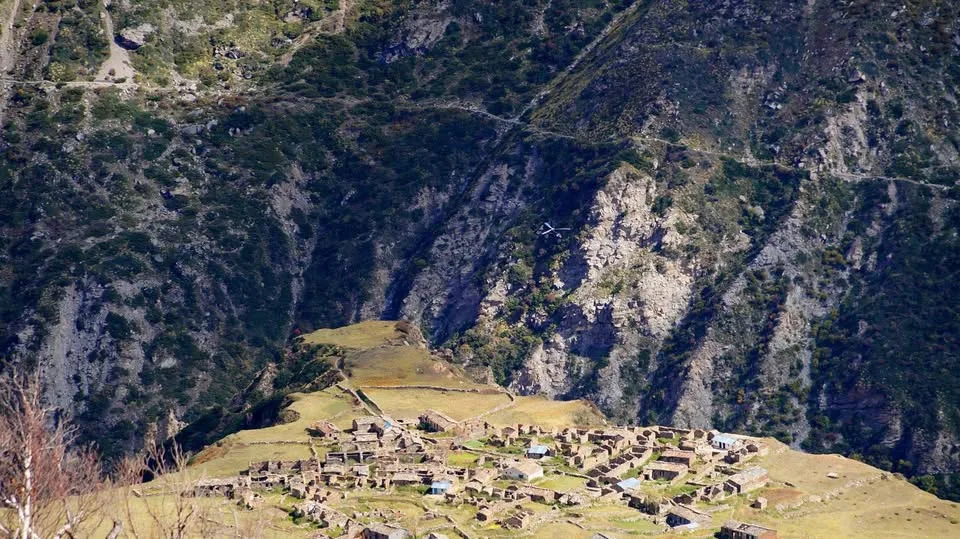
Not hiring a local heritage guide — the architectural history of Martoli's specific mansions is not in any published guidebook. The knowledge is exclusively held by the Shauka families and a select few local guides. Without this narration, the Himals are just old buildings.
Arriving in Martoli too late in the day (after 2pm) on Day 2 — the afternoon cloud often builds over Nanda Devi East by 3pm. Aim to be at the ridge by 4:30pm for the clearest late-afternoon views.
Safety & Medical Risks
Key Risks
Landslide on the Gori Ganga gorge road (July–August primarily; less common in May, June, September, October but possible after heavy rain at Munsiyari)
Mild AMS — Martoli at 11,000 ft is within the altitude range where sensitive individuals may experience headache; hydration and slow pace manage this easily
Structural instability in abandoned Martoli Himals — some upper-floor sections have degraded floor joists; follow guide instruction on which structures are safe to enter
AMS (Altitude Sickness)
Very low AMS risk at this altitude for normal healthy adults. Monitor for headache or sleep disturbance first night at Martoli. If symptomatic: descend to Burfu (10,200 ft) — sufficient relief at 800 ft lower.
Evacuation Route
Drive from Burfu road-head to Munsiyari (5 hrs), then Pithoragarh District Hospital (2 hrs more). Helicopter landing possible at Burfu road-head clearing.
Solo Trekking
Completely safe for solo travel. The trail from Burfu to Martoli is used by Shauka families throughout the season. A solo traveler is welcome in the Martoli homestays. However, a heritage guide adds irreplaceable value that a solo traveler without local context cannot access independently.
Common Trail Ailments
🏥 Nearest ICU: Ujala Cygnus Central Hospital, Haldwani / B.D. Pandey District Hospital, Pithoragarh
Tactical Emergency Hub
> ITBP Lilam (on the return drive route) is the primary emergency contact point. Helicopter landing possible at Burfu road-head. Munsiyari Community Health Centre for basic medical care.
Auditability
How is this calculated?
Understand This Route Further
Before attempting this route:
Still deciding?
Compare routes side-by-side to find the perfect match for your fitness, dates, and budget.
Still think it's doable? Share this with your trek mate and see if they agree.
Step 2: Seasonal Safety
You know how demanding this route is.
Now find the safest and most reliable season to attempt it.
Check Best Time to Go