
Explore
Intelligence
Essential Planning Guide
Kalindi Khal Expedition — Complete Guide (2026)
Vibe & Scenery
The Experience
Introduction
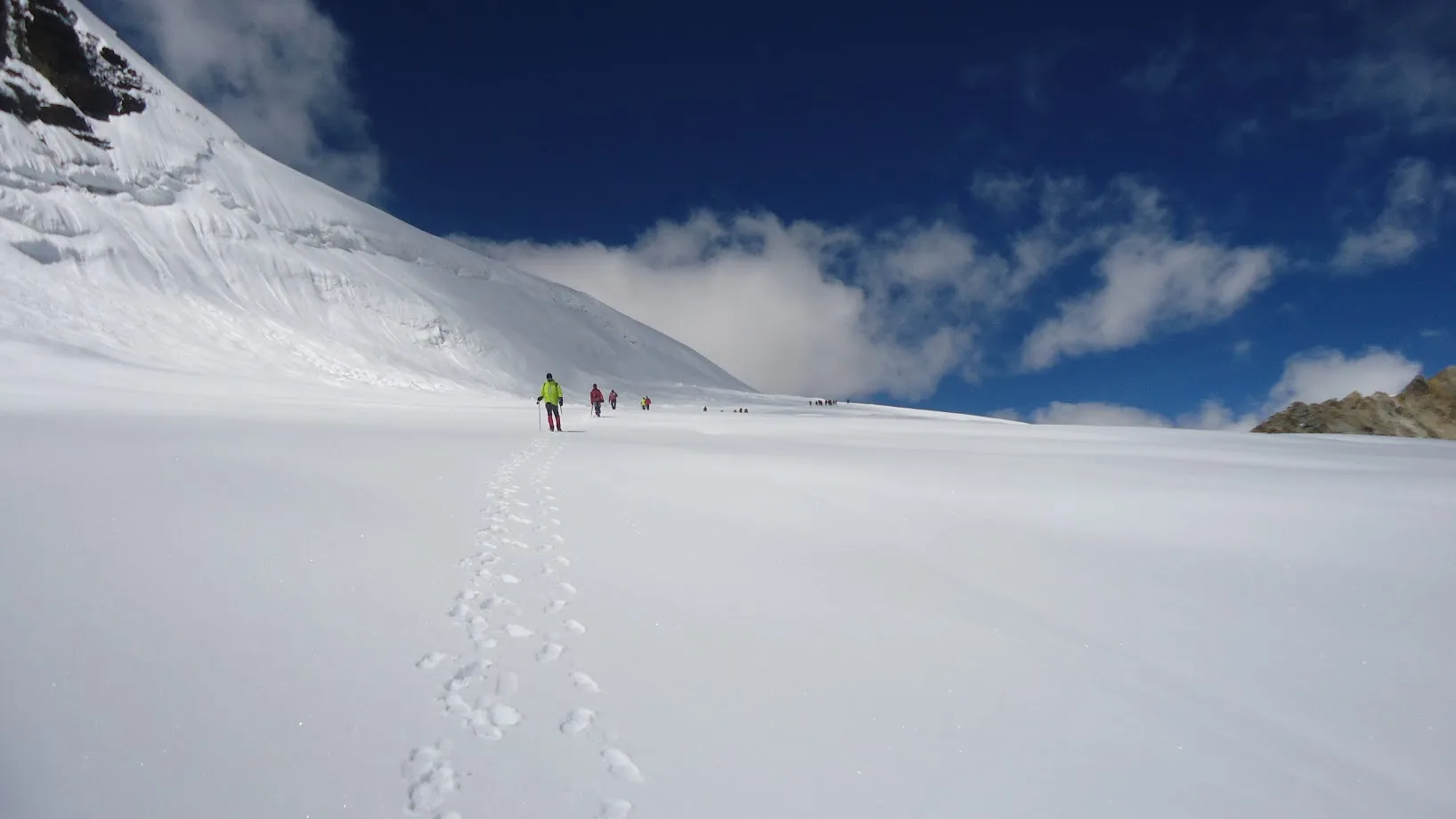
Rising to approximately 5,950 m (19,520 ft), Kalindi Khal is among the highest non-technical alpine passes regularly attempted in the Indian Himalayas. Connecting the sacred shrines of Gangotri and Badrinath, the expedition traverses one of the largest glaciated landscapes in Garhwal through an uninterrupted succession of glaciers, moraines, and high-altitude camps.
The route follows the Gangotri Glacier before crossing the Chaturangi, Sweta, and Kalindi glacier systems to reach the pass beneath towering peaks including Shivling, Meru, Bhagirathi, and Kamet. Continuous glacier travel, complex navigation, extreme altitude, and rapidly changing weather make every stage physically and mentally demanding.
Reserved for elite mountaineers with extensive glacier experience, Kalindi Khal is regarded as one of India's greatest expedition traverses and a benchmark for high-altitude endurance.
Quick Facts
Duration
Max Altitude
Difficulty
Best Time
Trek Distance
Trail Atmosphere
Stargazing
Class 1 Dark Sky
Scent Profile
Silence Level
~5 dB
Vertigo Factor
5 / 10
Iconic Spots
Kalindi Khal Sunrise
Environment
Nature & Culture
Flora & Fauna
Flora
Fauna
The route is the cosmic connection between the sister rivers—Baghirathi (Ganges) and Alaknanda. It is considered a path so holy that dying on it guarantees moksha.
— Local folklore
Spiritual & Cultural Significance
A deeply physical manifestation of crossing the threshold between two of the holiest dhams.
🕐 Shrine Timings: N/A
Temple Protocols
Technical Details
Challenge & Preparation
Primarily a cardio demand and altitude exposure challenge
A demanding expedition with extreme cardio demand and altitude exposure.
Personal Readiness
Am I ready?
Planning
Logistics & Trail Intel
Getting There
Route to Base
10 hour drive from Dehradun
Base Village
Gangotri
10,000 ft
Nearest Railhead
Dehradun / Rishikesh
Nearest Airport
Jollygrant Airport (Dehradun)
Last ATM
Uttarkashi
Nearest Medical Facility
Uttarkashi / Joshimath
Mobile Signal
Zero.
Water Sources
Melted glacial snow. Boiling mandatory.
Charging
Zero.
For Drivers
Road Condition
National highway 34 up to Gangotri.
Uttarkashi
Trail Culinary & Diet
Don't miss the N/A
Buy specialized diet items at Dehradun
The Content & Remote Hub
No DronesStrictly banned near Indo-China border sector.Top Vlog Spots
Video Calls
none
Est. 0 Mbps
UPI Reliability
1/10
Permits and Regulations
Heavily regulated by the Indian Mountaineering Foundation (IMF) and the DFO Uttarkashi. Due to its proximity to the Indo-China border, strictly vetted Inner Line Permits (ILP) are required. Foreign nationals face intense scrutiny and must apply months in advance.
Learn more about how we vet operators and ensure transparency on our why MountRoutes page.
Packing List
High-Alpine Technical Logistics
- Rigid mountaineering boots (B3/B2 rating mandatory)
- 12-point crampons (Fitted to boots beforehand)
- Climbing Harness, 2 Locking Carabiners, Ascender (Jumar), and Descender (Figure 8/ATC)
- Straight-shaft Ice Axe with leash
- Climbing Helmet
Extreme Cold & Glacial Exposure
- Heavy Expedition Down Jacket (Rating: -30°C comfort)
- Category 4 Glacier Glasses (Wrap-around to prevent side-glare blindness)
- Heavy Gore-Tex Hardshell pants (Ski-pants will tear on crampon points)
Survival & Sustainment
- -20°C Sleeping bag (Down insulation highly preferred)
- Double-insulated water flask (Water bladders will freeze and crack)
- High-calorie energy gels (Chewing solid food above 18k ft is exhausting)
Deep Dives
Explore Further
Editor's Notes
A clear, sunny day on the glacier is a double-edged sword. It looks beautiful, but it melts the snow bridges over the crevasses, making the afternoon descent off the pass highly dangerous.
Explore In Detail
Day by Day Itinerary
15-day route reaching 19,521ft. Covers 99km of varied terrain.
→ See full itinerary with altitude profileDifficulty & Fitness
Rated challenging. Almost the entire expedition from Day 3 to Day 10 is on highly technical, shifting ice, crevassed glaciers, and treacherous moraine. No solid trail exists.
→ See difficulty breakdown and fitness guideCost & Pricing
Packages range from ₹80,000 to ₹1,20,000. Inclusions and hidden costs vary by operator tier.
→ See full cost breakdownFrequently Asked Questions
Is Kalindi Khal the toughest trek in India?
Yes. It holds the unofficial title due to its staggering 19,500 ft altitude, the number of days spent entirely on glacial ice, and the objective dangers of crevasses and avalanches.
Do I need prior mountaineering experience?
Absolutely. At minimum, you must have completed a Basic Mountaineering Course (BMC) or have successfully climbed multiple 6000m peaks. Basic trekkers will be turned back at Bhojbasa.
What is the peak altitude?
The pass itself sits at 5,950 meters (19,521 ft). This is significantly higher than Mount Elbrus or Kilimanjaro. You will feel extreme oxygen deprivation.
How cold does it get?
Night temperatures at Kalindi Base Camp (18,000 ft) routinely plunge to -20°C or -25°C, even in the peak trekking season of June or September.
Is there a real trail?
Only until Gomukh. After Gomukh, you are walking entirely on the shifting, chaotic ice and moraine of the Chaturangi, Sweta, and Kalindi Glaciers. The landscape changes weekly.
What happens if I get AMS?
Above Nandanvan (14,000 ft), evacuation is extremely difficult. If you display HAPE or HACE symptoms, your guide will administer Dexamethasone/Diamox and you must immediately descend. Helicopter rescue is highly unreliable due to winds.
Do we use ropes?
Yes. You will be roped to your team members while crossing the heavily crevassed glaciers to ensure that if someone falls through a snow bridge, the team can auto-arrest.
Where does the expedition start and end?
It starts at the Gangotri temple in the west, crosses the central spine of the Garhwal, and ends at the Badrinath temple in the east.
What is the descent like?
The descent off Kalindi Khal is notoriously steep, littered with hidden crevasses, and heavily avalanche-prone. It is often considered more dangerous than the ascent.
How long is the crossing?
From Gangotri to Badrinath, it usually takes 12 to 14 days of sustained walking, including mandatory acclimatization rest days.
Route Intelligence
Routes With Similar Character
Routes that share the character of Kalindi Khal Expedition.
Audens Col Expedition
Both routes involve navigating deep into glacial valleys to access the high mountains. They share multiple characteristics.
Bandarpunch Peak Expedition
Both routes involve navigating deep into glacial valleys to access the high mountains.
Pin Parvati Pass Expedition
Both routes involve navigating deep into glacial valleys to access the high mountains. They share multiple characteristics.
Still deciding?
Compare routes side-by-side to find the perfect match for your fitness, dates, and budget.
Everything you need to know, in one place. Someone else in your group needs to see this.
Planning Kalindi Khal Expedition?
Get route conditions, operator updates, and season windows before booking.
Don't miss out! Follow us for route updates@mountroutes|LinkedIn
No spam. Only useful trek updates.
Ready to walk this route?
You’ve read the guide, now find the perfect local team to take you there. Compare our verified list of operators.
Compare verified operators