
Explore
Intelligence
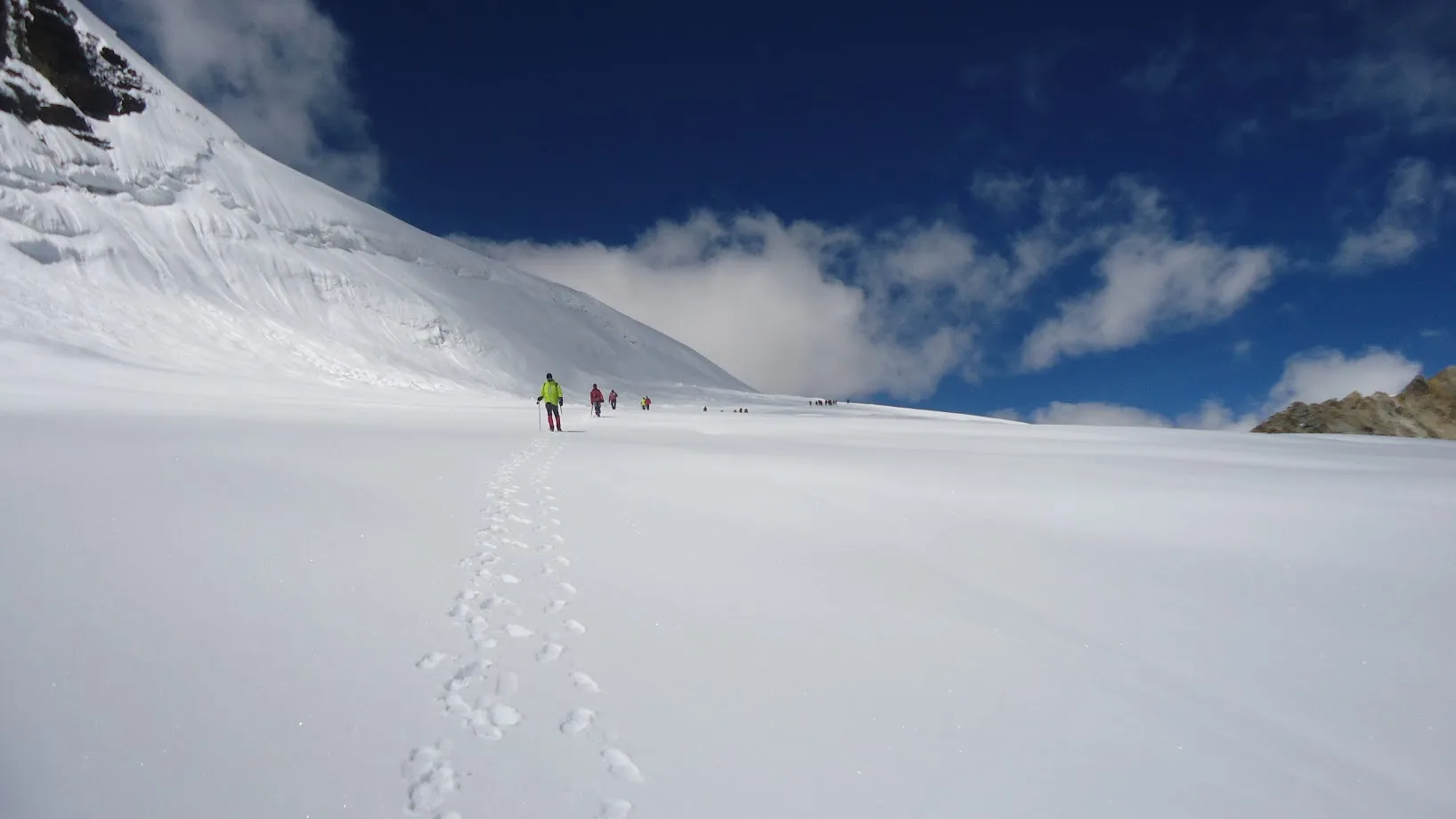
Traverse Safety & Risk
Kalindi Khal Expedition — Safety Guide
Altitude physiology, pass crossing go/no-go criteria, evacuation protocol, and insurance requirements.
Pass Crossing Protocol
GO Conditions
- ✓ Clear starry night
- ✓ Stable barometer
- ✓ Firm snow crust
NO-GO Conditions
- ✗ Whiteout
- ✗ Heavy fresh snow
- ✗ High winds >40km/h
Primary Hazards
Lethal HAPE/HACE
Crevasse falls leading to hypothermia/trauma
Severe Avalanches off the Kalindi headwall
Snow Blindness
Historical Safety Record
We publish verified incident records to help trekkers and operators make informed decisions. Names and personal identifiers are anonymized.
Documented
6
verified incidents
Fatalities
1
recorded
Near Misses
3
logged
We have analysed 6 documented incidents for this expedition to extract critical safety lessons.
Due to the nature of mountaineering — where most non-fatal incidents go unreported — experts estimate 40+ total historical incidents on this route. Estimated historical fatalities: 6. We present the documented record as-is rather than speculate on undocumented cases.
Fatal incidents have occurred on Kalindi Khal Expedition
This route has recorded 1 fatal incident. Review all incidents below, understand the lessons, and discuss your operator's safety protocols before booking.
Year
2023
Weather Stranding
Outcome
Fatal
Contributing Cause
Contributing factors not fully documented
Key Safety Lesson
Never force an expedition to continue in bad weather. Listen to your guide's advice to turn back.
Year
2022
Snow Blindness
Outcome
Led out by team members
Contributing Cause
UV-protective eyewear not worn on high snowfields
Key Safety Lesson
Always uV radiation on high-altitude snowfields is intense. Wear Category 4 sunglasses constantly.
Year
2021
Weather Stranding
Outcome
Self-recovered
Contributing Cause
Contributing factors not fully documented
Key Safety Lesson
Always pitch tents at least 50 meters above the riverbed to avoid sudden glacial surges.
Year
2020
HAPE — High Altitude Pulmonary Edema
Outcome
Assisted descent by team
Contributing Cause
Rapid ascent without adequate rest days
Key Safety Lesson
Always hAPE can strike suddenly. The only cure is immediate descent, regardless of the time of day.
Year
2019
Fall — Rocky Terrain
Outcome
Self-recovered
Contributing Cause
Loose scree and insufficient footwear traction
Key Safety Lesson
Always move quickly and quietly through steep gorges. Helmets must be worn at all times.
Year
2017
Crevasse Fall
Outcome
Rescue by external team
Contributing Cause
Contributing factors not fully documented
Key Safety Lesson
Always snow bridges weaken in the afternoon. Cross glaciers strictly between 3 AM and 8 AM.
Source: Public Records / News Reports
Why estimates differ from records: IMF and news sources only capture permitted expeditions and helicopter rescues. Non-fatal near-misses (AMS, frostbite, falls with self-rescue) are almost never filed. Peaks with multi-decade climbing histories compound these gaps significantly.
Altitude Physiology — SpO₂ by Camp
Gangotri
95
SpO₂
Nandanvan
85
SpO₂
Kalindi Base
75
SpO₂
Turn-Around Threshold
SpO₂ < 65%
Descend immediately if reading drops below this at rest
Diamox (Acetazolamide)
Recommended
125mg twice daily as prophylaxis
⚠️ Golden Rule: Immediate descent upon ataxia or resting dyspnea.
Expedition Medical Kit
AMS Protocol
Maximum severity risk. If symptoms appear at Sweta or Kalindi Base Camp, retreating back down the glacier is agonizingly slow. Rapid descent is difficult.
Emergency Contacts
Evacuation Route
Helicopter (Weather permitting). Otherwise, manual carry-outs back to Bhojbasa or forward to Ghastoli depending on your position relative to the pass.
Solo Advisory
Absolutely prohibited.
Medical Evacuation Intelligence
Nearest ICU
SNM Hospital, Leh
Blood Bank Hub
Uttarkashi
O₂ Refill at Base
Available
Insurance Requirements
Altitude Cover
20,000 ft
Heli Rescue
Required
Declare These Activities
Recommended Providers
Mandatory Operator Equipment
Verify this equipment is included before booking. Compare operator safety standards →
Plan Your Expedition:
Still deciding?
Compare routes side-by-side to find the perfect match for your fitness, dates, and budget.
Knowledge Integrity
Help us keep this data ground-truth accurate.
This encyclopedia entry for Kalindi Khal Expedition is curated from a mix of public survey records, first-hand climber accounts, and official permit logs. However, mountains are dynamic. If you have been on this route recently and noticed a change in terrain, water availability, or local regulations, we want to hear from you.
Community Vetted
Last Verified: May 2026
EXPEDITION DATABASE
Step 5: Cost & Logistics
You understand the risks.
Now see what the IMF peak fees, logistics, and operator services actually cost.
View Cost Breakdown