
Explore
Intelligence
Essential Planning Guide
Kedarkantha Trek — Complete Guide (2026)
Vibe & Scenery
The Experience
Introduction
Kedarkantha has become one of the most sought-after trekking destinations in India thanks to its combination of accessible altitude, reliable winter snow, and rewarding summit views. Beginning from villages in the Govind Wildlife Sanctuary, the trail passes through dense pine and oak forests, open meadows, and the picturesque Juda Ka Talab before climbing to the summit ridge.
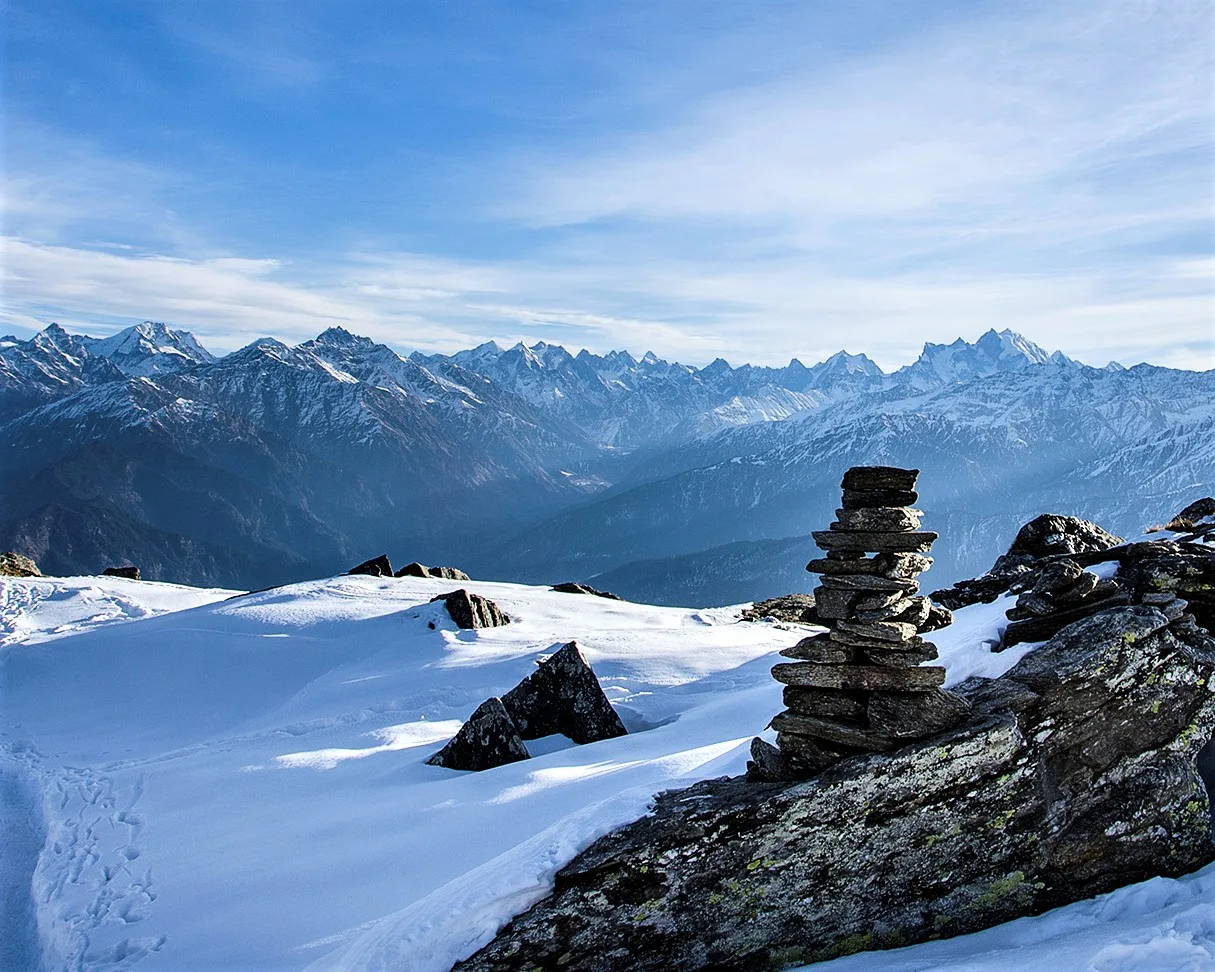
From the 12,500-foot summit, trekkers enjoy panoramic views of Swargarohini, Bandarpoonch, Black Peak (Kalanag), and numerous Garhwal ranges. The trek remains attractive throughout the year, although winter transforms the forests and meadows into one of the country's best snow-trekking destinations.
Suitable for beginners with good fitness, Kedarkantha provides an excellent introduction to multi-day Himalayan trekking while remaining enjoyable for experienced trekkers seeking a classic winter route.
Quick Facts
Duration
Max Altitude
Difficulty
Best Time
Trek Distance
Trail Atmosphere
Stargazing
Class 3 Dark Sky
Scent Profile
Silence Level
~30 dB
Vertigo Factor
1 / 10
Iconic Spots
Sankri Village Architecture
Juda Ka Talab
Swargarohini Massif
Environment
Nature & Culture
Flora & Fauna
Flora
Fauna
Named 'Throat of Shiva'. Juda Ka Talab formed by Shiva's hair lock to quench thirst during meditation. Swargarohini peaks visible from trail are believed to be the stairway to heaven.
— Local folklore
Spiritual & Cultural Significance
Legendary retreat of Lord Shiva.
🕐 Shrine Timings: Visible 24/7
Temple Protocols
- •No leather at summit trishul point
Festivals & Dates
Technical Details
Challenge & Preparation
Primarily a cardio demand challenge
A capable trekker's route that balances cardio demand and joint & muscle impact.
Personal Readiness
Am I ready?
Planning
Logistics & Trail Intel
Getting There
Route to Base
Dehradun to Sankri by shared jeep or operator vehicle
9–10 hours via Mussoorie, Purola, Mori
Most operators depart Dehradun at 6–7 AM
Base Village
Sankri
6,400 ft
Last ATM
Purola
Gear Rental
Rental shops offer boots, poles, gaiters, microspikes, down jacket, sleeping bag. Quality varies — inspect boots before accepting. Book in advance December–January as stock runs low.
Nearest Medical Facility
Max Super Speciality Hospital, Dehradun
Mobile Signal
Jio/BSNL erratic in Sankri. No signal beyond Juda Ka Talab; spotty at summit ridge.
Water Sources
Refill at Sankri, Juda Ka Talab, Kedarkantha Base. Natural springs available; purification mandatory.
Charging
Last reliable charging at Sankri base village. Zero points on trail.
For Drivers
Road Condition
Yamuna valley drive is scenic but winding. Final 15km to Sankri can be rough.
Purola
Trail Culinary & Diet
Don't miss the Apple Halwa (Sankri special)
Buy specialized diet items at Dehradun
The Content & Remote Hub
No DronesStrictly prohibited inside Govind Wildlife Sanctuary.Top Vlog Spots
Video Calls
unreliable
Est. 5 Mbps
UPI Reliability
3/10
Base WiFi Available
Permits and Regulations
Kedarkantha falls within the Govind Wildlife Sanctuary. All trekkers require a forest entry permit, which is processed at the Sankri check post. Organised operators handle this as part of the package. Solo trekkers must present a valid government-issued ID (Aadhar Card or Passport) and one passport-sized photo. Foreign nationals require an additional Inner Line Permit, obtained through the District Magistrate's office in Uttarkashi.
Learn more about how we vet operators and ensure transparency on our why MountRoutes page.
Packing List
Clothing
- 3 moisture-wicking thermal base layers
- 2 mid-layer fleece jackets
- 1 heavy down/padded jacket (-15°C rated)
- Waterproof outer shell jacket
- Insulated waterproof trek pants
- Thermal leggings (2 pairs)
- 3 pairs merino wool socks
- Balaclava and buff/neck gaiter
- Warm waterproof gloves + liner gloves
Footwear
- High-ankle waterproof trekking boots (broken in)
- Camp sandals or lightweight shoes for Sankri guesthouse
- Micro-spikes or crampons (rental available)
- Waterproof gaiters
Gear & Safety
- Trekking poles (essential for summit day)
- 40L daypack with rain cover
- Headlamp with 2 extra sets of batteries
- Sunglasses (UV400, polarised)
- Sun hat and woolen cap
- Personal first-aid kit
- Altitude sickness medication (Diamox — consult a doctor)
- Hydration bladder or 1L insulated water bottle
Deep Dives
Explore Further
Editor's Notes
Kedarkantha is the most beginner-friendly Himalayan summit trek — gradual altitude gain over 3 days, well-marked trail, and no technical sections. But summit day starts at 3:30 AM and includes a same-day descent to Hargaon. The easy label applies to the route, not the day length.
Gear rental at Sankri runs out fast in December and January. Microspikes, boots, and sleeping bags are all available — but inspect boots before accepting worn-out pairs. Book rental in advance with your operator, not on arrival.
Explore In Detail
Day by Day Itinerary
6-day route reaching 12,500ft. Covers 28km of varied terrain.
→ See full itinerary with altitude profileDifficulty & Fitness
Rated moderate. Pine and oak forest trails for the first two days — well-defined paths with moderate gradient. Open snow slopes from base camp onward. Final 200m to the summit is steep loose scree under snow — the only genuinely challenging section of the entire trek.
→ See difficulty breakdown and fitness guideCost & Pricing
Packages range from ₹6,000 – ₹12,000. Inclusions and hidden costs vary by operator tier.
→ See full cost breakdownFrequently Asked Questions
Is it the same as Kedarnath?
No. This is a common confusion. Kedarkantha is a summit trek in the Tons Valley, while Kedarnath is a pilgrimage in the Mandakini Valley. They are in different regions.
Is Kedarkantha suitable for first-time trekkers?
Highly suitable. It is the #1 gateway trek for beginners in India due to its well-defined trails, gradual ascent, and stunning 360-degree summit views.
What is the best month to do Kedarkantha for snow?
January and February offer the most consistent deep snow cover. December is the earliest reliable snow month.
Can I rent gear at the Sankri base camp?
Yes. Shops at Sankri provide boots, jackets, poles, gaiters, and micro-spikes for rent at roughly ₹50–₹200 per item/day.
What is the legend of Juda Ka Talab?
Local folklore says that while meditating, Lord Shiva opened his hair (Jata) and water flowed out to form this high-altitude lake.
Is there any electricity or ATM in Sankri?
Electricity is sporadic and there are no ATMs. Purola is the last reliable point for cash; ensure you are fully stocked before reaching Sankri.
What happens if a trekker gets altitude sickness?
Operators carry oxygen and oximeters. Standard protocol is immediate descent. Descent is the only reliable cure for AMS.
Is solo trekking permitted?
Technically permitted, but ill-advised in winter due to avalanche risks and sudden trail whiteouts. Shared batch pricing is usually very affordable for solos.
Which operator is best for Kedarkantha?
MountRoutes compares dozens of verified operators. Sort our list by "Safety Score" or "Value" to find your ideal match based on group size and transport needs.
What is included in the trek cost?
Most packages include camping, meals, permits, and guides. Check our comparison table to see if transport from Dehradun is included or an add-on.
Why do prices differ?
Prices vary based on group size, guide-to-trekker ratio, and food quality. Cheaper packages often mean larger groups and more basic equipment.
Route Intelligence
Routes With Similar Character
Routes that share the character of Kedarkantha Trek.
Brahmatal Trek
Trekkers frequently compare these. Both are highly popular first winter trekking objectives.
Dayara Bugyal Trek
Trekkers frequently compare these. Both are highly popular first winter trekking objectives.
Kuari Pass Trek
Both serve as excellent introductions to multi-day Himalayan trekking.
Still deciding?
Compare routes side-by-side to find the perfect match for your fitness, dates, and budget.
Everything you need to know, in one place. Someone else in your group needs to see this.
Planning Kedarkantha Trek?
Get route conditions, operator updates, and season windows before booking.
Don't miss out! Follow us for route updates@mountroutes|LinkedIn
No spam. Only useful trek updates.
Ready to walk this route?
You’ve read the guide, now find the perfect local team to take you there. Compare our verified list of operators.
Compare verified operators