
Explore
Intelligence
Season & Weather Guide
Best Time for Kedarkantha Trek — Month-by-Month Guide
India's premier winter trek.
Seasonal Verdict
When should you go?
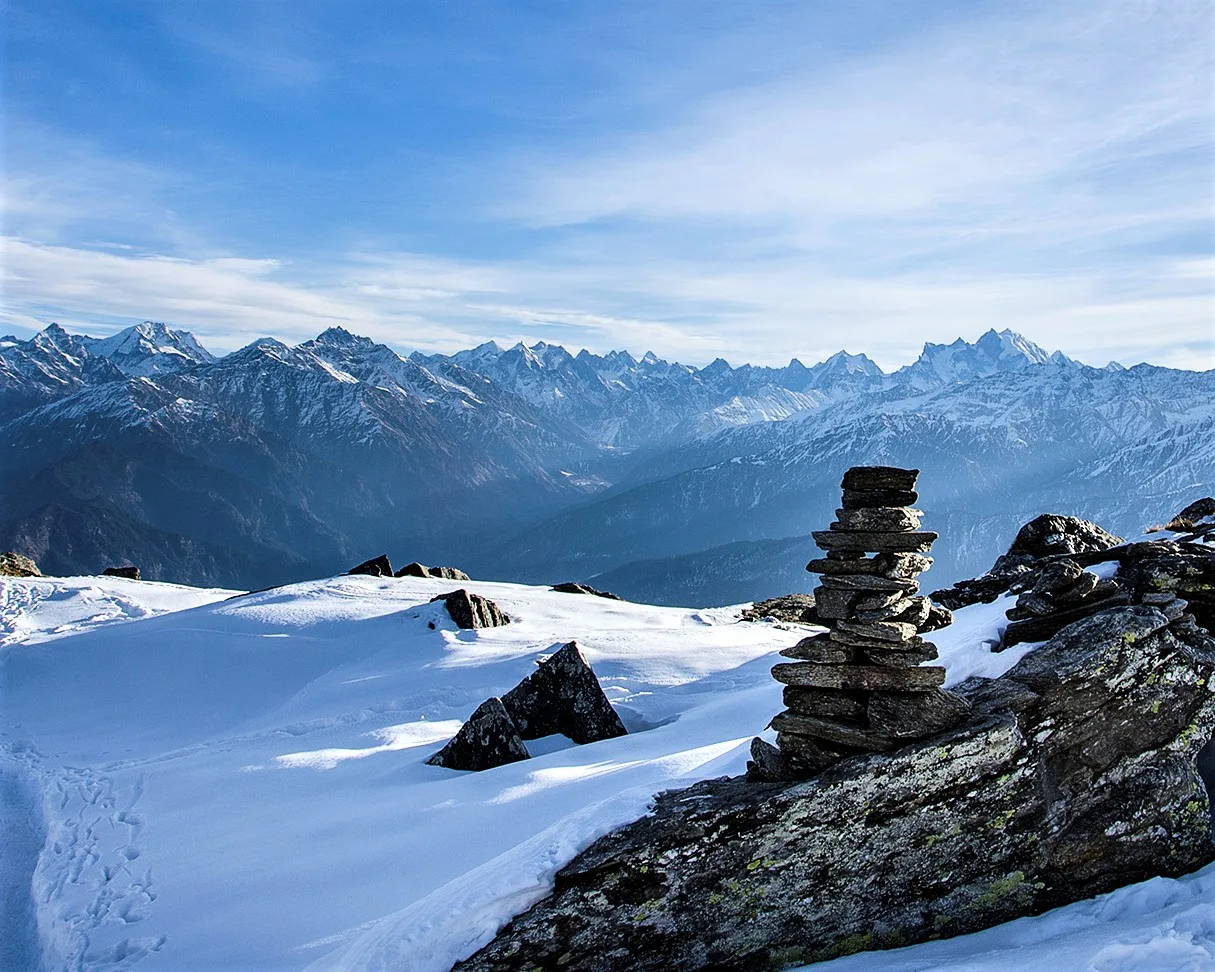
India's premier winter trek. The geography allows for safe, commercial trekking even during heavy snowfall, making December to March the ultimate peak season. Spring offers green meadows, while the monsoon brings mud and leeches without the reward of winter snow.
Season at a Glance
Editor's Notes
Kedarkantha is open almost year-round except monsoon — 9 recommended months out of 12. Each season is genuinely different: winter for snow, April–May for rhododendrons, October for the sharpest post-monsoon views. Pick based on what you want, not just availability.
October is the most underrated month — clearest skies of the year, best summit views, far fewer trekkers than December–January, and no microspikes needed. Ideal for first-timers who want views without winter complexity.
January summit nights drop to -10°C. A sleeping bag rated for -15°C is not optional — it is the difference between sleeping and surviving the night. Do not accept a bag rated above -10°C from rental shops in January.
Month by Month
What each month looks like
January
Peak SeasonConditions
Peak winter season. The trail is a heavily trafficked, stunning snow-covered route to the summit.
Crowds
high
Closed. Extreme winter conditions.
February
Peak SeasonConditions
Peak winter season continues. Excellent snow cover and clear views of the Swargarohini peaks.
Crowds
high
Closed. Extreme winter conditions.
March
Peak SeasonConditions
Spring melt begins. The lower forest sections clear up, but the summit retains excellent snow.
Crowds
high
Early season. Deep snow accumulations.
April
Peak SeasonConditions
Spring conditions. The snow is largely gone, revealing green meadows and rhododendron blooms.
Crowds
medium
Early season. Deep snow accumulations.
May
RecommendedConditions
Warm and pleasant summer trekking, though it lacks the signature winter experience.
Crowds
low
Prime pre-monsoon window. Good snow stability.
June
RecommendedConditions
Pre-monsoon season. Stable weather before the rains arrive.
Crowds
low
Prime pre-monsoon window. Good snow stability.
July
Conditions
Monsoon rains turn the forest sections into muddy, leech-infested trails.
Crowds
none
Muddy trails and zero visibility without a unique seasonal reward.
Monsoon danger. Landslides and severe rains.
August
Conditions
Peak monsoon. The trail is heavily washed out and views are completely obscured.
Crowds
none
Muddy trails and zero visibility without a unique seasonal reward.
Monsoon danger. Landslides and severe rains.
September
RecommendedConditions
The rains recede. The forests are incredibly lush and washed clean.
Crowds
low
Crystal clear skies. Best visibility of the year.
October
Peak SeasonConditions
Crisp autumn air provides excellent clarity for summit views.
Crowds
medium
Crystal clear skies. Best visibility of the year.
November
Peak SeasonConditions
Temperatures drop significantly as the route transitions back toward winter conditions.
Crowds
medium
Winter setting in. Sub-zero temperatures rapid.
December
Peak SeasonConditions
The first heavy snowfalls arrive, officially kicking off the massive commercial winter season.
Crowds
high
Closed. Extreme winter conditions.
Plan Your Trek:
Still deciding?
Compare routes side-by-side to find the perfect match for your fitness, dates, and budget.
Timing makes or breaks a trek. Send this to your group before you decide.
Step 3: Route Intelligence
You've chosen a season.
Now see exactly how the route unfolds day by day, including terrain types and daily altitude profiles.
Explore the Itinerary