
Explore
Intelligence
Difficulty & Readiness Guide
Is Kagbhushandi Tal Trek Difficult? — Fitness & Altitude Guide
Requires advanced physical lung capacity and strong quadriceps for continuous un-even terrain navigation.
The Question
Can I do this trek?
Preparation Required
Advanced
Prior Experience
Required: At least 2-3 moderate Himalayan treks (above 13,000ft).
Expert Verdict
Highly technical trek requiring physical and mental preparation.
Kagbhushandi Tal Trek
Himalayan Placement · Index 51Route Knowledge
Why is it difficult?
Exertion Index
Primary Challenge
Route Identity
High-altitude exposure route where thin air is the primary barrier across a pass-crossing route featuring loose moraine.
Primary Drivers
- Maximum sleeping altitude of 15,000 ft
- 2 consecutive high-output trekking days
View Full Route Analysis
Physiological Demand
Extreme high altitude exposure. Severe oxygen depletion requires careful acclimatization and peak cardiovascular health.
Expect long, exhausting days of sustained climbing at high intensity. Your cardiovascular system will be pushed to its absolute limit.
Notable elevation gains and losses requiring good leg strength and joint resilience.
Comfortable pacing with good recovery options.
Well-defined, stable trails with no technical maneuvers required.
Terrain Breakdown
Extremely rugged. Once you leave the tree line on Day 3, there is no defined path. You are walking over raw glacial moraine and massive boulders to reach the pass.
Summit Day Notes
Kankul Khal sits at 15,200 ft. Altitude sickness is a major risk, and the boulder hopping requires immense concentration to avoid breaking an ankle.
The Descent
The exit into the Farkia valley is punishing on the knees. Trekking poles are an absolute requirement.
Altitude Profile
High HAPE risk. Jumping from 10k to 15k ft over two days demands aggressive hydration and slow pacing.
Run AMS Risk Audit →Trail Performance Data
Max Gradient
50%
Hydration
0.4L per km recommended
Loose Surface Sections
- •The entire approach and descent of Kankul Khal pass
Personal Readiness
Am I ready?
What this route demands
People who feel comfortable on this route can usually:
Who Can Do This Trek?
Min Age
18+
Max Age
50
Western Toilets at Base
Yes
Solo Female Travelers
Requires an established, highly vetted operator. Trail is entirely desolate.
Hazard Profile
What goes wrong?
Common Mistakes on Kagbhushandi Tal Trek
Most injuries and failures on this trail can be avoided by making smarter decisions early on.
Attempting to cross Kankul Khal without a local guide. The 'pass' is visually deceptive among the jagged peaks.
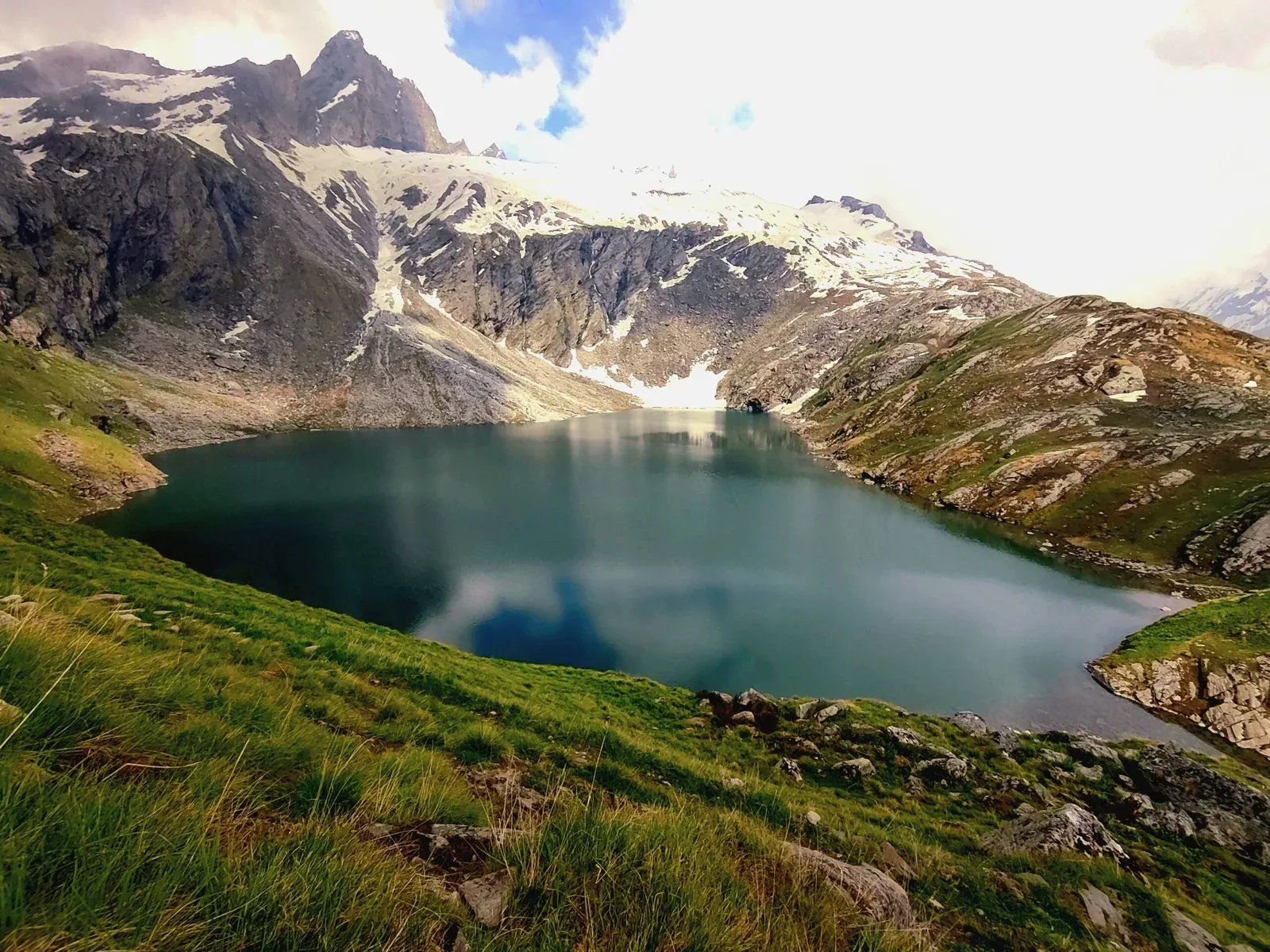
Not bringing a water filter; the lake and surrounding area feed off raw glacial runoff.
Safety & Medical Risks
Key Risks
Ankle/Leg fractures traversing the Kankul Khal boulders
Getting lost in the whiteouts on the pass
Altitude Sickness
AMS (Altitude Sickness)
High risk. The summit push to 15,200 ft is steep. Bring Diamox.
Evacuation Route
Extremely slow. If you break an ankle on the lake side, porters will have to carry you UP and over the 15,200 ft pass before they can take you down.
Solo Trekking
Absolutely prohibited. The trail is completely unmarked.
Common Trail Ailments
🏥 Nearest ICU: AIIMS Rishikesh / Max Super Specialty Hospital, Dehradun
Tactical Emergency Hub
> Extraction from the lake basin is purely manual and extremely difficult due to the boulder fields.
Auditability
How is this calculated?
Understand This Route Further
Before attempting this route:
Still deciding?
Compare routes side-by-side to find the perfect match for your fitness, dates, and budget.
Still think it's doable? Share this with your trek mate and see if they agree.
Step 2: Seasonal Safety
You know how demanding this route is.
Now find the safest and most reliable season to attempt it.
Check Best Time to Go