We are currently vetting local partners for Kagbhushandi Tal Trek to ensure the highest safety standards. Be the first to know when it's open for booking.
Are you a local operator?
Join our platform to list your verified packages for Kagbhushandi Tal Trek and reach thousands of trekkers directly.
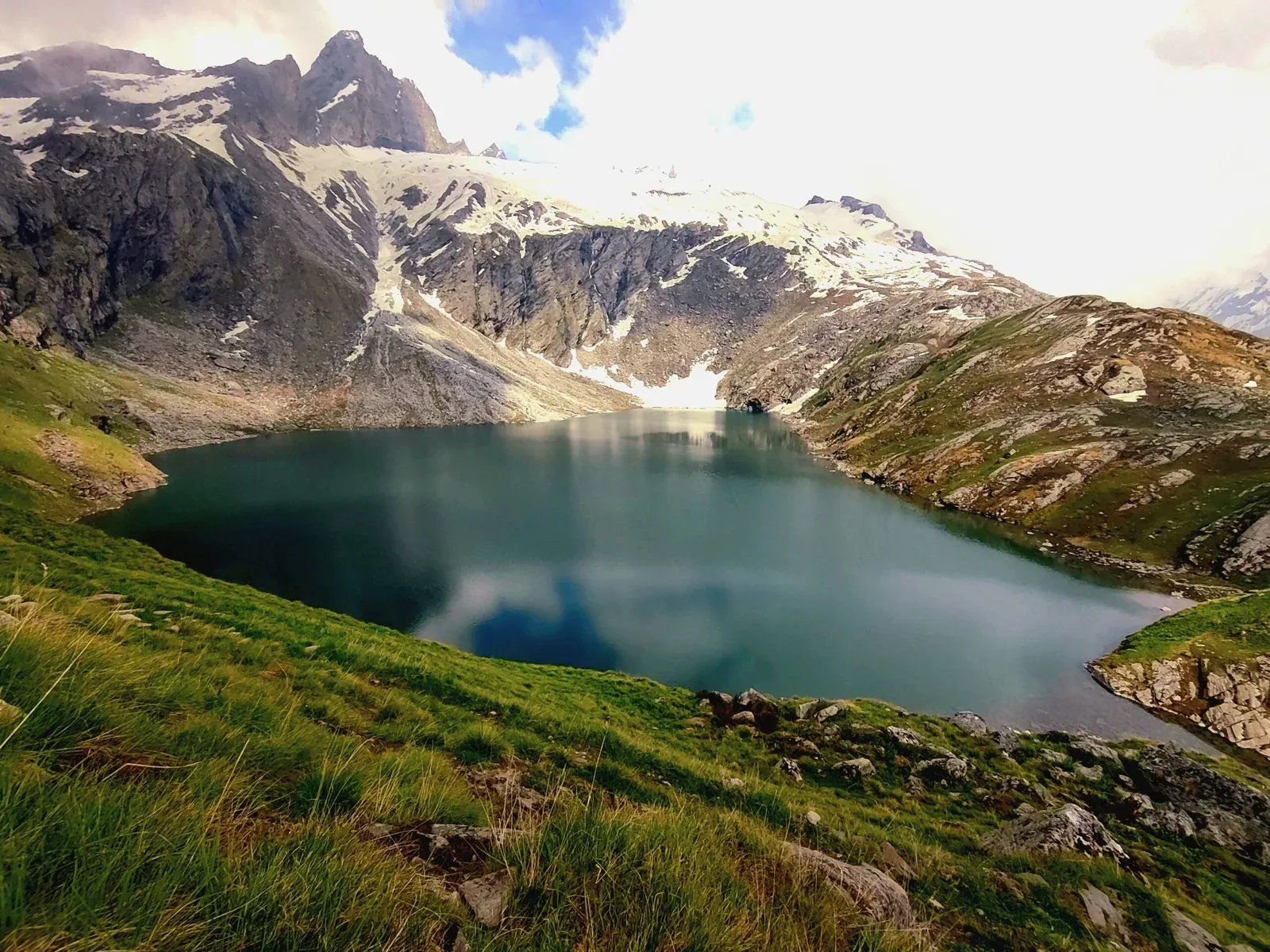
A sacred emerald-green lake at 15,500 ft, known as the "Crow-shaped Lake." Accessed from Ghangaria or Joshimath, it is an alternative to the crowded routes of the region. The trek is physically demanding and involves steep climbs, but reward trekkers with direct views of MT. Hathi Parvat and Ghoda Parvat.
Trek Highlights
Kankul Khal Descent
Looking down from 15,200 ft over the labyrinth of grey rock to see the impossibly vivid green iris of the lake sitting peacefully at the bottom.
Only for the first day. You drive/trek from Govindghat to Bhyundar village, but instead of continuing towards Ghangaria, you cut sharply East into a completely wild, unmapped valley.
Why is the lake so famous?
Aside from its vivid emerald color, mythology dictates that it is the home of Kakbhushundi (the crow sage). You will frequently see large ravens and crows congregating around the freezing waters, adding to the mystique.
Can beginners do this?
Absolutely not. This is a severe wilderness trek. There are no tea houses, no defined trails on the upper sections, and it requires crossing a 15,200 ft pass over massive boulders.
Is there mobile connectivity?
None. Your phone will lose signal permanently after leaving the main Bhyundar/Govindghat corridor.
Are there bears?
Yes. The dense oak and rhododendron forests below the tree line are prime Himalayan Black Bear territory. Do not keep food in your tents.
Can I do it alone?
It is highly dangerous to attempt solo. The path over Kankul Khal is unmarked boulder-scree. A local guide from Bhyundar or Joshimath is essentially mandatory to find the route.
What peaks will I see?
The lake sits directly beneath the massive rock wall of Hathi Parbat. You also get incredible views of Chaukhamba, Neelkanth, and Nar-Narayan peaks.
Are mules allowed?
Mules cannot cross the boulders over Kankul Khal. You must hire specialized local porters for the upper sections.
Where does the trek end?
It is typically a crossover. You start at Bhyundar, cross Kankul Khal to Kagbhushandi Tal, and descend the other side down the Farkia valley to exit near Vishnuprayag/Joshimath.
Is camping equipment provided?
There are no camps. Your expedition must carry all logistical gear, food, and fuel from the roadhead.
Is this the same trail as the Valley of Flowers?
Only for the first day. You drive/trek from Govindghat to Bhyundar village, but instead of continuing towards Ghangaria, you cut sharply East into a completely wild, unmapped valley.
Why is the lake so famous?
Aside from its vivid emerald color, mythology dictates that it is the home of Kakbhushundi (the crow sage). You will frequently see large ravens and crows congregating around the freezing waters, adding to the mystique.
Can beginners do this?
Absolutely not. This is a severe wilderness trek. There are no tea houses, no defined trails on the upper sections, and it requires crossing a 15,200 ft pass over massive boulders.
Is there mobile connectivity?
None. Your phone will lose signal permanently after leaving the main Bhyundar/Govindghat corridor.
Are there bears?
Yes. The dense oak and rhododendron forests below the tree line are prime Himalayan Black Bear territory. Do not keep food in your tents.
Can I do it alone?
It is highly dangerous to attempt solo. The path over Kankul Khal is unmarked boulder-scree. A local guide from Bhyundar or Joshimath is essentially mandatory to find the route.
What peaks will I see?
The lake sits directly beneath the massive rock wall of Hathi Parbat. You also get incredible views of Chaukhamba, Neelkanth, and Nar-Narayan peaks.
Are mules allowed?
Mules cannot cross the boulders over Kankul Khal. You must hire specialized local porters for the upper sections.
Where does the trek end?
It is typically a crossover. You start at Bhyundar, cross Kankul Khal to Kagbhushandi Tal, and descend the other side down the Farkia valley to exit near Vishnuprayag/Joshimath.
Is camping equipment provided?
There are no camps. Your expedition must carry all logistical gear, food, and fuel from the roadhead.
Are you a local operator?
Join our platform to list your verified packages for this trek.