
Explore
Intelligence
Season & Weather Guide
Best Time for Kagbhushandi Tal Trek — Month-by-Month Guide
A highly demanding, exploratory alpine lake and pass crossover trek.
Seasonal Verdict
When should you go?
A highly demanding, exploratory alpine lake and pass crossover trek. It has very narrow operational windows. The monsoon swells the side streams into raging torrents, making it incredibly dangerous, and winter completely buries the high Kankul Khal pass.
Season at a Glance
Editor's Notes
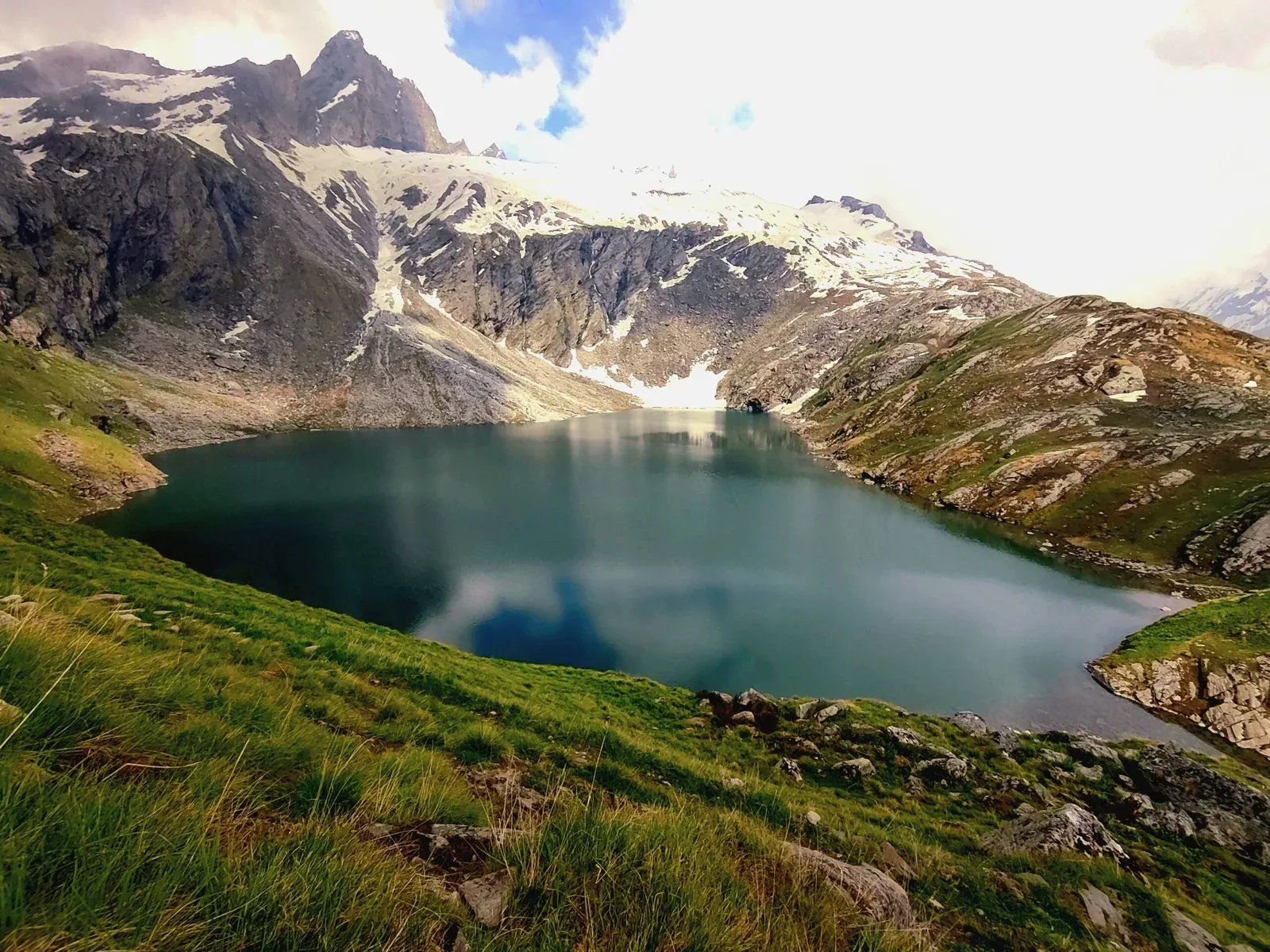
Mid-September is spectacular. The emerald color of the lake is most vivid when the post-monsoon sun hits it un-obscured by summer humidity.
Month by Month
What each month looks like
January
Conditions
Deep winter. Kankul Khal and the lake are buried under massive snowpack.
Crowds
none
Impassable winter snowpack and blocked pass.
Closed. Extreme winter conditions.
February
Conditions
Deep winter. Kankul Khal and the lake are buried under massive snowpack.
Crowds
none
Impassable winter snowpack and blocked pass.
Closed. Extreme winter conditions.
March
Conditions
Heavy residual snow covers the approach. Avalanche danger remains high.
Crowds
none
High avalanche exposure and deep residual snow.
Early season. Deep snow accumulations.
April
Conditions
Spring melt begins, making steep approaches to the pass highly unstable.
Crowds
none
Unstable snow conditions and dangerous river levels.
Early season. Deep snow accumulations.
May
RecommendedConditions
Early season window. Requires navigating significant snow over Kankul Khal.
Crowds
low
Prime pre-monsoon window. Good snow stability.
June
RecommendedConditions
Prime summer window. The pass and lake are accessible, though river crossings require care.
Crowds
low
Prime pre-monsoon window. Good snow stability.
July
Conditions
Monsoon hits. Side streams become unfordable raging torrents.
Crowds
none
Extremely dangerous river crossings and zero visibility.
Monsoon danger. Landslides and severe rains.
August
Conditions
Peak monsoon. The boulder-hopping terrain becomes incredibly slick and dangerous.
Crowds
none
Extremely dangerous river crossings and zero visibility.
Monsoon danger. Landslides and severe rains.
September
RecommendedConditions
The premier window for the route. Water levels drop and skies clear completely.
Crowds
low
Crystal clear skies. Best visibility of the year.
October
RecommendedConditions
Cold but stable autumn conditions. High risk of early snowfall on the pass.
Crowds
low
Crystal clear skies. Best visibility of the year.
November
Conditions
Winter storms arrive, rapidly closing Kankul Khal and freezing the approach.
Crowds
none
Severe cold and blocked pass.
Winter setting in. Sub-zero temperatures rapid.
December
Conditions
The route is fully closed and abandoned for the winter.
Crowds
none
Impassable winter snowpack and blocked pass.
Closed. Extreme winter conditions.
Plan Your Trek:
Still deciding?
Compare routes side-by-side to find the perfect match for your fitness, dates, and budget.
Timing makes or breaks a trek. Send this to your group before you decide.
Step 3: Route Intelligence
You've chosen a season.
Now see exactly how the route unfolds day by day, including terrain types and daily altitude profiles.
Explore the Itinerary