
Difficulty & Readiness Guide
Is Panpatia Col Expedition Difficult? — Fitness & Altitude Guide
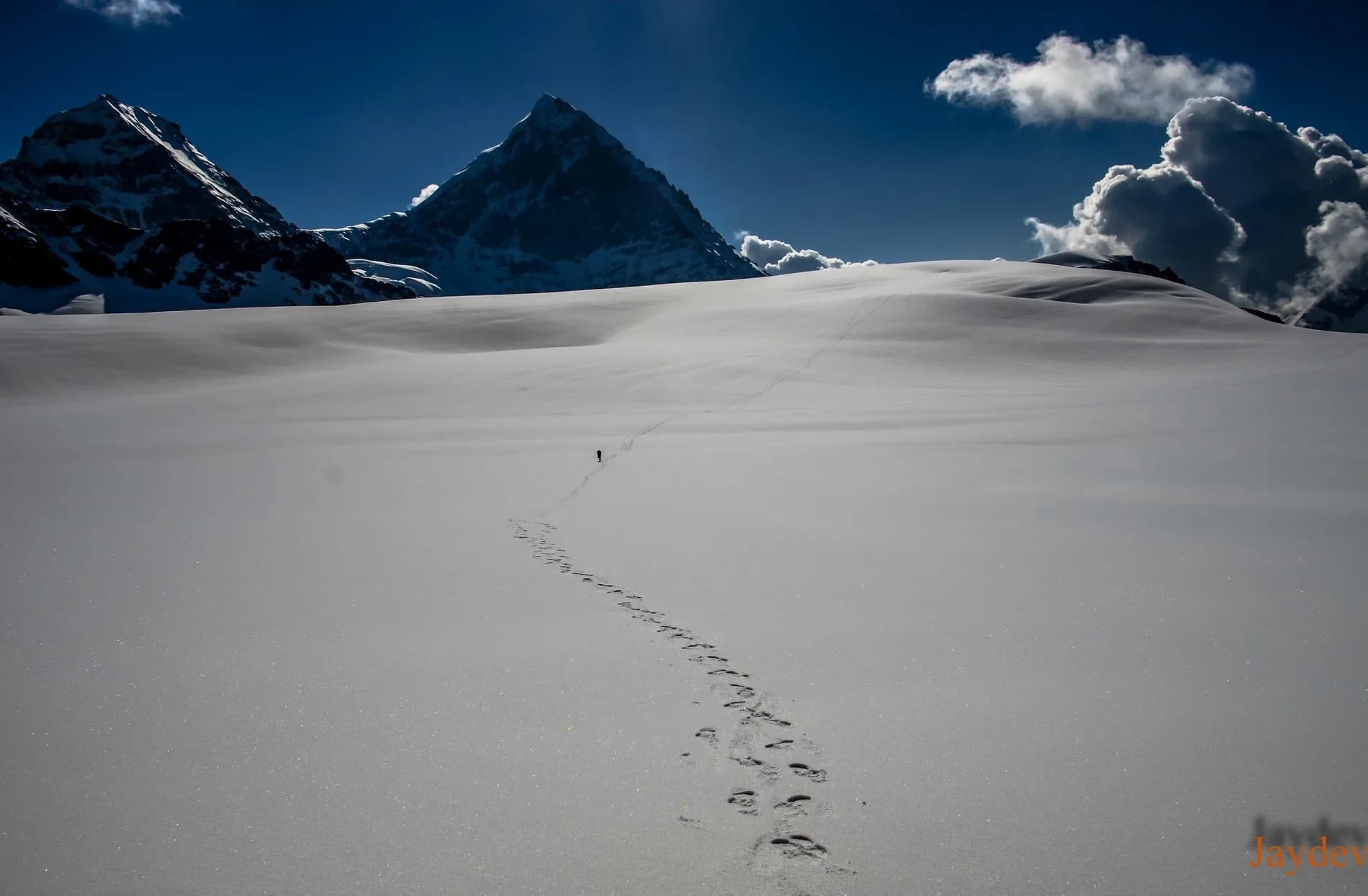
Extremely difficult. The endless Panpatia snowfield requires meticulous navigation to avoid wandering into bottomless crevasses.
Preparation Required
Advanced
Prior Experience
Required: At least 2-3 moderate Himalayan treks (above 13,000ft).
Score Engine v3
Why This Score?
Stamina
49/100
Based on average nightly altitude gain, highest campsite, and daily distance. Reflects how hard the average day feels.
Spike Day
46/100
Based on max altitude reached, summit day elevation gain, and summit day distance. Reflects the hardest single day.
Why Panpatia Col Expedition Feels Difficult
A demanding expedition with extreme joint & muscle impact, cumulative fatigue, and altitude exposure. This route will push every dimension of your physical and mental endurance to the limit.
Physiological Demand
Steep, punishing ascents and descents that will heavily tax your knees, ankles, and overall joint stability.
Deep wilderness isolation and cumulative fatigue. The mental challenge of enduring days on end in harsh conditions is extreme.
Extreme high altitude exposure. Severe oxygen depletion requires careful acclimatization and peak cardiovascular health.
Expect long, exhausting days of sustained climbing at high intensity. Your cardiovascular system will be pushed to its absolute limit.
Rough, uneven trails with occasional scrambling or minor exposure.
Crux Section
Day 8 — Oxygen Peak
Highest exposure point at 17,257ft.
High-Altitude Crossing — Grading Context
At 73/100 on the ExpeditionDifficulty Scale, this is one of India's most demanding high-altitude crossings. Due to the remoteness, sustained altitude, and total daily effort, this crossing demands elite fitness and prior high-altitude experience.
Panpatia Col Expedition/ 73
The Glacial Reality
Caution
The Panpatia Col is not a high-altitude pass for experienced hikers — it is a glacial crossing for trained mountaineers. The distinction matters: any team attempting this without genuine glacier travel training and rope team experience is at serious risk.
Terrain Breakdown
Moraine, glacier, crevasse field, fixed rope, col wall. Full expedition terrain.
Summit Day Notes
40-50 degree glacier sections on the col approach. Fixed rope mandatory.
The Descent
Long Badrinath-side descent — glacier to moraine to loose rock then established trail.
Preparation
Mountaineering-expedition fitness. Prior 5000m+ glacial experience essential.
Altitude Profile
18,400 ft col — severe hypoxia. Full acclimatization protocol mandatory.
Run AMS Risk Audit →Route Stress Forecast
Highest exposure point at 17,257ft.
Deep 4,900ft descent will test joint stability.
First major altitude jump occurs on Day 4.
*Forecast derived from route geometry and altitude profile. External variables (weather/group) remain the final authority.
Trail Performance Data
Max Gradient
60%
Hydration
0.7L per km recommended
Loose Surface Sections
- •Moraine approach
- •Badrinath side descent loose rock
Common Mistakes on Panpatia Col Expedition
Most injuries and failures on this trail can be avoided by making smarter decisions early on.
Attempting without prior 5000m+ glacial crossing experience
Underestimating the 3-night Kedarnath acclimatization — essential for 18,000 ft push
Safety & Medical Risks
Key Risks
HACE/HAPE at 17,000+ ft
Crevasse fall on glacier approach
Avalanche on steep col wall
Complete isolation on failure
AMS (Altitude Sickness)
3 nights at Kedarnath (11,755 ft) is non-negotiable minimum acclimatization.
Evacuation Route
Helicopter feasible from Kedarnath temple area. From high camp: retrace to base camp (1 day) then helicopter from Kedarnath. Badrinath side: descent to Mana village.
Solo Trekking
Extremely dangerous due to hidden crevasses on the snowfield.
Common Trail Ailments
🏥 Nearest ICU: AIIMS Rishikesh / Max Super Specialty Hospital, Dehradun
Tactical Emergency Hub
> Helicopter from Kedarnath (on approach). Badrinath helipad (on exit). Both accessible within 1-2 days of the col.
Who Can Do This Trip?
Min Age
25+
Max Age
50
Western Toilets at Base
Yes
Solo Female Travelers
Kedarnath is a crowded pilgrimage site — busy but safe. Glacier zone is isolated and technical.
Expert Verdict
Highly technical peak requiring physical and mental preparation.
Ready to book? Compare verified operators for Panpatia Col Expedition — transparent pricing, no paid rankings.
Want to know which operators carry certified guides and medical support? See operator safety ratings for Panpatia Col Expedition
Also on this trek
Still deciding?
Compare routes side-by-side to find the perfect match for your fitness, dates, and budget.
Still think it's doable? Share this with your trek mate and see if they agree.
Fit for the challenge?
For challenging treks, safety is paramount. Find operators prioritizing medical support and guide expertise.
Compare operator safety scores