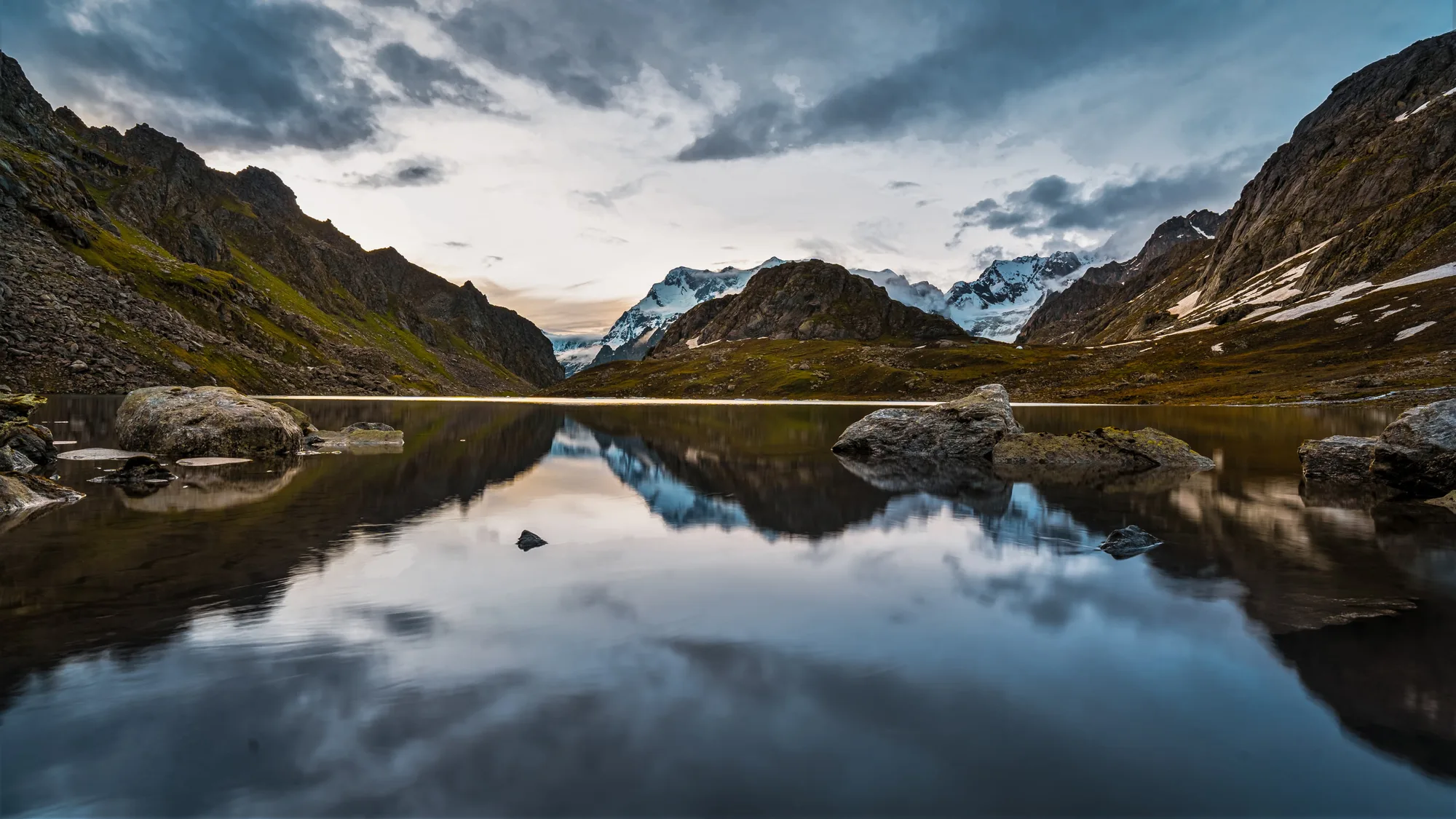
The Nandikund Trek leads to a remote high-altitude glacial lake in the Garhwal Himalayas, combining alpine meadows, mountain ridges, and sacred Himalayan landscapes. The route offers a rewarding wilderness experience for trekkers seeking solitude beyond Uttarakhand's popular trails.
Trek Highlights
Nandikund Sunrise Mirror
On a calm September morning, the perfectly still lake becomes a mirror reflecting the unnamed 6,000m peak above — one of the rarest photography opportunities in the Indian Himalayas.
What makes Nandikund different from other Himalayan lakes?
Its mythological significance (Shiva's sword), near-zero foot traffic, extraordinary high-altitude setting at 14,268 ft, and the presence of permanent snowfields around the lake even in September make it uniquely raw compared to commercialized lakes like Chandratal or Rupin Pass.
Is there a connection between Nandikund and Rudranath?
Yes. Both are in the Ransi Valley. Experienced trekkers sometimes combine the two in a 10-12 day itinerary visiting both the Rudranath temple and the Nandikund lake. This requires an expert operator.
What is the base village?
Ransi Village, located 3 km from the main highway on a side road off the Gopeshwar-Ukhimath route. It's a traditional Garhwali hamlet with very basic homestay options.
Are there any camps or teahouses beyond Ransi?
None. This is a fully self-sufficient camping trek. All food, fuel, and equipment must come from Ransi or be arranged by the operator in advance.
What is the lake's legend?
Local Chamoli legend holds that when Lord Shiva was battling demons, his divine sword (nandi-khand) fell from the heavens and plunged into this lake. The sword is said to still rest at the lake's bottom, and the lake's waters are considered sacred.
Can I swim in the lake?
The water hovers near freezing temperatures even in summer. While locals may ritually enter the water during religious occasions, swimming is strongly discouraged for safety reasons.
What peaks are visible from Nandikund?
From the lake-side, the views include the massive Mandani Group of peaks, distant Nanda Devi East, Chaukhamba, and an unnamed 6,000m+ peak that forms the dramatic headwall above the lake's southern shore.
How strict is the guide requirement here?
Absolute. The trail from Ransi is completely unmarked after the first shepherd settlement. Fog is common above 11,000 ft. Multiple trekkers have been reported missing on the upper approach without a guide.
What is the best time for photography?
September mornings offer mirror-lake reflections with absolutely zero wind. The side-lighting at 6 AM paints the unnamed peaks above the lake in vivid orange — an extraordinary photography opportunity.
How does this compare to the more popular Satopanth Lake?
Satopanth is more accessible (drive starts from Mana), gets more traffic, and its mythology is better known. Nandikund is deeper wilderness, higher relative difficulty, and offers genuine archaeological solitude that Satopanth has now lost.
What is Nandikund and why is it sacred?
Nandikund is a high-altitude emerald green lake situated at 15,700 ft. Mythology says it is the place where Lord Shiva's holy bull (Nandi) drank water. A small temple dedicated to Nandi stands near the lake.
How difficult is the crossover via Gimi Pass on this trek?
Gimi Pass (16,000 ft) is an exceptionally steep and hazardous pass filled with loose moraine debris, hard blue ice, and vertical rock chimneys. Ropes are mandatory for the crossing.
Can we expect mobile signal at Nandikund Lake?
No. You enter a zone of complete wilderness after Madhmaheshwar. There is absolutely no network coverage until you descend to the roadhead at Ransi.
What is the unique phenomenon of the ancient swords at Nandikund?
At the temple near Nandikund, ancient metal swords are anchored in the rock. Local legend says they belonged to the Pandavas of the Mahabharata epoch.
What are the logistical requirements for the Nandikund trek?
This is a fully self-sustained expedition. Trekkers must carry all tents, high-altitude food rations, kerosene fuel, and emergency medical kits.
What makes Nandikund different from other Himalayan lakes?
Its mythological significance (Shiva's sword), near-zero foot traffic, extraordinary high-altitude setting at 14,268 ft, and the presence of permanent snowfields around the lake even in September make it uniquely raw compared to commercialized lakes like Chandratal or Rupin Pass.
Is there a connection between Nandikund and Rudranath?
Yes. Both are in the Ransi Valley. Experienced trekkers sometimes combine the two in a 10-12 day itinerary visiting both the Rudranath temple and the Nandikund lake. This requires an expert operator.
What is the base village?
Ransi Village, located 3 km from the main highway on a side road off the Gopeshwar-Ukhimath route. It's a traditional Garhwali hamlet with very basic homestay options.
Are there any camps or teahouses beyond Ransi?
None. This is a fully self-sufficient camping trek. All food, fuel, and equipment must come from Ransi or be arranged by the operator in advance.
What is the lake's legend?
Local Chamoli legend holds that when Lord Shiva was battling demons, his divine sword (nandi-khand) fell from the heavens and plunged into this lake. The sword is said to still rest at the lake's bottom, and the lake's waters are considered sacred.
Can I swim in the lake?
The water hovers near freezing temperatures even in summer. While locals may ritually enter the water during religious occasions, swimming is strongly discouraged for safety reasons.
What peaks are visible from Nandikund?
From the lake-side, the views include the massive Mandani Group of peaks, distant Nanda Devi East, Chaukhamba, and an unnamed 6,000m+ peak that forms the dramatic headwall above the lake's southern shore.
How strict is the guide requirement here?
Absolute. The trail from Ransi is completely unmarked after the first shepherd settlement. Fog is common above 11,000 ft. Multiple trekkers have been reported missing on the upper approach without a guide.
What is the best time for photography?
September mornings offer mirror-lake reflections with absolutely zero wind. The side-lighting at 6 AM paints the unnamed peaks above the lake in vivid orange — an extraordinary photography opportunity.
How does this compare to the more popular Satopanth Lake?
Satopanth is more accessible (drive starts from Mana), gets more traffic, and its mythology is better known. Nandikund is deeper wilderness, higher relative difficulty, and offers genuine archaeological solitude that Satopanth has now lost.
What is Nandikund and why is it sacred?
Nandikund is a high-altitude emerald green lake situated at 15,700 ft. Mythology says it is the place where Lord Shiva's holy bull (Nandi) drank water. A small temple dedicated to Nandi stands near the lake.
How difficult is the crossover via Gimi Pass on this trek?
Gimi Pass (16,000 ft) is an exceptionally steep and hazardous pass filled with loose moraine debris, hard blue ice, and vertical rock chimneys. Ropes are mandatory for the crossing.
Can we expect mobile signal at Nandikund Lake?
No. You enter a zone of complete wilderness after Madhmaheshwar. There is absolutely no network coverage until you descend to the roadhead at Ransi.
What is the unique phenomenon of the ancient swords at Nandikund?
At the temple near Nandikund, ancient metal swords are anchored in the rock. Local legend says they belonged to the Pandavas of the Mahabharata epoch.
What are the logistical requirements for the Nandikund trek?
This is a fully self-sustained expedition. Trekkers must carry all tents, high-altitude food rations, kerosene fuel, and emergency medical kits.
Are you a local operator?
Join our platform to list your verified packages for this trek.