
Explore
Intelligence
Essential Planning Guide
Namik Glacier Trek — Complete Guide (2026)
Vibe & Scenery
The Experience
Introduction
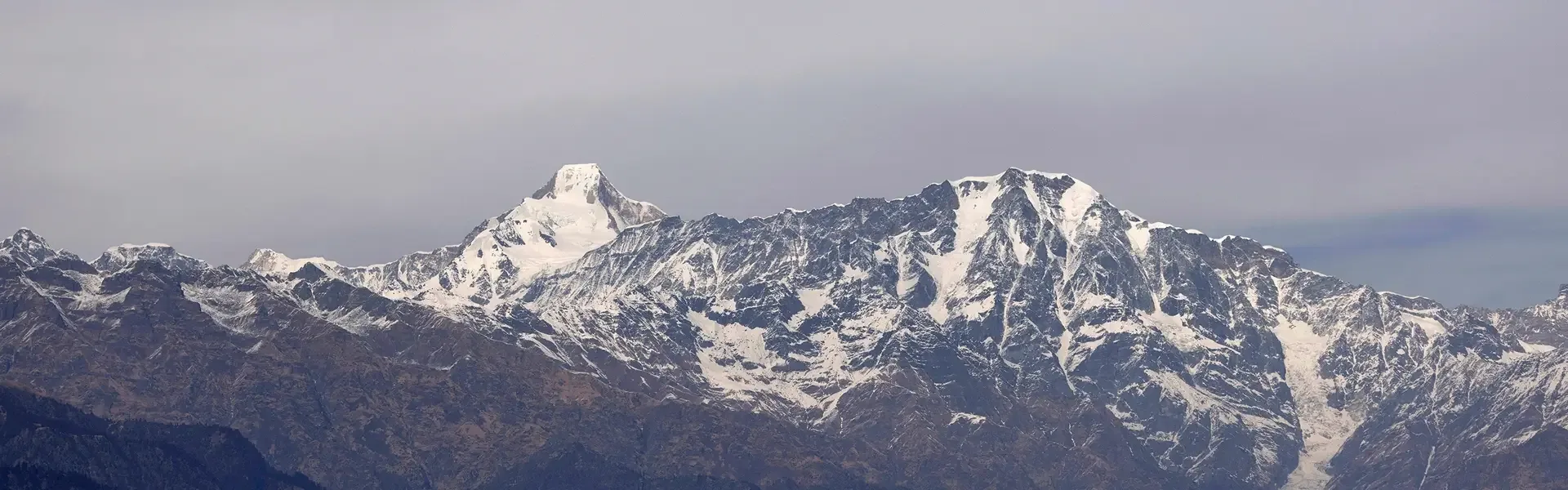
The Namik Glacier Trek leads into one of the quieter glacial valleys of the Kumaon Himalayas. Beginning from villages such as Gogina, the trail passes through dense oak and rhododendron forests, traditional Himalayan settlements, and broad alpine meadows before reaching the glacier beneath Nanda Kot and neighboring peaks.
Historically, the valley formed part of regional trade and pastoral routes linking remote mountain communities. Today, its limited footfall preserves a peaceful atmosphere that contrasts with Kumaon's more established trekking destinations.
Suitable for trekkers seeking glacial landscapes without heavy commercial traffic, Namik Glacier combines natural beauty, local culture, and moderate Himalayan trekking.
Quick Facts
Duration
Max Altitude
Difficulty
Best Time
Trek Distance
Trail Atmosphere
Stargazing
Class 1 Dark Sky
Scent Profile
Silence Level
~15 dB
Vertigo Factor
2 / 10
Iconic Spots
Nanda Kund
Environment
Nature & Culture
Flora & Fauna
Flora
Fauna
The salt springs near the glacier were vital to the village economy before modern salt imports destroyed the local trade routes.
— Local folklore
Spiritual & Cultural Significance
Deep veneration of Goddess Nanda by local villagers.
🕐 Shrine Timings: N/A
Temple Protocols
Technical Details
Challenge & Preparation
Primarily a cumulative fatigue and cardio demand challenge
A capable trekker's route that balances cumulative fatigue and cardio demand.
Personal Readiness
Am I ready?
Planning
Logistics & Trail Intel
Getting There
Route to Base
Train to Kathgodam, shared jeep to Bageshwar, followed by another jeep to Kapkot/Gogina
Base Village
Gogina / Namik
7,500 ft
Last ATM
Bageshwar / Kapkot
Nearest Medical Facility
Bageshwar District Hospital
Mobile Signal
Total dark zone past Gogina.
Water Sources
Abundant streams near the tree line. The high ridges need water carried.
Charging
Sometimes solar in Namik village.
For Drivers
Road Condition
Kathgodam to Bageshwar is good. Bageshwar to Gogina features rough patches.
Bageshwar / Kapkot
Trail Culinary & Diet
Don't miss the N/A
Buy specialized diet items at Bageshwar
The Content & Remote Hub
Top Vlog Spots
Video Calls
none
Est. 0 Mbps
UPI Reliability
1/10
Permits and Regulations
Standard forest department permissions are required from Bageshwar/Kapkot. Unlike Milam, it does not require the heavier Inner Line Permit (ILP) because it does not push directly against the Tibetan border axis, making it significantly easier to organize.
Learn more about how we vet operators and ensure transparency on our why MountRoutes page.
Packing List
High-Alpine Clothing
- Heavy down jacket (High camps like Sudamkhan drop below zero easily)
- Fleece mid-layers (Required for the damp, cold forest sections)
- Windproof/Waterproof Hardshell Jacket
Footwear
- Waterproof mid-ankle trekking boots
- Gaiters (For crossing residual snow around Nanda Kund)
- 3 pairs of merino wool socks
Trekking Essentials
- Trekking poles (For the steep descent into Gogina)
- Water purification tablets
- High-lumen Headlamp
Deep Dives
Explore Further
Editor's Notes
The wind at Sudamkhan will tear poorly pitched tents apart. Ensure your operator uses high-quality geodesic dome tents and cross-pegs them securely.
Explore In Detail
Day by Day Itinerary
9-day route reaching 11,800ft. Covers 63km of varied terrain.
→ See full itinerary with altitude profileDifficulty & Fitness
Rated moderate. Very pleasant compared to other Kumaon routes. Half the trek is under a shaded forest canopy, and the upper half traces wide, gently rolling alpine ridges. No severe rock-scrambling.
→ See difficulty breakdown and fitness guideCost & Pricing
Packages range from ₹12,000 to ₹16,000. Inclusions and hidden costs vary by operator tier.
→ See full cost breakdownFrequently Asked Questions
Is Namik Glacier better than Pindari?
It depends on what you value. Pindari is grander and has KMVN rest houses, making it highly commercial. Namik is entirely wild, heavily forested, and guarantees absolute solitude. It is 'better' if you seek isolation.
Can beginners do the Namik Glacier trek?
Yes. It is a strictly moderate trek. The maximum altitude is around 11,800 ft, and the gradients are surprisingly well-managed. Fit beginners will thrive here.
What is the peak altitude?
The highest point on the main trail is roughly 11,800 feet (Sudamkhan Pass / Nanda Kund area).
Are there KMVN rest houses available?
No. Unlike Pindari, this route has virtually zero government trekking infrastructure. You must rely entirely on tents and local homestays in Gogina.
Where does the trek start?
Historically it started from Munsiyari / Birthi Fall. Today, most itineraries start from Gogina / Senar Gadho (approached from Bageshwar).
Is mobile network available?
Dead zone. After leaving Kapkot/Gogina, expect zero mobile network for the remainder of the trek.
Which peaks will I see clearly?
Nanda Kot (6,861m) dominates the sky entirely. You also see the twin peaks of Nanda Bhanar and glimpses of the Panchachuli range on clear days.
Do I need a local guide?
Yes. The lack of commercial traffic means the trails through the high bugyals can become faint or overgrown. A local guide from Gogina is essential.
Is it safe from landslides?
Much safer than Milam or Sundardhunga. The valleys are wider and lack the sheer, claustrophobic rock gorges that plague the Gori Ganga routes.
What is 'Namik'?
Namik translates locally to 'a place where saline water springs exist.' The village of Namik itself is historically famous for producing salt.
What is the unique highlight of the Namik Glacier trail?
Unlike commercial glacier trails, Namik remains raw and untouched, passing through ancient village communities like Gogina and Namik, offering close-up views of Nanda Kot.
Do we camp on the glacier ice at Namik?
No, the campsite is established at the scenic meadows of Sudamkhan or Thaltop, safe from glacial shifts and cold drafts blowing off the snout.
Are there high-altitude river crossings on this trek?
Yes, crossing the Ramganga river branches over temporary log bridges is common. Exercise extreme caution during the afternoon water volume increase.
What is the local deity associated with Namik Glacier?
The glacier and surrounding mountains are believed to be the home of local mountain deities. Trekkers are requested to respect local shrines and avoid littering.
What kind of warm gear is needed for Namik?
Heavy fleece layers, a windproof outer jacket, and a down sleeping bag rated for -10°C are required, as high meadows experience strong, freezing winds.
Still deciding?
Compare routes side-by-side to find the perfect match for your fitness, dates, and budget.
Everything you need to know, in one place. Someone else in your group needs to see this.
Planning Namik Glacier Trek?
Get route conditions, operator updates, and season windows before booking.
Don't miss out! Follow us for route updates@mountroutes|LinkedIn
No spam. Only useful trek updates.
Ready to walk this route?
You’ve read the guide, now find the perfect local team to take you there. Compare our verified list of operators.
Compare verified operators