
Explore
Intelligence
Season & Weather Guide
Best Time for Kanakata Pass Trek — Month-by-Month Guide
Strictly limited to the pre-monsoon (May-June) and post-monsoon (September-October) windows. The valley is lethal during the monsoon.
Seasonal Verdict
When should you go?
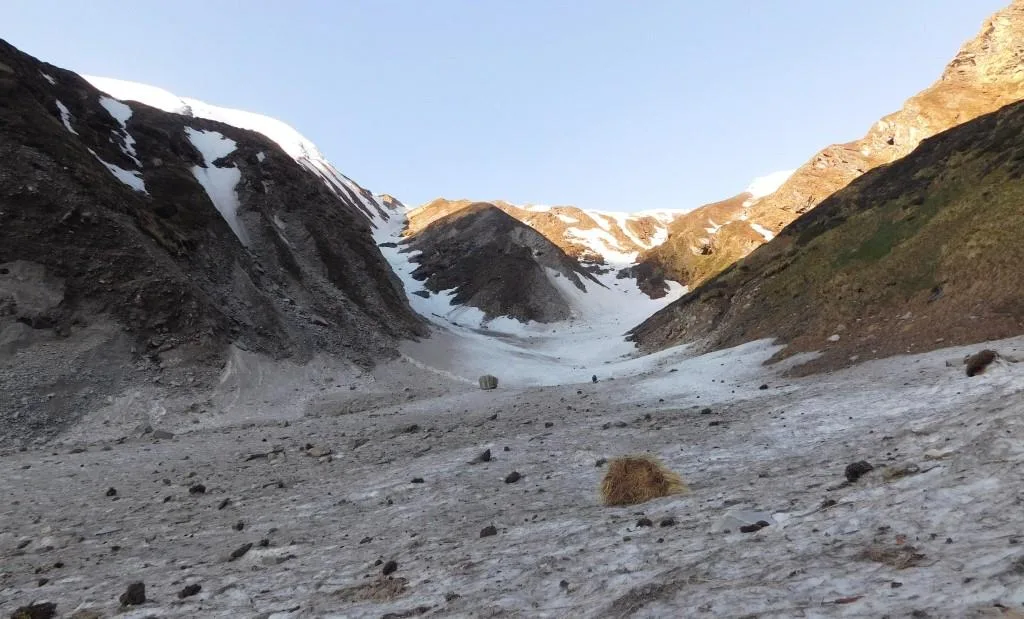
The trek demands a narrow weather window to safely cross the steep slopes below the pass. Pre-monsoon (mid-May to June) offers snow near the pass, while post-monsoon (mid-September to October) offers the sharpest mountain views and stable rock.
Season at a Glance
Editor's Notes
Month by Month
What each month looks like
January
Conditions
Extreme winter. Trails above Jatoli are buried under deep snow and impassable.
Crowds
none
Lethal cold, deep snow, high avalanche risk.
Trek inaccessible.
February
Conditions
Peak winter conditions. Region is highly avalanche-prone.
Crowds
none
Lethal avalanche risk.
Trek inaccessible.
March
Conditions
Snow begins to melt at lower elevations, but the pass is still heavily snowed in.
Crowds
none
Pass impassable.
Trek inaccessible.
April
Conditions
Trek to Jatoli/Kathalia is possible, but Kanakata Pass remains extremely difficult due to soft, unstable spring snow.
Crowds
none
Unstable snowpack.
Pass is usually closed due to deep spring snow.
May
RecommendedConditions
Late May opens the window. Expect residual snow above Devi Kund. Microspikes are highly recommended.
Crowds
low
Excellent time. Microspikes needed for residual snow near the pass.
June
RecommendedConditions
The prime pre-monsoon window. Clear trails, blooming rhododendrons lower down, but afternoon thunderstorms become frequent.
Crowds
low
Prime trekking window before the monsoon hits.
July
Conditions
Monsoon hits Kumaon hard. Trails wash out, rivers swell, and leeches are rampant.
Crowds
none
Landslides, floods, poor visibility.
Avoid. Severe landslide risk in the valley.
August
Conditions
Peak monsoon. The Sunderdhunga valley becomes highly treacherous with falling rocks.
Crowds
none
Extreme landslide danger.
Avoid. Trails washed out.
September
RecommendedConditions
Mid-September post-monsoon clearing provides flawless skies, washed-clean forests, and mostly snow-free access to the pass.
Crowds
low
Best views, lush valleys, and clear skies.
October
RecommendedConditions
Crystal clear views of Maiktoli and Panwali Dwar, but temperatures drop sharply below freezing at night.
Crowds
low
Extremely cold but the sharpest mountain views of the year.
November
Conditions
First two weeks are possible but extremely cold. Late November brings the first winter storms, blocking the pass.
Crowds
none
Extreme cold, unpredictable winter storms.
Too cold for standard trekking. Pass may close early.
December
Conditions
Deep winter. Region evacuated.
Crowds
none
Extreme winter.
Trek inaccessible.
Plan Your Trek:
Still deciding?
Compare routes side-by-side to find the perfect match for your fitness, dates, and budget.
Timing makes or breaks a trek. Send this to your group before you decide.
Step 3: Route Intelligence
You've chosen a season.
Now see exactly how the route unfolds day by day, including terrain types and daily altitude profiles.
Explore the Itinerary