
Explore
Intelligence
Season & Weather Guide
Best Time for Valley of Flowers Trek — Month-by-Month Guide
A world-renowned UNESCO World Heritage site where the monsoon is the primary attraction.
Seasonal Verdict
When should you go?
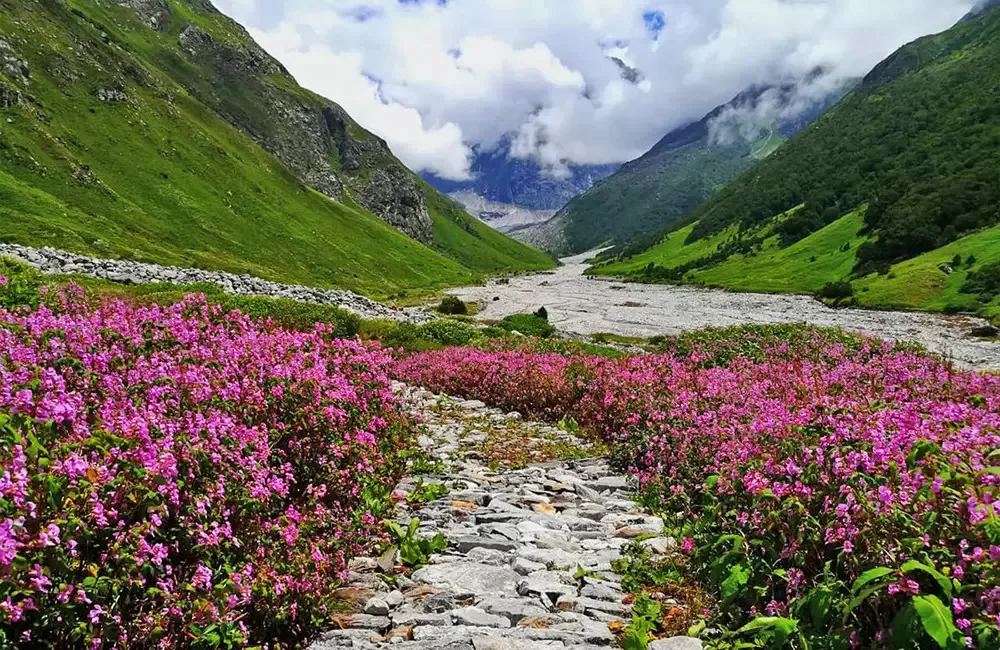
A world-renowned UNESCO World Heritage site where the monsoon is the primary attraction. The valley officially opens in June and closes in October. July and August are the absolute peak months for the legendary floral bloom.
Season at a Glance
Editor's Notes
September is the best overall month — flowers still present, skies clearer than July–August, mountain views sharper, and significantly fewer crowds.
The park opens June 1 every year without exception and closes mid-October. There is no trekking window outside this range — do not book without confirming your dates fall within it.
Peak bloom is mid-July to mid-August. If wildflower photography is your primary goal, plan for this window specifically — not just any month in the open season.
Month by Month
What each month looks like
January
Conditions
Deep winter. The National Park is officially closed.
Crowds
none
Administrative closure and deep snow.
Closed. Extreme winter conditions.
February
Conditions
Deep winter. The National Park is officially closed.
Crowds
none
Administrative closure and deep snow.
Closed. Extreme winter conditions.
March
Conditions
The National Park remains officially closed.
Crowds
none
Administrative closure.
Early season. Deep snow accumulations.
April
Conditions
The National Park remains officially closed for snow clearing.
Crowds
none
Administrative closure.
Early season. Deep snow accumulations.
May
Conditions
The National Park prepares for its official June opening.
Crowds
none
Administrative closure.
Prime pre-monsoon window. Good snow stability.
June
Peak SeasonConditions
The Park opens. Early blooms appear and the weather is stable before the monsoon.
Crowds
medium
Prime pre-monsoon window. Good snow stability.
July
Peak SeasonConditions
Peak monsoon. The heavy rains trigger the massive bloom of the valley.
Crowds
high
Monsoon danger. Landslides and severe rains.
August
Peak SeasonConditions
The absolute premier month. The valley floor is completely carpeted in flowers.
Crowds
high
Monsoon danger. Landslides and severe rains.
September
Peak SeasonConditions
The rains withdraw. Flowers begin to seed, but the air is incredibly clear.
Crowds
medium
Crystal clear skies. Best visibility of the year.
October
RecommendedConditions
Crisp autumn air provides beautiful golden landscapes before the season closes.
Crowds
low
Crystal clear skies. Best visibility of the year.
November
Conditions
Winter starts. The National Park is officially closed.
Crowds
none
Administrative closure.
Winter setting in. Sub-zero temperatures rapid.
December
Conditions
The region returns to complete winter isolation.
Crowds
none
Administrative closure and deep snow.
Closed. Extreme winter conditions.
Plan Your Trek:
Still deciding?
Compare routes side-by-side to find the perfect match for your fitness, dates, and budget.
Timing makes or breaks a trek. Send this to your group before you decide.
Step 3: Route Intelligence
You've chosen a season.
Now see exactly how the route unfolds day by day, including terrain types and daily altitude profiles.
Explore the Itinerary