
Explore
Intelligence
Difficulty & Readiness Guide
Is Panch Kedar Trek Difficult? — Fitness & Altitude Guide
An extreme endurance marathon. It is technically simple but physically destroying, requiring you to hike 100km and climb/descend thousands of feet over 14 days.
The Question
Can I do this trek?
Preparation Required
Advanced
Prior Experience
Required: At least 2-3 moderate Himalayan treks (above 13,000ft).
Expert Verdict
Highly technical trek requiring physical and mental preparation.
Panch Kedar Trek
Himalayan Placement · Index 64Route Knowledge
Why is it difficult?
Exertion Index
Primary Challenge
Route Identity
High-impact route characterised by steep gradients and heavy joint loading across a trek featuring loose moraine.
Primary Drivers
- Maximum sleeping altitude of 11,800 ft
- Grueling summit push with 1,600 ft of elevation gain
- 9 consecutive high-output trekking days
- Peak daily distance of 20 km
View Full Route Analysis
Physiological Demand
Steep, punishing ascents and descents that will heavily tax your knees, ankles, and overall joint stability.
Expect long, exhausting days of sustained climbing at high intensity. Your cardiovascular system will be pushed to its absolute limit.
Deep wilderness isolation and cumulative fatigue. The mental challenge of enduring days on end in harsh conditions is extreme.
Below the major effects of altitude sickness. Air remains relatively dense.
Well-defined, stable trails with no technical maneuvers required.
Terrain Breakdown
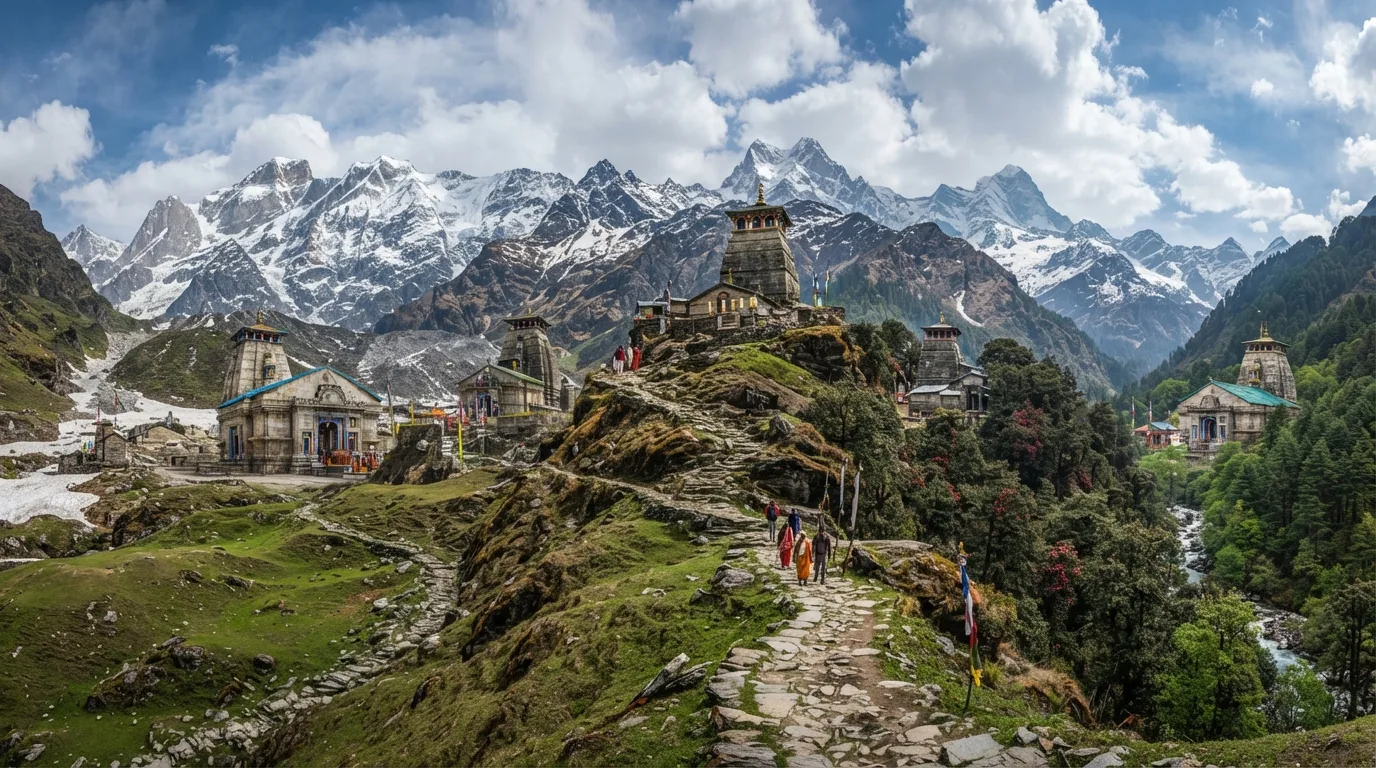
The trail oscillates wildly between paved, heavily trafficked pilgrim paths (Kedarnath, Tungnath) and raw, punishing alpine trails (Rudranath, Madhmaheshwar). Expect dense mud in forests and exposed rock on ridges.
Summit Day Notes
There are 5 'summit' days. Rudranath is the hardest, involving a brutal 6000 ft ascent followed by a ridge walk at 13,100 ft. Kedarnath is hard purely due to the sheer volume of foot traffic and mules.
The Descent
The descents are the real killer on this circuit. Dropping 5000+ ft in a single day at Kedarnath, Madhmaheshwar, and Rudranath causes severe IT band and patellar tendon strain.
Altitude Profile
You are constantly ascending to 11,000+ ft and descending back to 6,000 ft. This yo-yo profile aids acclimatization but exhausts the body.
Run AMS Risk Audit →Trail Performance Data
Max Gradient
45%
Hydration
0.5L per km recommended
Loose Surface Sections
- •Descent from Pitradhar to Rudranath
- •Short cuts on the Kedarnath trail
Personal Readiness
Am I ready?
What this route demands
People who feel comfortable on this route can usually:
Who Can Do This Trek?
Min Age
14+
Max Age
60
Western Toilets at Base
Yes
Solo Female Travelers
Very safe due to the high pilgrimage focus, but hiring a reliable local driver/guide for the 14 days is essential.
Hazard Profile
What goes wrong?
Common Mistakes on Panch Kedar Trek
Most injuries and failures on this trail can be avoided by making smarter decisions early on.
Wearing new, unbroken boots. You will get debilitating blisters.
Not carrying rain gear. Mountain weather shifts in minutes.
Underestimating Rudranath because Tungnath was easy.
Failing to hydrate on the long mountain drives, leading to motion sickness and fatigue.
Safety & Medical Risks
Key Risks
Severe knee and joint injuries from repetitive 5000ft descents
Acute Mountain Sickness (AMS) on rapid ascents
Physical exhaustion leading to falls on exposed trails (Rudranath)
Road accidents during monsoon/night driving
AMS (Altitude Sickness)
The 'yo-yo' profile (climbing to 12k ft, descending to 6k ft, repeating 5 times) is exhausting but helps prevent severe HAPE/HACE. Still, Diamox is highly recommended.
Evacuation Route
Kedarnath has dedicated heli-evac. Other trails require mule or human stretcher carry down to the nearest roadhead.
Solo Trekking
Feasible for highly experienced trekkers, but logistics (transport between valleys) are a nightmare to manage alone. Hiring a car and guide is heavily advised.
Common Trail Ailments
🏥 Nearest ICU: AIIMS Rishikesh (via Heli)
Tactical Emergency Hub
> Kedarnath has state-sponsored medical and evac setups. Rudranath and Madhmaheshwar rely entirely on local manpower (mules/stretchers) for extraction.
Auditability
How is this calculated?
Understand This Route Further
Before attempting this route:
Still deciding?
Compare routes side-by-side to find the perfect match for your fitness, dates, and budget.
Still think it's doable? Share this with your trek mate and see if they agree.
Step 2: Seasonal Safety
You know how demanding this route is.
Now find the safest and most reliable season to attempt it.
Check Best Time to Go