
Explore
Intelligence
Essential Planning Guide
Manimahesh Kailash Trek — Complete Guide (2026)
Vibe & Scenery
The Experience
Introduction
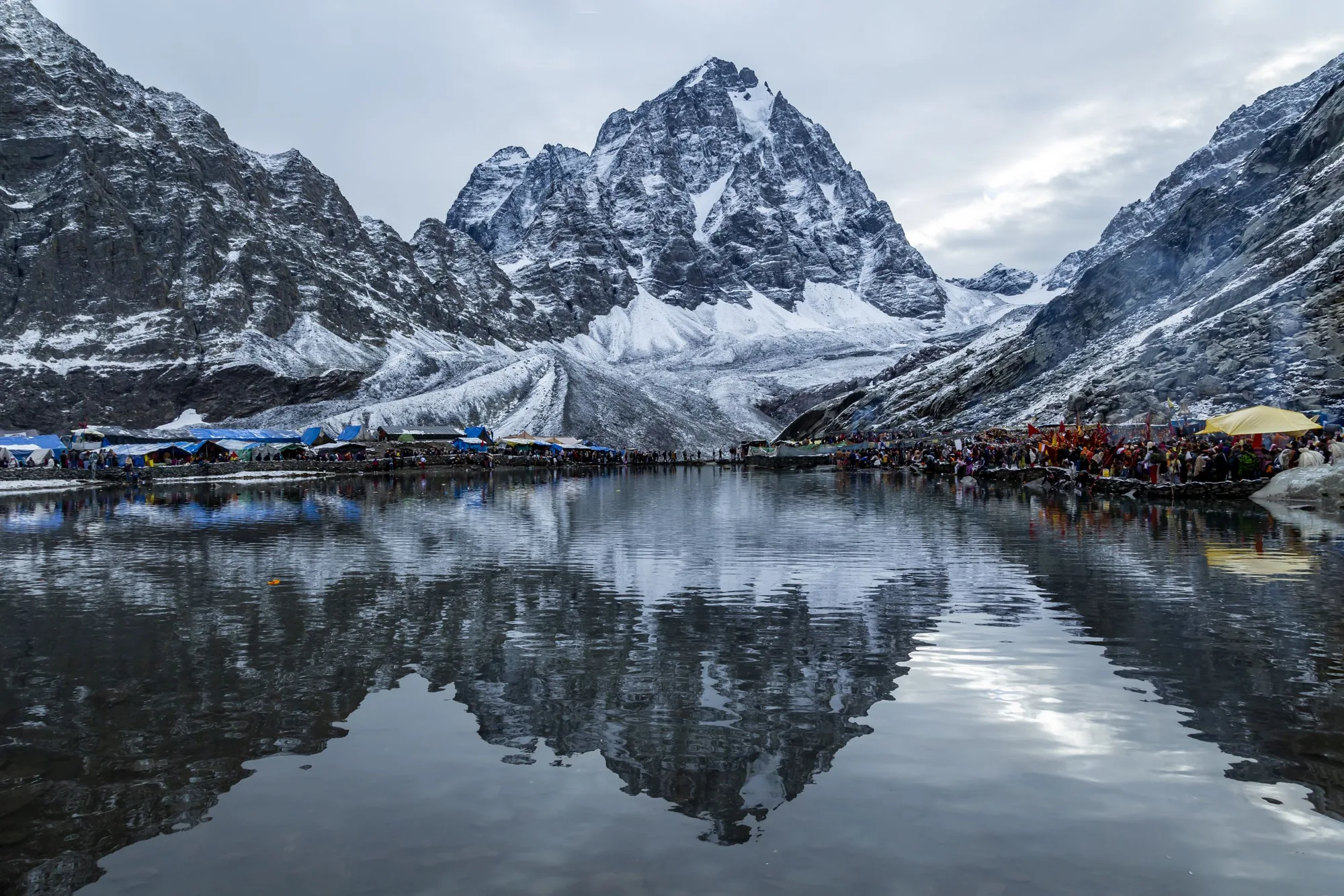
The Manimahesh Kailash Trek leads to the sacred Manimahesh Lake, situated beneath the striking pyramid-shaped Manimahesh Kailash peak in Himachal Pradesh's Chamba district. Beginning from Hadsar village, the route climbs steadily through forests, alpine meadows, and mountain valleys before reaching the revered lake at approximately 13,500 ft.
Every year, thousands of pilgrims undertake the Manimahesh Yatra, considering the lake and the mountain sacred to Lord Shiva. Outside the pilgrimage season, the trail offers a quieter trekking experience with impressive views of the surrounding Pir Panjal mountains.
While technically straightforward, the trek involves significant altitude gain over a short distance, requiring good fitness and adequate acclimatization.
Quick Facts
Duration
Max Altitude
Difficulty
Best Time
Trek Distance
Trail Atmosphere
Stargazing
Class 2 Dark Sky
Scent Profile
Silence Level
~50 dB
Vertigo Factor
2 / 10
Iconic Spots
Manimahesh Peak Reflection
Dhancho Waterfall
Environment
Nature & Culture
Flora & Fauna
Flora
Fauna
Abode of Lord Shiva. The peak is believed to be unconquered; any attempt to summit ends in divine intervention. The sun's first light on the peak is the 'Mani' (Jewel). Pilgrims must bathe in the icy lake (13,000 ft) before seeking darshan.
— Local folklore
Spiritual & Cultural Significance
One of the state's most important Shiva pilgrimages.
🕐 Shrine Timings: 24x7 during Yatra
Temple Protocols
- •Mandatory ritual bath in Gauri Kund (ladies) and Shiv Kund
- •Walk barefoot around the lake lake for merit
Festivals & Dates
Technical Details
Challenge & Preparation
Primarily a cardio demand challenge
A capable trekker's route that balances cardio demand and joint & muscle impact.
Personal Readiness
Am I ready?
Planning
Logistics & Trail Intel
Getting There
Route to Base
Chamba is 12 hours from Delhi
Bharmour is 3 hours from Chamba
Hadsar is 3 km from Bharmour
Base Village
Hadsar (via Bharmour, Chamba)
7,200 ft
Nearest Railhead
Rishikesh
Nearest Airport
Jollygrant Airport
Last ATM
Chamba town.
Nearest Medical Facility
Bharmour CHC / Chamba District Hospital
Mobile Signal
Strong at Bharmour Base. Spotty BSNL/Jio at Dhancho forest camp. Zero at the Manimahesh Lake.
Water Sources
Reliable mountain water at Hadsar, Dhancho, and the holy lake. Multiple seasonal springs and Langars (volunteer food stalls) active during Yatra season (Aug-Sept).
Charging
Electricity available at Hadsar and Bharmour hubs. Limited generator-backed charging kiosks at Dhancho camp (paid).
For Drivers
Road Condition
Good road from Chamba to Bharmour; narrow in patches and prone to monsoon blocks.
Bharmour
Trail Culinary & Diet
Don't miss the Madra / Chamba Rajma
Buy specialized diet items at Pathankot / Chamba
The Content & Remote Hub
Top Vlog Spots
Video Calls
base-only
Est. 20 Mbps
UPI Reliability
4/10
Base WiFi Available
Permits and Regulations
The yatra is managed by the Chamba District Administration. Registration is free but mandatory at the Hadsar or Bharmour checkpoint. Medical fitness declarations are collected. Government medical camps and rescue helicopters are deployed during the yatra window. Pony and mule services are available and regulated. The lake area is sacred — no soap, detergent, or shoes allowed near the water. Photography is permitted but drones are banned.
Learn more about how we vet operators and ensure transparency on our why MountRoutes page.
Packing List
Clothing
- Warm fleece
- Waterproof jacket
- Thermal inner
- Dry change of clothes (post holy dip)
- Woolen cap
- Gloves
Footwear Gear
- Waterproof trekking shoes
- Camp slippers
Gear Safety
- Trekking poles (recommended)
- Headlamp
- Power bank
- Water bottle
- Personal medical kit
- Towel (for holy dip)
Deep Dives
Explore Further
Editor's Notes
The reflection of Manimahesh Kailash in the still morning lake is one of the most iconic images in Himalayan spirituality. Arrive at sunrise for this view.
Bharmour's Chaurasi temple complex is a UNESCO tentative list site and one of the most important Hindu architectural ensembles in the Himalayas.
Explore In Detail
Day by Day Itinerary
3-day route reaching 13,500ft. Covers 26km of varied terrain.
→ See full itinerary with altitude profileDifficulty & Fitness
Rated moderate. Forest trail to Dhancho, then steep rocky switchbacks to the lake. No technical sections but sustained steep climbing.
→ See difficulty breakdown and fitness guideCost & Pricing
Packages range from ₹5,000 – ₹18,000. Inclusions and hidden costs vary by operator tier.
→ See full cost breakdownFrequently Asked Questions
Why is Manimahesh sacred?
It is considered the abode of Lord Shiva in the Chamba region, home to the sacred Kailash peak and the holy lake.
how do we get there from Chamba?
A drive to Bharmaur and then Hadsar, which is the starting point of the 13km trek.
What is the Mani Mahesh jewel mystery?
Locals believe that on clear full-moon nights, a jewel at the peak of Kailash shines brightly, a phenomenon witnessed by many pilgrims.
is helicopter service reliable?
Yes, during the yatra window, but weather frequently disrupts services. It is better to have at least one day buffer.
Where can we stay near the lake?
Basic tented accommodations are provided by community groups and NGOs at the lake side during the yatra.
Can we swim in the lake?
Pilgrims take a ritual holy dip in the icy waters of the lake as a mark of devotion.
Is it open for foreigners?
Yes, it is an open trek, but if you are attempting the high-altitude parikrama, a guide and permits are recommended.
What is the return route?
Most pilgrims return the same way to Hadsar, while the adventurous often cross over to the Kugti pass.
Still deciding?
Compare routes side-by-side to find the perfect match for your fitness, dates, and budget.
Everything you need to know, in one place. Someone else in your group needs to see this.
Planning Manimahesh Kailash Trek?
Get route conditions, operator updates, and season windows before booking.
Don't miss out! Follow us for route updates@mountroutes|LinkedIn
No spam. Only useful trek updates.
Ready to walk this route?
You’ve read the guide, now find the perfect local team to take you there. Compare our verified list of operators.
Compare verified operators