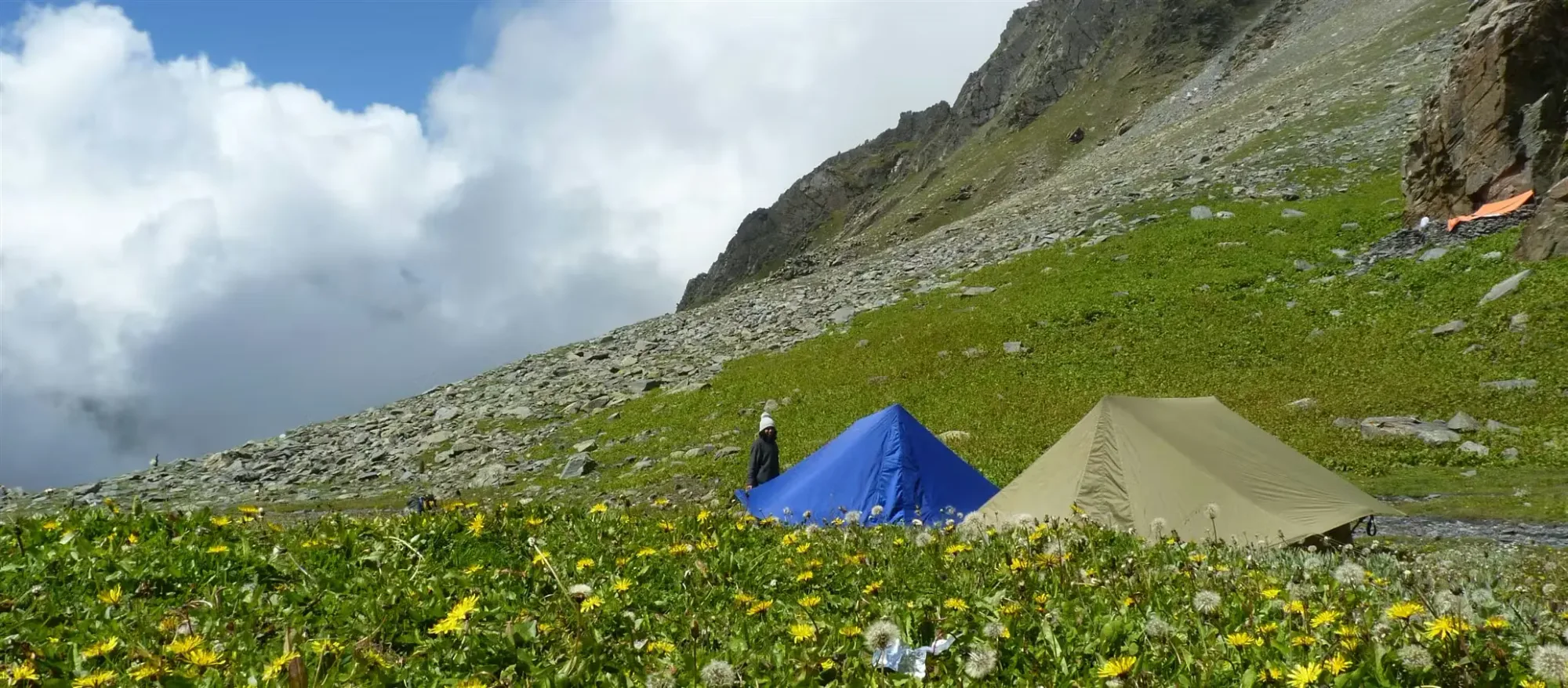
The Darati Pass Trek is a demanding crossover in the Pir Panjal range linking Chamba with the remote Pangi Valley. Traversing forests, alpine slopes, scree, and glacial terrain, it is one of Himachal Pradesh's least-traveled high mountain routes.
Trek Highlights
The Sickle Ridge
Standing on the literal knife edge of the pass, seeing the green canopy of Chamba on one side and the red dust of Lahaul on the other.
Yes. While Sach Pass has a motor road and established trekking variants, Darati is completely wild. The slopes are technically steeper and there is almost zero human traffic.
Can I do this trek unguided?
Absolutely not. The trail disappears entirely above the treeline. Without a local who actively knows the shepherd migration times, you will get hopelessly lost in the moraines.
Are there glaciers?
Yes, specifically on the northern (Pangi) descent, there are steep, icy snowfields that require careful navigation and sometimes roped descent depending on the season.
Will I see wildlife?
High probability. The Chamba approach forests are dense Himalayan Brown Bear territory. In Pangi, Ibex and occasionally snow leopards roam the high ridges.
What is the exit logistics like?
You exit at Tindi in the Pangi Valley. From there, you must take a highly rugged 4x4 drive along the Chenab river either west to Killar or east to Lahaul (Keylong).
Is there mobile connectivity?
You lose it completely on Day 1. There is zero connectivity until you hit the road at Tindi on Day 5 or 6.
Is AMS a big risk?
Yes. Gaining 15,400 feet with the aggressive ascent profiles of the Pir Panjal demands disciplined acclimatization and hydration.
Are mules practical here?
Mules can only manage the lowest sections. The summit push and descent require human high-altitude porters.
What happens if we can't cross?
You must turn back to Chamba. There is no alternative path linking the valleys once you are committed.
Why would someone choose this over Sach Pass?
For the absolute solitude. Darati has zero road noise, no tourist traffic, and completely pristine alpine environments.
How technical is the Darati Pass crossing compared to Kugti Pass?
Darati Pass (15,400 ft) is slightly lower than Kugti but has a steeper, narrower gully approach that is highly prone to falling rocks. It requires excellent route-finding and rope management.
Is hiring a local Gaddi guide mandatory for Darati Pass?
Yes, the route is highly remote and undefined. Only experienced local Gaddi shepherd guides know the safe passage through the treacherous rock corridors.
What is the best month to cross Darati Pass?
September is the golden window. The monsoons have washed away loose dust, the crevasses are exposed and stable, and the pass is relatively clear of soft avalanche snow.
What happens in case of sudden bad weather on the pass?
You must immediately retreat to the base camps (Alyas). The narrow pass ridge acts as a wind funnel and can become lethal within minutes during a blizzard.
Are crampons and ice axes required for Darati?
Yes, hard snow slopes on the Chamba approach and steep glacial ice on the Lahaul side make professional microspikes/crampons and ice axes absolute safety essentials.
Is Darati harder than Sach Pass?
Yes. While Sach Pass has a motor road and established trekking variants, Darati is completely wild. The slopes are technically steeper and there is almost zero human traffic.
Can I do this trek unguided?
Absolutely not. The trail disappears entirely above the treeline. Without a local who actively knows the shepherd migration times, you will get hopelessly lost in the moraines.
Are there glaciers?
Yes, specifically on the northern (Pangi) descent, there are steep, icy snowfields that require careful navigation and sometimes roped descent depending on the season.
Will I see wildlife?
High probability. The Chamba approach forests are dense Himalayan Brown Bear territory. In Pangi, Ibex and occasionally snow leopards roam the high ridges.
What is the exit logistics like?
You exit at Tindi in the Pangi Valley. From there, you must take a highly rugged 4x4 drive along the Chenab river either west to Killar or east to Lahaul (Keylong).
Is there mobile connectivity?
You lose it completely on Day 1. There is zero connectivity until you hit the road at Tindi on Day 5 or 6.
Is AMS a big risk?
Yes. Gaining 15,400 feet with the aggressive ascent profiles of the Pir Panjal demands disciplined acclimatization and hydration.
Are mules practical here?
Mules can only manage the lowest sections. The summit push and descent require human high-altitude porters.
What happens if we can't cross?
You must turn back to Chamba. There is no alternative path linking the valleys once you are committed.
Why would someone choose this over Sach Pass?
For the absolute solitude. Darati has zero road noise, no tourist traffic, and completely pristine alpine environments.
How technical is the Darati Pass crossing compared to Kugti Pass?
Darati Pass (15,400 ft) is slightly lower than Kugti but has a steeper, narrower gully approach that is highly prone to falling rocks. It requires excellent route-finding and rope management.
Is hiring a local Gaddi guide mandatory for Darati Pass?
Yes, the route is highly remote and undefined. Only experienced local Gaddi shepherd guides know the safe passage through the treacherous rock corridors.
What is the best month to cross Darati Pass?
September is the golden window. The monsoons have washed away loose dust, the crevasses are exposed and stable, and the pass is relatively clear of soft avalanche snow.
What happens in case of sudden bad weather on the pass?
You must immediately retreat to the base camps (Alyas). The narrow pass ridge acts as a wind funnel and can become lethal within minutes during a blizzard.
Are crampons and ice axes required for Darati?
Yes, hard snow slopes on the Chamba approach and steep glacial ice on the Lahaul side make professional microspikes/crampons and ice axes absolute safety essentials.
Are you a local operator?
Join our platform to list your verified packages for this trek.