
Difficulty & Readiness Guide
Is Audens Col Expedition Difficult? — Fitness & Altitude Guide
Extremely difficult. Involves an 80-degree near-vertical descent over the shattered ice of the Khatling Glacier.
Preparation Required
Advanced
Prior Experience
Required: At least 2-3 moderate Himalayan treks (above 13,000ft).
Score Engine v3
Why This Score?
Stamina
45/100
Based on average nightly altitude gain, highest campsite, and daily distance. Reflects how hard the average day feels.
Spike Day
53/100
Based on max altitude reached, summit day elevation gain, and summit day distance. Reflects the hardest single day.
Why Audens Col Expedition Feels Difficult
A demanding expedition with extreme cumulative fatigue and altitude exposure.
Physiological Demand
Deep wilderness isolation and cumulative fatigue. The mental challenge of enduring days on end in harsh conditions is extreme.
Extreme high altitude exposure. Severe oxygen depletion requires careful acclimatization and peak cardiovascular health.
Notable elevation gains and losses requiring good leg strength and joint resilience.
Challenging daily distances and steady climbs. Good cardiovascular fitness is required.
Rough, uneven trails with occasional scrambling or minor exposure.
Crux Section
Day 8 — Oxygen Peak
Highest exposure point at 18,011ft.
High-Altitude Crossing — Grading Context
At 74/100 on the ExpeditionDifficulty Scale, this is one of India's most demanding high-altitude crossings. Due to the remoteness, sustained altitude, and total daily effort, this crossing demands elite fitness and prior high-altitude experience.
Audens Col Expedition/ 74
Mental Endurance
Caution
Walking roped up on the glacier requires total focus. If your partner falls in a crevasse, you have exactly 1.5 seconds to self-arrest.
Terrain Breakdown
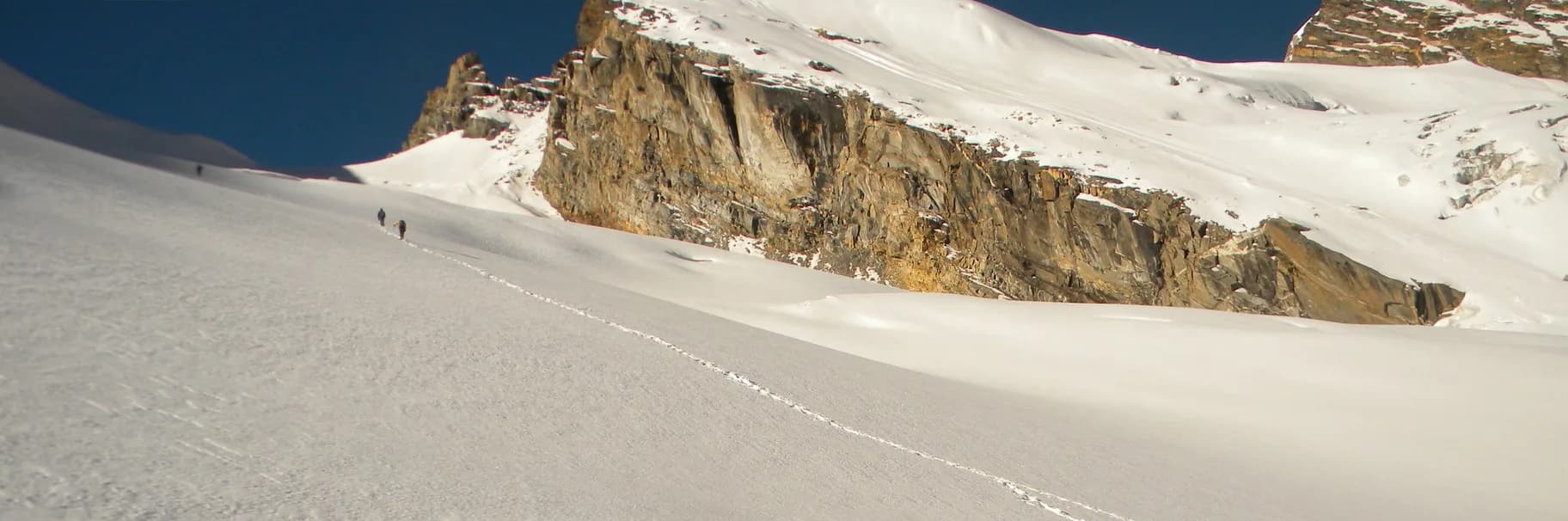
60% of the trek is on technical, shifting moraine, blue ice, or snow. The trail frequently disappears. Crevasses pose a constant hazard on Khatling.
Summit Day Notes
Col Day requires waking at 1:30 AM. Climbing an immense snow wall, then surviving the highly technical 80-degree rappel down the icefall on the other side.
The Descent
The descent off Auden's Col is a literal cliff of ice. If you do not know how to rappel using an ATC or Figure-8, you will die.
Preparation
Requires elite cardiovascular fitness and prior experience hauling 15kg packs above 5000 meters. Must know how to perform a self-arrest.
Altitude Profile
Prolonged exposure above 14,000 ft for nearly 7 consecutive days puts extreme stress on the body's recovery systems.
Run AMS Risk Audit →Route Stress Forecast
Highest exposure point at 18,011ft.
Deep 2,500ft descent will test joint stability.
First major altitude jump occurs on Day 12.
*Forecast derived from route geometry and altitude profile. External variables (weather/group) remain the final authority.
Trail Performance Data
Max Gradient
80%
Hydration
0.6L per km recommended
Loose Surface Sections
- •Khatling Icefall is literal vertical ice
Common Mistakes on Audens Col Expedition
Most injuries and failures on this trail can be avoided by making smarter decisions early on.
Attempting this without strict rope-team discipline on the glacier
Underestimating the cold
Skimping on technical gear checks
Safety & Medical Risks
Key Risks
Crevasse falls on Khatling
Severe HAPE/HACE above 16,000ft
Avalanche on the Col approaches
Freezing to death if stranded
AMS (Altitude Sickness)
Extreme. Diamox and Dexamethasone protocols must be managed by the lead guide.
Evacuation Route
Helicopter from Advanced camps only if weather permits. Retreat down the way you came is the only foot option until Chowki.
Solo Trekking
Suicidal. The Khatling glacier is one of the most heavily crevassed in India.
Common Trail Ailments
🏥 Nearest ICU: AIIMS Rishikesh / Max Super Specialty Hospital, Dehradun
Tactical Emergency Hub
> Heli rescue is heavily compromised by the massive mountain walls. Weather must be perfect.
Who Can Do This Trip?
Min Age
21+
Max Age
55
Western Toilets at Base
No
Solo Female Travelers
Elite technical expedition setting.
Expert Verdict
Highly technical peak requiring physical and mental preparation.
Ready to book? Compare verified operators for Audens Col Expedition — transparent pricing, no paid rankings.
Want to know which operators carry certified guides and medical support? See operator safety ratings for Audens Col Expedition
Also on this trek
Still deciding?
Compare routes side-by-side to find the perfect match for your fitness, dates, and budget.
Still think it's doable? Share this with your trek mate and see if they agree.
Fit for the challenge?
For challenging treks, safety is paramount. Find operators prioritizing medical support and guide expertise.
Compare operator safety scores