
Explore
Intelligence
Detailed Route
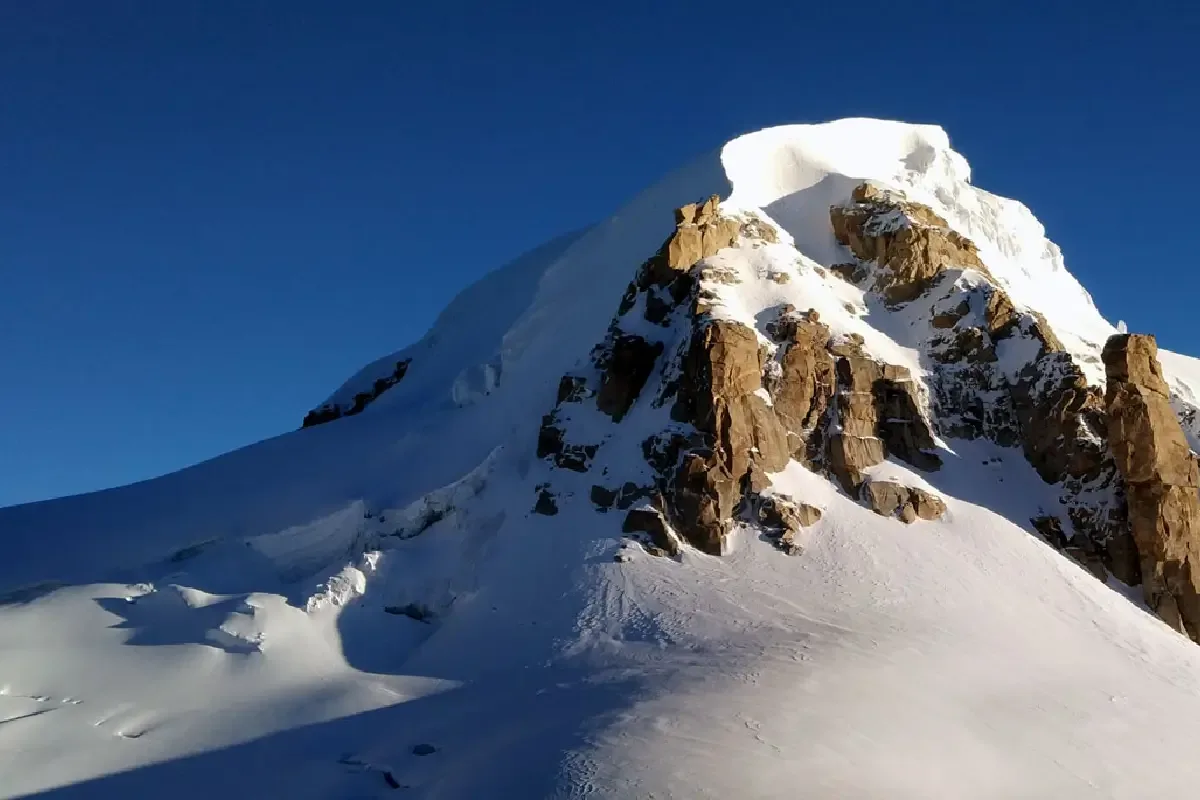
Deo Tibba Peak Expedition Itinerary — Day by Day Route & Camps
12-day expedition from Manali via Jagatsukh and the beautiful Tainta meadows to the historic 6,001m summit first climbed in 1952.
Standard RouteThis is the baseline pacing strategy for this expedition. Expedition leaders frequently modify rotation schedules, add reserve weather days, or adjust high camps based on real-time mountain conditions. Consult the operator's expedition dossier for their precise approach.
Duration
12 Days
Total Distance
55 KM
Max Altitude
19,688 FT
Trek Type
Standard
Permits Required Before You Go
Permit Cost
Foreigner Process
Expedition visa setup required if going via recognized bodies, though basic IMF peak fees act as a blanket cover for most commercial teams.
Nearest Embassy Hub
New Delhi
Day by Day Breakdown
Camp Alt
6,730 ft
Day Gain
-160 ft
Today's Objective
☕ Acclimatization & Recovery
Arrive and rest at 2,050m. Good acclimatization starting point.
Key Landmarks
The team holds position within the alpine meadow basin, monitoring weather patterns and adapting to the thinning atmosphere.
Camp Alt
6,890 ft
Day Gain
+160 ft
Drive to Jagatsukh & Gear Check
30-min drive to trek start. Acquire all permits.
Key Landmarks
The motorable road navigates deeper into the mountain river corridor, where the landscape transitions from lower foothills into the steep, dense forested valleys.
Camp Alt
10,830 ft
Day Gain
+3,940 ft
Reach Chika
Through dense conifer forest into high meadows.
Key Landmarks
Vegetation gives way to barren glacial debris as the route enters the expansive moraine basin and ablation zone of the glaciated upper watershed.
Field Notes
Use Trekking Poles
Trekking poles are highly recommended to save your knees on the descent.
INFOSlower Progress
Progress will be significantly slower and more taxing on your ankles than trail distance suggests.
Camp Alt
13,350 ft
Day Gain
+2,520 ft
Reach Tainta Base Camp
Classic Himalayan base camp at ~4,070m. Views of Deo Tibba and Indrasan emerge.
Key Landmarks
Vegetation gives way to barren glacial debris as the route enters the expansive moraine basin and ablation zone of the glaciated upper watershed.
Field Notes
Use Trekking Poles
Trekking poles are highly recommended to save your knees on the descent.
INFOSlower Progress
Progress will be significantly slower and more taxing on your ankles than trail distance suggests.
Camp Alt
14,700 ft
Day Gain
+1,350 ft
Today's Objective
☕ Acclimatization & Recovery
Day hike to the stunning glacial lake at ~4,480m. Return to Tainta for the night.
Key Landmarks
The expedition remains stationed within the high-altitude ablation zone, adjusting to the stark environment where exposed scree and ice dominate the glaciated upper watershed.
Camp Alt
13,350 ft
Day Gain
-1,350 ft
Today's Objective
☕ Acclimatization & Recovery
Full day of crampon, ice-axe, crevasse rescue, and fixed rope training on the glacier above camp.
The team holds position within the alpine meadow basin, monitoring weather patterns and adapting to the thinning atmosphere.
Field Notes
Use Trekking Poles
Trekking poles are highly recommended to save your knees on the descent.
INFOSlower Progress
Progress will be significantly slower and more taxing on your ankles than trail distance suggests.
Camp Alt
16,730 ft
Day Gain
+3,380 ft
Today's Objective
☕ Acclimatization & Recovery
Carry gear to ABC at ~5,100m near Duhangan Col. Return to Tainta to sleep — acclimatization rotation.
Key Landmarks
The expedition remains stationed within the high-altitude ablation zone, adjusting to the stark environment where exposed scree and ice dominate the glaciated upper watershed.
Field Notes
KEY ACTIONRoped Travel
Requires roped glacier travel and constant vigilance for hidden crevasses.
KEY ACTIONVertical Sections
Expect steep sections requiring jumars and rappelling on fixed lines.
KEY ACTIONHarness Gear
Harness-compatible gear is mandatory.
Use Trekking Poles
Trekking poles are highly recommended to save your knees on the descent.
INFOSlower Progress
Progress will be significantly slower and more taxing on your ankles than trail distance suggests.
Camp Alt
13,350 ft
Day Gain
-3,380 ft
Today's Objective
☕ Acclimatization & Recovery
Recovery. Final weather forecast review. Guide briefing on summit day protocol.
The team holds position within the alpine meadow basin, monitoring weather patterns and adapting to the thinning atmosphere.
Camp Alt
16,730 ft
Day Gain
+3,380 ft
Shift to Advance Camp
Establish at ABC near Duhangan Col at ~5,100m. Early dinner, sleep by 7 PM.
Vegetation gives way to barren glacial debris as the route enters the expansive moraine basin and ablation zone of the glaciated upper watershed.
Field Notes
KEY ACTIONRoped Travel
Requires roped glacier travel.
KEY ACTIONStart Early
Start before sunrise to ensure snow bridges remain solid.
KEY ACTIONHarness Gear
Harness-compatible gear is mandatory.
Use Trekking Poles
Trekking poles are highly recommended to save your knees on the descent.
INFOPacing Delays
Slower pacing expected due to bottlenecking on fixed lines.
Camp Alt
13,350 ft
Day Gain
-3,380 ft
Today's Objective
🏔 Summit Abc To Deo Tibba
Alpine start at 1–2 AM. Glacier traverse, hanging glacier ice section (fixed ropes), steep summit dome. Summit at 6,001m. Return to ABC then descend to Tainta.
Key Landmarks
The final ascent leaves the upper glacial basin for the exposed summit ridges, offering panoramic views across the watershed divide before descending back to the icefields.
Field Notes
KEY ACTIONRoped Travel
Requires roped glacier travel.
KEY ACTIONStart Early
Start before sunrise to ensure snow bridges remain solid.
KEY ACTIONVertical Sections
Expect steep sections requiring jumars and rappelling on fixed lines.
KEY ACTIONHarness Gear
Harness-compatible gear is mandatory.
Camp Alt
6,730 ft
Day Gain
-6,620 ft
Trek to Khanol & Drive to Manali
Descent through the forest. Arrive Manali for celebration dinner.
Vegetation gives way to barren glacial debris as the route enters the expansive moraine basin and ablation zone of the glaciated upper watershed.
Camp Alt
6,730 ft
Day Gain
0 ft
Departure
End of expedition.
The motorable road navigates deeper into the mountain river corridor, where the landscape transitions from lower foothills into the steep, dense forested valleys.
Expedition Extensions & Add-ons
Suraj Tal Exploration
+0 DayOn Day 3, walk down to the nearby Suraj Tal, a stunning emerald green glacial lake right on the highway.
Camp-by-Camp Details
Tainta Base Camp
Base Camp
Water
Stream
Wind
Moderate
Night Temp
-5°C
Chotta Chandratal
acclimatization_camp
Water
Lake / Stream
Night Temp
-8°C
Advance Camp (Duhangan Col area)
High Camp
Water
Snow melt
Wind
High
Night Temp
-15°C
Navigation & Route Data
Key Waypoints
Critical Navigation Notes
Route finding on scree can be tricky in the dark.
Plan Your Expedition:
Ready to book? Compare verified operators for Deo Tibba Peak Expedition — transparent pricing, no paid rankings.
Still deciding?
Compare routes side-by-side to find the perfect match for your fitness, dates, and budget.
Day by day, camp by camp. Send this to your group so everyone's on the same page.
Step 4: Safety & Framework
You understand the route.
Now understand the hazards, physiology, and Go/No-Go decision framework.
View Safety Framework