
Explore
Intelligence
Season & Weather Guide
Best Time for Gupt Khal Expedition — Month-by-Month Guide
Extremely narrow windows in May/June and September/October. The glaciers are lethal during the monsoon and winter.
Summit Window
When is it climbable?
Summit Weather Window
Lightning Risk
June & July
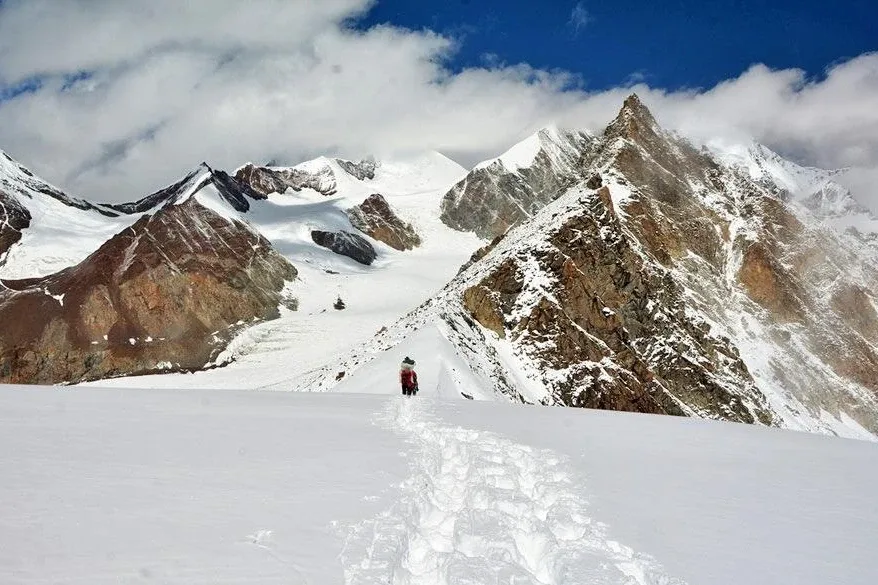
The window for this expedition is terrifyingly short. Only two brief periods in May/June and September/October offer the stability required to safely cross the icefalls and the 19,052 ft pass.
Season at a Glance
Editor's Notes
Month by Month
What each month looks like
January
Conditions
Extreme winter. Entire region is under 20+ feet of snow. Temperatures at pass are -40C.
Crowds
none
Lethal cold, avalanches, pass closed.
Expedition impossible.
February
Conditions
Peak winter conditions. Avalanches are highly active on the headwall.
Crowds
none
Lethal avalanche danger.
Expedition impossible.
March
Conditions
Slight warming begins, triggering massive spring avalanches.
Crowds
none
Unstable snowpack.
Expedition impossible.
April
Conditions
Snow starts consolidating, but weather remains highly volatile above 5000m.
Crowds
none
Pass usually impassable.
Expedition impossible.
May
RecommendedConditions
Late May opens the window. Snow bridges are thick and strong, making crevasse negotiation easier, but the headwall requires intense step-cutting.
Crowds
low
Window opens late May. Expect deep snow on approach.
June
RecommendedConditions
The primary pre-monsoon window. The ice is relatively stable, though pre-monsoon storms can strike.
Crowds
low
Prime window. Best balance of stable ice and tolerable temperatures.
July
Conditions
Monsoon hits. Whiteout conditions on the glacier. Crevasses become hidden and lethal.
Crowds
none
Monsoon storms, zero visibility, hidden crevasses.
Monsoon danger. Avoid entirely.
August
Conditions
Peak monsoon. The approach routes wash away. Icefalls become highly unstable.
Crowds
none
Monsoon washouts, serac collapse.
Monsoon danger. Avoid entirely.
September
RecommendedConditions
Post-monsoon window. The weather is flawlessly clear. However, all snow bridges have melted, exposing massive, terrifying open crevasses that require complex ladder/rope work.
Crowds
low
Prime window. Be prepared for complex crevasse navigation as snow bridges are gone.
October
RecommendedConditions
First two weeks of October offer the sharpest views, but extreme cold sets in quickly. High winds on the pass.
Crowds
low
Flawless skies but brutal wind chill on the pass. Window closes by late October.
November
Conditions
Winter strikes. Jet stream winds make the pass un-crossable.
Crowds
none
Jet stream winds, deep cold.
Too cold and windy. Pass closed.
December
Conditions
Deep winter. Region evacuated.
Crowds
none
Extreme winter.
Expedition impossible.
Photography & Light Conditions
Sunrise Spot
Gupt Khal Base Camp (Alpenglow on Nilgiri Parbat)
Recommended Lenses
Astrophotography
Drones not permitted
Banned. Sensitive military border zone and National Park.
Batteries will die rapidly in the -20C cold. Keep phones inside base layers.
Plan Your Expedition:
Still deciding?
Compare routes side-by-side to find the perfect match for your fitness, dates, and budget.
Timing makes or breaks a trek. Send this to your group before you decide.
Step 3: Route Intelligence
You've chosen a season.
Now see exactly how the route unfolds day by day, including terrain types and daily altitude profiles.
Explore the Itinerary