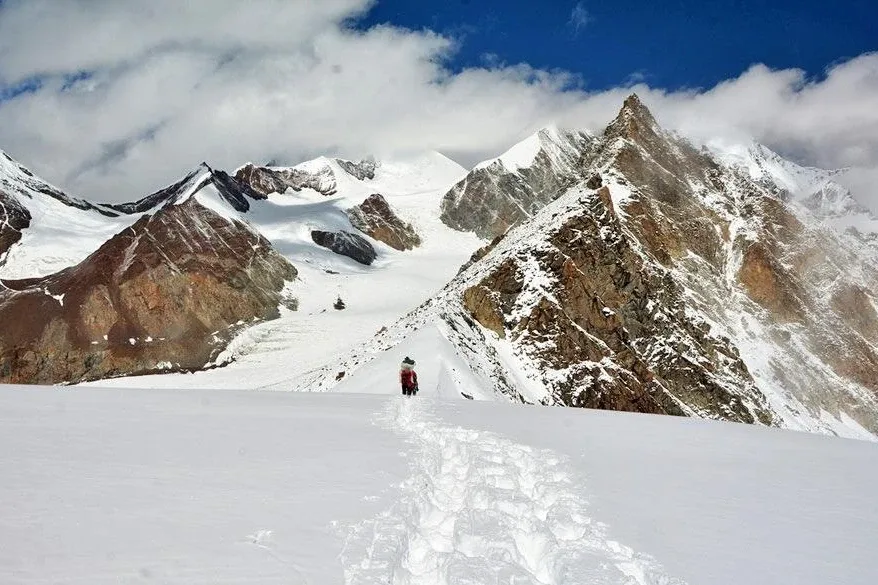
Gupt Khal Expedition expedition
Summit Peak

Compare operators for Gupt Khal Expedition

14 Days19,052ft maxUttarakhandChallenging

No operators listed yet

Interested in this expedition?

We are currently vetting local partners for Gupt Khal Expedition to ensure the highest safety standards. Be the first to know when it's open for booking.

Are you a local operator?

Join our platform to list your verified packages for Gupt Khal Expedition and reach thousands of climbers directly.

Apply to join
Mandatory Pre-Check

Summit Readiness Audit

Before booking your expedition, run your profile through our clinical safety checks. Generate your gear manifest and AMS protocol.

About Gupt Khal Expedition

14 Days
19,052 FT
Challenging

The Gupt Khal Expedition is a high-altitude technical traverse in the Garhwal Himalayas linking the Dhauli Ganga and Alaknanda watersheds. Crossing Gupt Khal at approximately 19,052 ft, the expedition requires advanced glacier travel, technical climbing, and complete self-sufficiency in remote alpine terrain.

Expedition Highlights

Kamet & Nilkantha Panorama

Close-range vistas of high-altitude Himalayan giants including Nilkantha, Hathi Parbat, Nilgiri, and the Kamet massif.

Bankkund & Meru Ice Fields

Traversing the massive, rugged ice fields and crevasses of the Bankkund, Kirti Bamak, and Meru glaciers.

Medial Moraine Ridges

Navigating expansive, untouched snowfields and dramatic glacial moraines.

Gupt Khal Col

Deep wilderness isolation on a rarely explored, hidden high-altitude pass.

View Complete Guide

Common Questions

How does Gupt Khal compare to Kalindi Khal?
They are peers in difficulty. Kalindi Khal is higher (19,500 ft) and longer, but Gupt Khal often features steeper, more technical ice climbing on the approach to the pass and crosses two passes (Twin Passes).
Can I do this if I have only done Everest Base Camp?
Absolutely not. EBC is a teahouse trek on a well-paved trail. Gupt Khal is an unmapped mountaineering expedition requiring crevasse rescue skills, jumaring, and ice climbing.
Why is it called the Twin Passes?
Because immediately after crossing Gupt Khal (19,052 ft) and descending into the glacier, you must ascend and cross Bhyundar Khal (16,700 ft) to exit into the Valley of Flowers.
Do I need double mountaineering boots?
Yes. Single boots will result in frostbite during the 1:00 AM pass crossing where temperatures drop to -20°C.
What happens if a storm hits while on the glacier?
You hunker down in the tents. Navigation in a whiteout over heavily crevassed terrain is suicidal. This is why buffer days and extra rations are mandatory.
Is there a trail on the glacier?
No. The glacier shifts every year. The lead guide must constantly probe for hidden crevasses and find a safe line through the icefall maze.
How steep is the pass?
The final headwall to Gupt Khal can be 60-70 degrees of hard ice or snow, requiring fixed static ropes and mechanical ascenders (Jumars) to climb safely.
What is the psychological crux of the expedition?
The sheer commitment. Once you cross the Bankund icefall, retreating is incredibly difficult. You are locked into a massive valley of ice with only one way out: over a 19,052 ft pass.
How does Gupt Khal compare to Kalindi Khal?
They are peers in difficulty. Kalindi Khal is higher (19,500 ft) and longer, but Gupt Khal often features steeper, more technical ice climbing on the approach to the pass and crosses two passes (Twin Passes).
Can I do this if I have only done Everest Base Camp?
Absolutely not. EBC is a teahouse trek on a well-paved trail. Gupt Khal is an unmapped mountaineering expedition requiring crevasse rescue skills, jumaring, and ice climbing.
Why is it called the Twin Passes?
Because immediately after crossing Gupt Khal (19,052 ft) and descending into the glacier, you must ascend and cross Bhyundar Khal (16,700 ft) to exit into the Valley of Flowers.
Do I need double mountaineering boots?
Yes. Single boots will result in frostbite during the 1:00 AM pass crossing where temperatures drop to -20°C.
What happens if a storm hits while on the glacier?
You hunker down in the tents. Navigation in a whiteout over heavily crevassed terrain is suicidal. This is why buffer days and extra rations are mandatory.
Is there a trail on the glacier?
No. The glacier shifts every year. The lead guide must constantly probe for hidden crevasses and find a safe line through the icefall maze.
How steep is the pass?
The final headwall to Gupt Khal can be 60-70 degrees of hard ice or snow, requiring fixed static ropes and mechanical ascenders (Jumars) to climb safely.
What is the psychological crux of the expedition?
The sheer commitment. Once you cross the Bankund icefall, retreating is incredibly difficult. You are locked into a massive valley of ice with only one way out: over a 19,052 ft pass.

Are you a local operator?

Join our platform to list your verified packages for this expedition.

Apply to join
MountRoutes Dispatch

Get Trek Intelligence Before You Book

Route conditions, operator changes, and the best season windows — once a week.

Don't miss out! Follow us for route updates@mountroutes|LinkedIn

No spam. Only useful trek updates.