
Explore
Intelligence
Traverse Safety & Risk
Borasu Pass Expedition — Safety Guide
Altitude physiology, pass crossing go/no-go criteria, evacuation protocol, and insurance requirements.
Pass Crossing Protocol
Primary Hazards
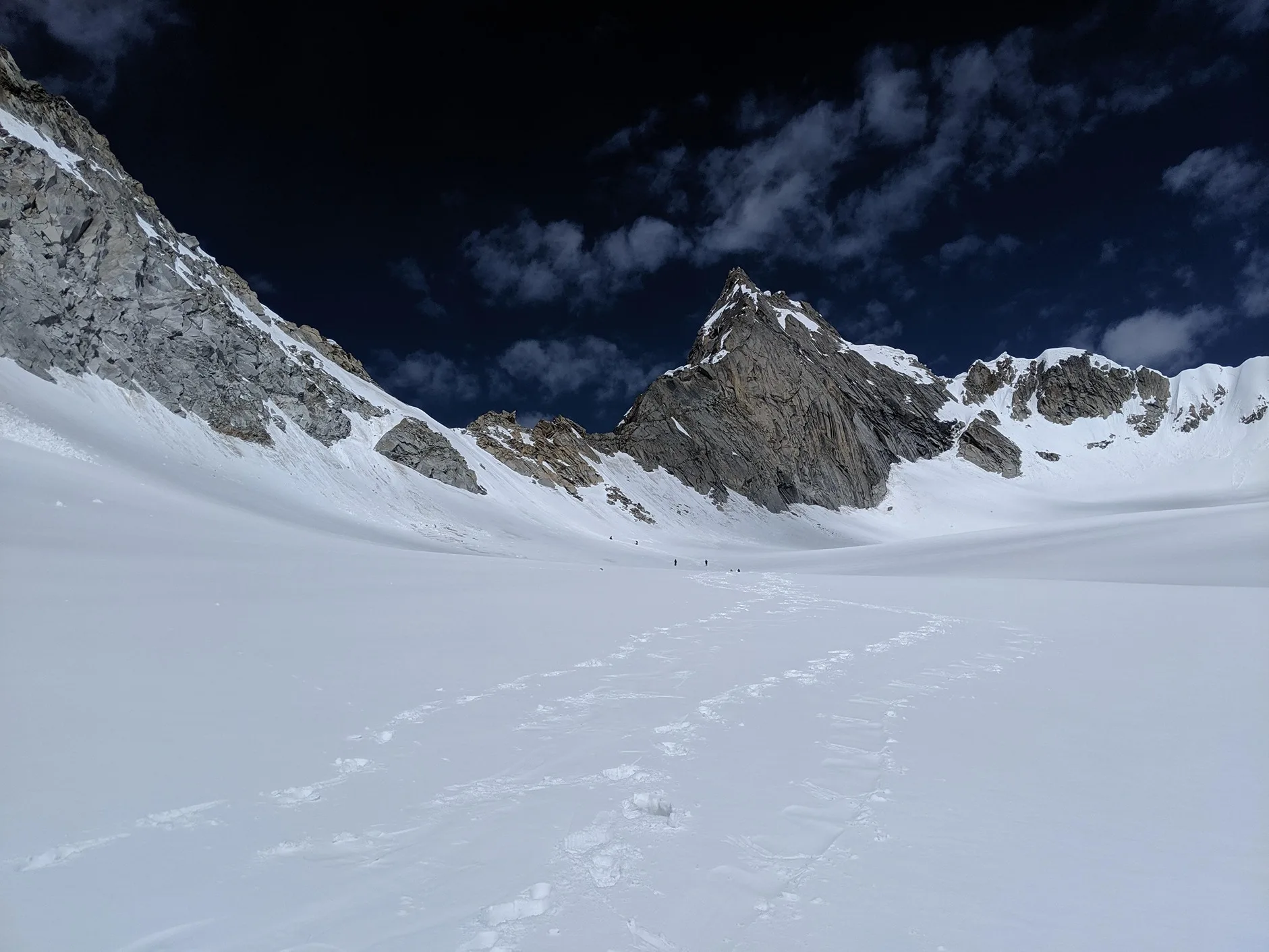
Crossing a 17,880ft pass with near-vertical snow sections
Crevasse risk on the HP side of the Borasu glacier
Rapidly changing weather and blizzard risk at 17,000ft
Extreme isolation during the crossover days
Historical Safety Record
We publish verified incident records to help trekkers and operators make informed decisions. Names and personal identifiers are anonymized.
Documented
6
verified incidents
Fatalities
3
estimated
Near Misses
2
logged
We have analysed 6 documented incidents for this expedition to extract critical safety lessons.
Due to the nature of mountaineering — where most non-fatal incidents go unreported — experts estimate 20+ total historical incidents on this route. Estimated historical fatalities: 3. We present the documented record as-is rather than speculate on undocumented cases.
Year
2022
Snow Blindness
Outcome
Led out by team members
Contributing Cause
UV-protective eyewear not worn on high snowfields
Key Safety Lesson
Always uV radiation on high-altitude snowfields is intense. Wear Category 4 sunglasses constantly.
Year
2022
Lost / Navigation Failure
Outcome
Rescue by external team
Contributing Cause
Contributing factors not fully documented
Key Safety Lesson
Do not blindly follow sheep trails. Always use a calibrated compass and GPS.
Year
2021
Weather Stranding
Outcome
Self-recovered
Contributing Cause
Contributing factors not fully documented
Key Safety Lesson
Always pitch tents at least 50 meters above the riverbed to avoid sudden glacial surges.
Year
2020
HAPE — High Altitude Pulmonary Edema
Outcome
Assisted descent by team
Contributing Cause
Rapid ascent without adequate rest days
Key Safety Lesson
Always hAPE can strike suddenly. The only cure is immediate descent, regardless of the time of day.
Year
2018
Snow Blindness
Outcome
Emergency evacuation on foot
Contributing Cause
Contributing factors not fully documented
Key Safety Lesson
Always category 4 UV glasses are mandatory. Do not remove them on the upper snowfields.
Year
2016
River Crossing Incident
Outcome
Rescue by external team
Contributing Cause
Contributing factors not fully documented
Key Safety Lesson
Always glacial melt doubles river volume by afternoon. Cross all major streams before 9 AM.
Source: Public Records / News Reports
Why estimates differ from records: IMF and news sources only capture permitted expeditions and helicopter rescues. Non-fatal near-misses (AMS, frostbite, falls with self-rescue) are almost never filed. Peaks with multi-decade climbing histories compound these gaps significantly.
Altitude Physiology — SpO₂ by Camp
AMS Protocol
You are crossing 17.8k ft. Pro-active monitoring for HAPE is mandatory from Ratia Thatch onwards.
Emergency Contacts
Evacuation Route
Manual stretcher to Chitkul (HP) or Sankri (UK). Extremely slow evacuation.
Solo Advisory
STRICTLY NOT RECOMMENDED. The pass crossing is dangerous and technically complex without a team and ropes.
Medical Evacuation Intelligence
Nearest ICU
IGMC, Shimla
Blood Bank Hub
Rekong Peo
O₂ Refill at Base
Available
Mandatory Operator Equipment
Verify this equipment is included before booking. Compare operator safety standards →
Plan Your Expedition:
Still deciding?
Compare routes side-by-side to find the perfect match for your fitness, dates, and budget.
Knowledge Integrity
Help us keep this data ground-truth accurate.
This encyclopedia entry for Borasu Pass Expedition is curated from a mix of public survey records, first-hand climber accounts, and official permit logs. However, mountains are dynamic. If you have been on this route recently and noticed a change in terrain, water availability, or local regulations, we want to hear from you.
Community Vetted
Last Verified: May 2026
EXPEDITION DATABASE
Step 5: Cost & Logistics
You understand the risks.
Now see what the IMF peak fees, logistics, and operator services actually cost.
View Cost Breakdown