
Explore
Intelligence
Essential Planning Guide
Seven Lakes Dhauladhar Trek — Complete Guide (2026)
Vibe & Scenery
The Experience
Introduction
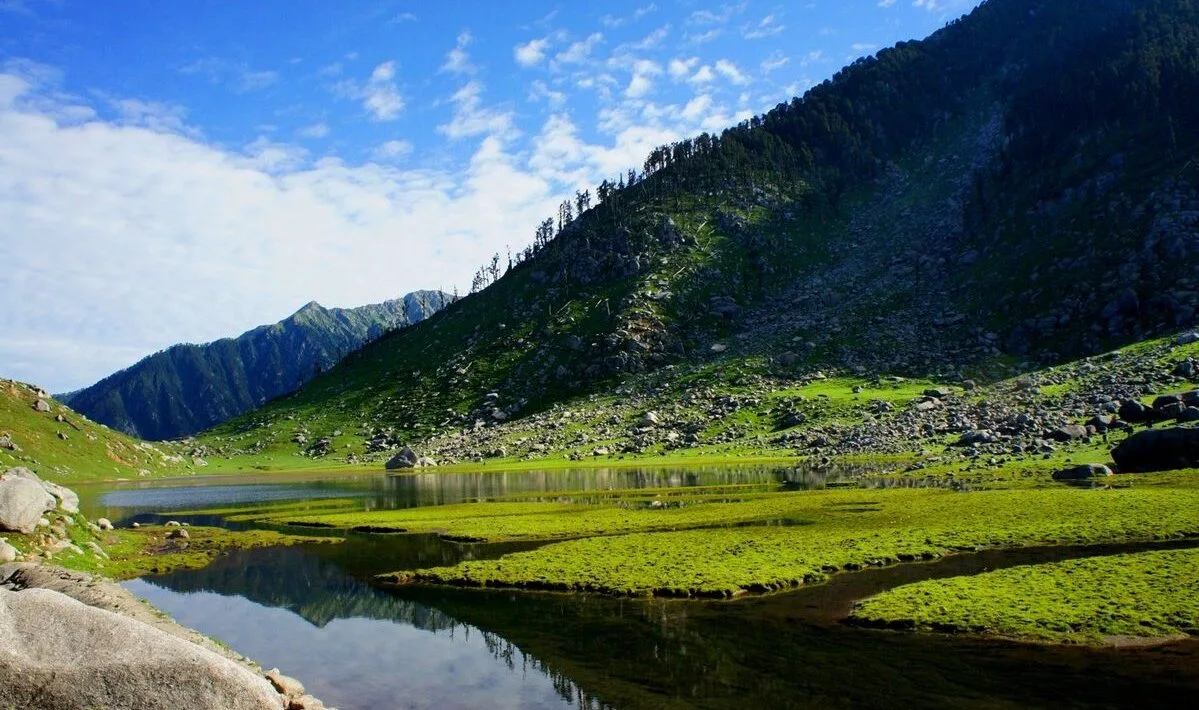
Deep within the upper Dhauladhar Range lie seven glacial lakes revered by local communities for centuries. This demanding expedition links these sacred water bodies—including Lam Dal, Nag Dal, and Kali Kund—through steep mountain terrain rarely visited outside the annual pilgrimage season.
The route traverses exposed ridges, boulder fields, alpine meadows, and high mountain passes while offering sweeping views across both the Kangra Valley and the Pir Panjal Range.
Considerable elevation gain, difficult terrain, and prolonged exposure above 13,000 ft make this trek suitable only for experienced trekkers with excellent fitness.
Quick Facts
Duration
Max Altitude
Difficulty
Best Time
Trek Distance
Trail Atmosphere
Stargazing
Class 1 Dark Sky
Scent Profile
Silence Level
~15 dB
Vertigo Factor
8 / 10
Iconic Spots
Indrahar Pass
Lam Dal Lake
Triund Ridge
Environment
Nature & Culture
Flora & Fauna
Flora
Fauna
Local folklore claims that Lord Shiva resides at Lam Dal, and the smaller lakes surrounding it are the abodes of his divine court.
— Local folklore
Spiritual & Cultural Significance
The lakes are sacred to Lord Shiva. Bathing in them during the Radhashtami festival in August/September is a major Gaddi pilgrimage.
Temple Protocols
- •No meat, alcohol, or swearing allowed near the lakes.
- •Do not use soap or detergent in any lake or stream.
Festivals & Dates
Technical Details
Challenge & Preparation
Primarily a cardio demand and cumulative fatigue challenge
A demanding expedition that balances cardio demand and cumulative fatigue.
Personal Readiness
Am I ready?
Planning
Logistics & Trail Intel
Getting There
Route to Base
Take an overnight Volvo bus from Delhi to Dharamshala/McLeod Ganj, or fly into Gaggal Airport (Kangra)
Base Village
McLeod Ganj
6,800 ft
Last ATM
McLeod Ganj
Nearest Medical Facility
Zonal Hospital, Dharamshala.
Mobile Signal
Total blackout from Day 2 to Day 5.
Water Sources
Abundant glacial lakes and streams. Water must be purified.
Charging
Total blackout after McLeod Ganj/Triund.
For Drivers
Road Condition
The highway from Delhi to Dharamshala is excellent. The final ascent to McLeod Ganj can have severe traffic jams in summer.
Dharamshala
Trail Culinary & Diet
Don't miss the Siddu (in Kareri village)
Buy specialized diet items at McLeod Ganj
The Content & Remote Hub
Top Vlog Spots
Video Calls
none
Est. 0 Mbps
UPI Reliability
1/10
Base WiFi Available
Permits and Regulations
No special border permits are required, but a standard forest entry fee must be paid at the checkpoint in Dharamkot/McLeod Ganj. Trekking groups must register with the local police station or forest department for safety tracking.
Learn more about how we vet operators and ensure transparency on our why MountRoutes page.
Packing List
High-Altitude Clothing
- Heavyweight fleece or down jacket (-5°C rating)
- Gore-Tex windproof/waterproof jacket and pants
- Merino wool base layers (upper and lower)
- Waterproof trekking gloves and woolen liner gloves
- Quick-dry trekking trousers
Technical Gear & Footwear
- Rigid, high-ankle trekking boots with deep tread
- Microspikes/crampons (mandatory for early summer pass crossing)
- Trekking poles with snow baskets
- Headlamp with spare lithium batteries
- Gaiters (for snow sections near Indrahar Pass)
Camping & Survival
- 4-season sleeping bag (-10°C comfort)
- Insulated sleeping mat
- Category 3 or 4 UV protection sunglasses
- Comprehensive high-altitude first aid kit (with Diamox)
- Water purification tablets or physical filter
Accessories
- 50-60 litre expedition backpack with rain cover
- 2x 1L reusable water bottles
- High SPF sunscreen and zinc lip balm
- Woolen beanie and sun hat
- High-energy trail snacks (dry fruits, energy bars)
Deep Dives
Explore Further
Editor's Notes
Explore In Detail
Day by Day Itinerary
6-day route reaching 14,107ft. Covers 58.0km of varied terrain.
→ See full itinerary with altitude profileDifficulty & Fitness
Rated challenging. The terrain transitions from forested mud trails to extreme, house-sized boulders between the lakes, and dangerously loose scree on the pass.
→ See difficulty breakdown and fitness guideCost & Pricing
Packages range from 18,000 - 25,000 INR. Inclusions and hidden costs vary by operator tier.
→ See full cost breakdownFrequently Asked Questions
How difficult is the Seven Lakes Dhauladhar Trek?
It is rated as Difficult. The terrain involves constant boulder hopping, steep ascents up scree slopes to cross Indrahar Pass, and long days above 12,000 ft. It requires elite trekking fitness and previous high-altitude experience.
Do I need technical mountaineering gear?
If trekking in May or June, ice axes and microspikes/crampons are required to navigate the snow and ice around Indrahar Pass and the descent to Nag Dal. In September/October, good trekking boots and poles are usually sufficient.
Are there any tea houses on the route?
Tea houses are only available on Day 1 (Triund). Beyond Triund, the route is absolute wilderness. You must be fully self-sufficient with tents, stoves, and rations for the remaining 5 days.
Can I do this trek solo?
Absolutely not. The trail between the lakes is unmarked, involves treacherous boulder fields, and is prone to sudden whiteouts. Hiring a certified local Gaddi guide is mandatory for survival.
What is the risk of altitude sickness (AMS)?
High. You ascend rapidly from McLeod Ganj (6,800 ft) to Indrahar Pass (14,107 ft) in just three days. Proper hydration, gradual pacing, and carrying Diamox are essential.
Is water readily available on the trail?
Yes, there are glacial streams and the lakes themselves. However, the water must be purified, especially lower down where sheep grazing occurs.
Will there be mobile network connectivity?
You will have a signal at Triund (Day 1). After crossing the ridge towards Lahesh Cave and the lakes, you will be completely off the grid until you descend near Kareri Village.
Why are the lakes considered sacred?
The local Gaddi shepherds revere these lakes as the abode of Lord Shiva. Pilgrims take holy dips in Lam Dal and Nag Dal during the monsoon (August), believing it washes away sins.
Still deciding?
Compare routes side-by-side to find the perfect match for your fitness, dates, and budget.
Everything you need to know, in one place. Someone else in your group needs to see this.
Planning Seven Lakes Dhauladhar Trek?
Get route conditions, operator updates, and season windows before booking.
Don't miss out! Follow us for route updates@mountroutes|LinkedIn
No spam. Only useful trek updates.
Ready to walk this route?
You’ve read the guide, now find the perfect local team to take you there. Compare our verified list of operators.
Compare verified operators