We are currently vetting local partners for Seven Lakes Dhauladhar Trek to ensure the highest safety standards. Be the first to know when it's open for booking.
Are you a local operator?
Join our platform to list your verified packages for Seven Lakes Dhauladhar Trek and reach thousands of trekkers directly.
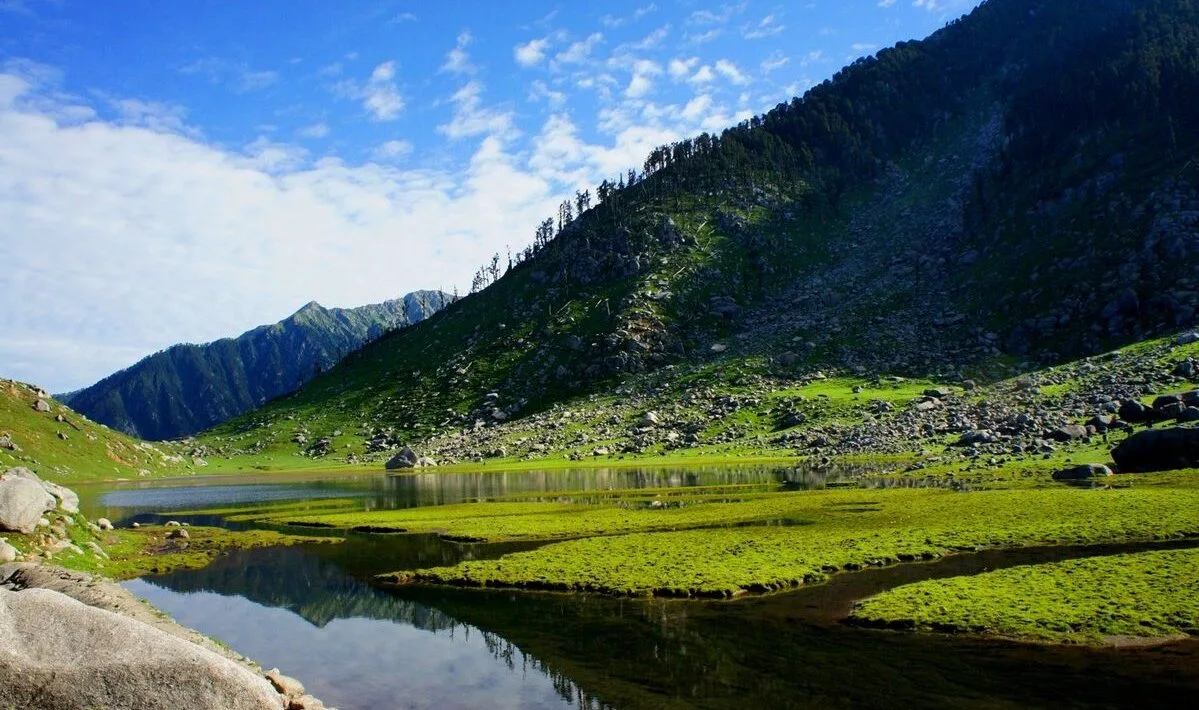
The Seven Lakes Dhauladhar Trek is a challenging high-altitude circuit linking a series of sacred glacial lakes hidden within the Dhauladhar Range. Combining rugged mountain terrain, high passes, and remote alpine camps, it is one of Himachal Pradesh's most demanding trekking routes.
Trek Highlights
Indrahar Pass
Standing at 14,107 ft, straddling the sharp rocky divide between the Kangra and Chamba valleys.
Lam Dal Lake
The largest and most spectacular glacial lake in the Dhauladhar range, shimmering blue amidst barren grey rock.
Triund Ridge
A stunning, grassy ridge offering unobstructed, face-to-face views of the towering Mun Peak.
It is rated as Difficult. The terrain involves constant boulder hopping, steep ascents up scree slopes to cross Indrahar Pass, and long days above 12,000 ft. It requires elite trekking fitness and previous high-altitude experience.
Do I need technical mountaineering gear?
If trekking in May or June, ice axes and microspikes/crampons are required to navigate the snow and ice around Indrahar Pass and the descent to Nag Dal. In September/October, good trekking boots and poles are usually sufficient.
Are there any tea houses on the route?
Tea houses are only available on Day 1 (Triund). Beyond Triund, the route is absolute wilderness. You must be fully self-sufficient with tents, stoves, and rations for the remaining 5 days.
Can I do this trek solo?
Absolutely not. The trail between the lakes is unmarked, involves treacherous boulder fields, and is prone to sudden whiteouts. Hiring a certified local Gaddi guide is mandatory for survival.
What is the risk of altitude sickness (AMS)?
High. You ascend rapidly from McLeod Ganj (6,800 ft) to Indrahar Pass (14,107 ft) in just three days. Proper hydration, gradual pacing, and carrying Diamox are essential.
Is water readily available on the trail?
Yes, there are glacial streams and the lakes themselves. However, the water must be purified, especially lower down where sheep grazing occurs.
Will there be mobile network connectivity?
You will have a signal at Triund (Day 1). After crossing the ridge towards Lahesh Cave and the lakes, you will be completely off the grid until you descend near Kareri Village.
Why are the lakes considered sacred?
The local Gaddi shepherds revere these lakes as the abode of Lord Shiva. Pilgrims take holy dips in Lam Dal and Nag Dal during the monsoon (August), believing it washes away sins.
How difficult is the Seven Lakes Dhauladhar Trek?
It is rated as Difficult. The terrain involves constant boulder hopping, steep ascents up scree slopes to cross Indrahar Pass, and long days above 12,000 ft. It requires elite trekking fitness and previous high-altitude experience.
Do I need technical mountaineering gear?
If trekking in May or June, ice axes and microspikes/crampons are required to navigate the snow and ice around Indrahar Pass and the descent to Nag Dal. In September/October, good trekking boots and poles are usually sufficient.
Are there any tea houses on the route?
Tea houses are only available on Day 1 (Triund). Beyond Triund, the route is absolute wilderness. You must be fully self-sufficient with tents, stoves, and rations for the remaining 5 days.
Can I do this trek solo?
Absolutely not. The trail between the lakes is unmarked, involves treacherous boulder fields, and is prone to sudden whiteouts. Hiring a certified local Gaddi guide is mandatory for survival.
What is the risk of altitude sickness (AMS)?
High. You ascend rapidly from McLeod Ganj (6,800 ft) to Indrahar Pass (14,107 ft) in just three days. Proper hydration, gradual pacing, and carrying Diamox are essential.
Is water readily available on the trail?
Yes, there are glacial streams and the lakes themselves. However, the water must be purified, especially lower down where sheep grazing occurs.
Will there be mobile network connectivity?
You will have a signal at Triund (Day 1). After crossing the ridge towards Lahesh Cave and the lakes, you will be completely off the grid until you descend near Kareri Village.
Why are the lakes considered sacred?
The local Gaddi shepherds revere these lakes as the abode of Lord Shiva. Pilgrims take holy dips in Lam Dal and Nag Dal during the monsoon (August), believing it washes away sins.
Are you a local operator?
Join our platform to list your verified packages for this trek.