
Explore
Intelligence
Season & Weather Guide
Best Time for Rupin Pass Trek — Month-by-Month Guide
May-June for the thrilling snow bridges and pass climb; September-October for clear skies and vibrant autumn colors.
Seasonal Verdict
When should you go?
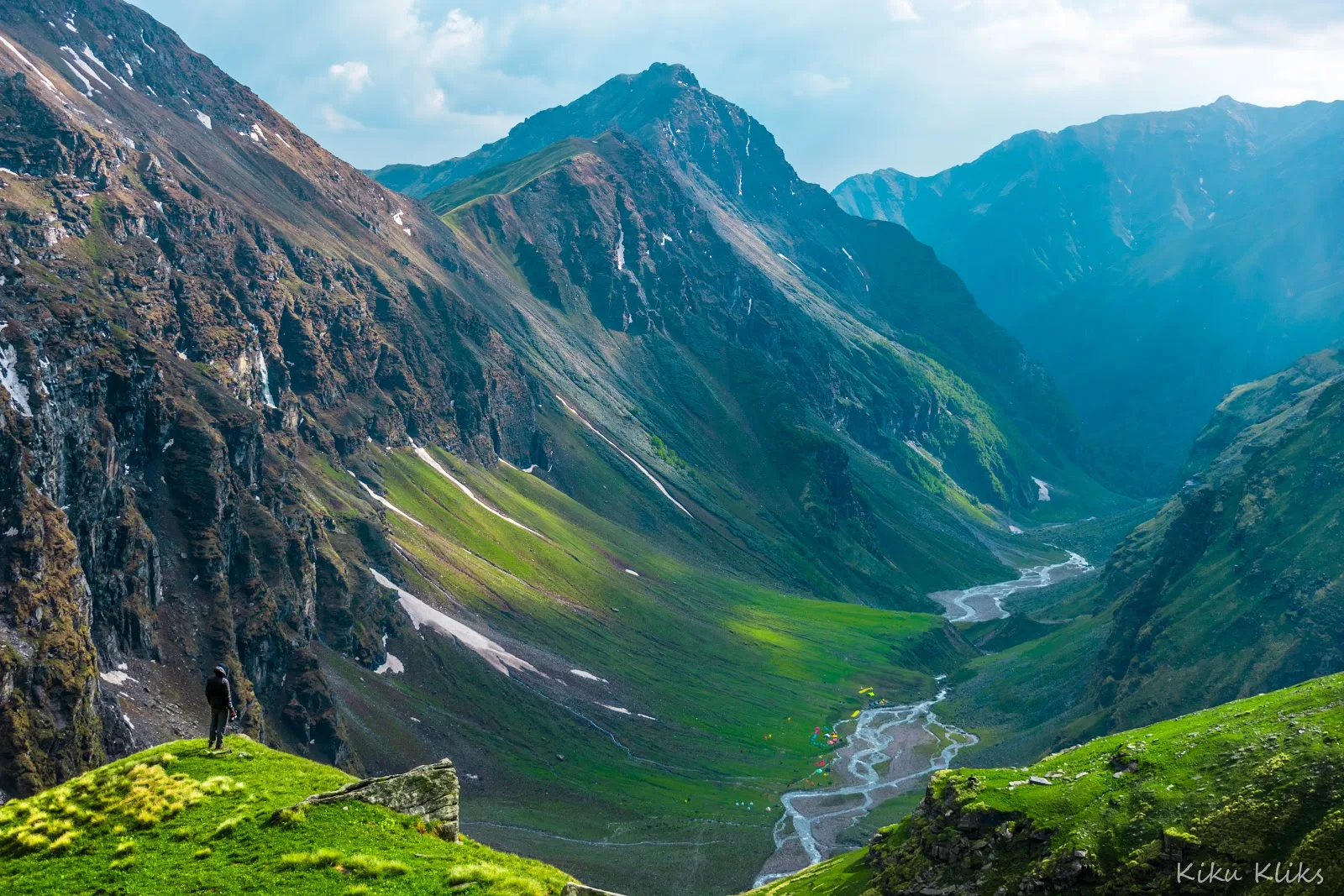
The Rupin Pass trek has two distinct and brilliant seasons. Early summer (May-June) offers the classic snow-covered pass and snow bridges, while post-monsoon (September-October) offers vibrant, clear views and the lush greenery of the Kinnaur valley.
Season at a Glance
Editor's Notes
Month by Month
What each month looks like
January
Conditions
Deep winter. The trail, pass, and upper camps are buried under several feet of snow.
Crowds
none
Lethal cold and completely inaccessible.
Inaccessible due to winter snow.
February
Conditions
Peak winter conditions. The route is closed.
Crowds
none
Inaccessible due to heavy snowpack.
Inaccessible.
March
Conditions
Heavy winter conditions persist, especially above 10,000 ft.
Crowds
none
Avalanche risk and impassable snow.
Pass remains closed due to snow.
April
Conditions
Spring in the lower valleys, but the pass and gullies remain choked with unstable snow.
Crowds
none
High avalanche risk in the pass gully.
Avalanche risk on the pass. Trail is not open.
May
Peak SeasonConditions
Season opens mid-May. Heavy snow at the pass. The famous snow bridges are intact. Thrilling snow ascent.
Crowds
high
Season opens. Expect deep snow at the pass and thrilling snow bridge crossings.
June
Peak SeasonConditions
Prime summer trekking. Warm days, cold nights. The snow at the pass softens by mid-day, requiring early starts.
Crowds
high
Prime time. Snow softens, requires early morning ascent to the pass.
July
Conditions
Monsoon begins. The lower valleys (Dhaula to Jhaka) become muddy, slippery, and prone to landslides. River levels are dangerously high.
Crowds
low
Heavy rain, landslides, and impassable rivers.
Monsoon. Dangerous rivers and slippery trails. Avoid.
August
Conditions
Peak monsoon. Trekking operations are shut down.
Crowds
none
Severe weather and dangerous trail conditions.
Peak monsoon. Trekking halted.
September
RecommendedConditions
Monsoon withdraws. The valleys are lush green. Skies are clear. Snow is mostly gone from the pass, revealing a steep scree climb.
Crowds
moderate
Monsoon ends. Lush green valleys. Pass is mostly scree and rock.
October
RecommendedConditions
Autumn colors peak. Crisp, clear views of the Kinnaur Kailash range. Nights become very cold at upper camps.
Crowds
moderate
Crystal clear views but very cold nights. Scree navigation required.
November
Conditions
Winter sets in rapidly. Night temperatures drop below -10°C. High risk of the pass closing due to early snowstorms.
Crowds
low
Extreme cold and risk of being stranded.
Winter begins. High risk of passes closing due to sudden snow.
December
Conditions
Deep winter. The pass is closed.
Crowds
none
Winter conditions.
Trek closes for winter.
Plan Your Trek:
Still deciding?
Compare routes side-by-side to find the perfect match for your fitness, dates, and budget.
Timing makes or breaks a trek. Send this to your group before you decide.
Step 3: Route Intelligence
You've chosen a season.
Now see exactly how the route unfolds day by day, including terrain types and daily altitude profiles.
Explore the Itinerary