Compare operators for Mud to Khamengar Glacier Trek
Himachal Pradesh
Challenging
MAX 17,500 FT
Compare operators for Mud to Khamengar Glacier Trek
Himachal PradeshChallenging
Interested in this trek?
We are currently vetting local partners for Mud to Khamengar Glacier Trek to ensure the highest safety standards. Be the first to know when it's open for booking.
Are you a local operator?
Join our platform to list your verified packages for Mud to Khamengar Glacier Trek and reach thousands of trekkers directly.
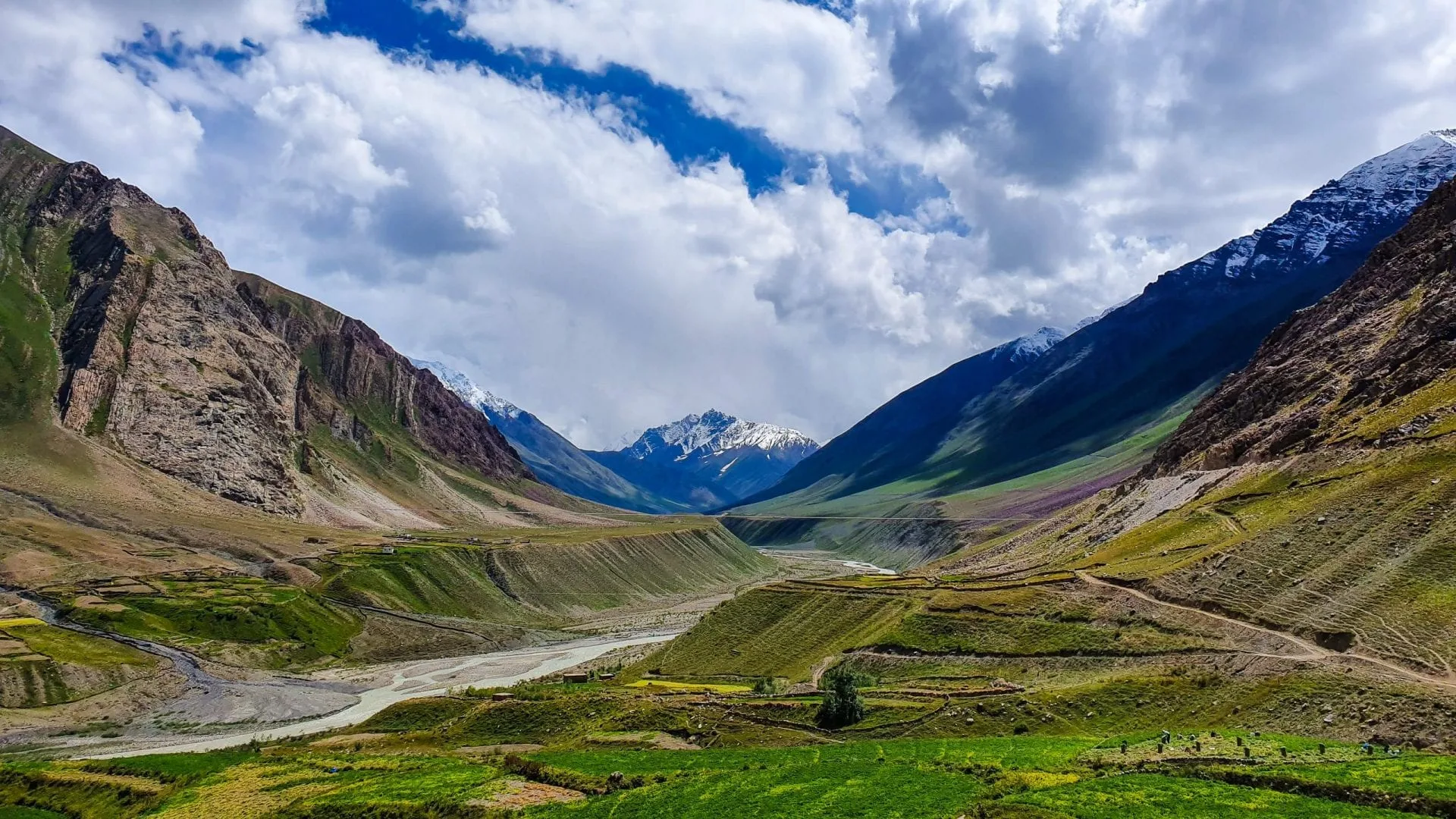
The Khamengar Glacier trek from Mud village in Pin Valley reaches a dramatic ice mass at 15,500 ft above one of Spiti's most remote upper valleys. Starting from Mud — the last village on the Pin River road — this 4-day difficult trek crosses scree-covered moraines and glacial streams in a stark lunar landscape unique to the Spiti desert environment. The upper glacier provides close-up access to 6,000m peaks on the Great Himalayan divide. A rare offbeat Spiti objective for serious trekkers.
Trek Highlights
Khamengar Glacier Snout — Striped Moraine
The distinctive alternating brown and white lateral moraine bands of the Khamengar glacier — a geological spectacle unique in the Spiti valley system.
Blue Sheep Herds — Pin Valley Scree
Herds of 50-100 Blue Sheep (Bharal) on the gray scree slopes of the Pin valley approach — one of the most wildlife-dense trekking corridors in India.
What makes the Khamengar glacier visually distinctive?
The Khamengar has strongly differentiated lateral moraines with alternating brown rock and white ice bands — the striped pattern from which the Tibetan name derives. It is highly photographic and geologically unusual.
Is the Pin Valley National Park entry required?
Yes. The trek passes through PVNP and requires a park permit from the DFO office in Kaza.
What wildlife can I see on the approach?
The Pin valley is one of India's premier Snow Leopard zones. Additionally: Himalayan Wolf (very rare), Tibetan Fox, Himalayan Ibex, Blue Sheep, and the PVNP is documented for Snow Leopard in the upper valley.
Is the glacier safe to walk on?
The glacier surface is stable but requires crampons. Crevasse bridging is present — your guide must do crevasse assessment before each rope team advance.
What is Mud village like?
Mud is the last settlement in Pin valley — a dramatically-sited stone village at the mouth of the inner valley. Population approximately 100 souls. Traditional Spitian Buddhist architecture. Basic guesthouses available.
How many people do this trek each year?
Perhaps 20-40 trekkers per year reach the Khamengar glacier area — making it one of the rarest trekking destinations in India.
Are there any permanent settlements above Mud?
No. Above Mud, the Pin valley is completely uninhabited — only seasonal ranger posts at the PVNP entry.
What is the Blue Sheep density like in Pin valley?
The Blue Sheep (Bharal) population in Pin valley PVNP is among the highest in India. Groups of 50-100 Bharal are routinely observed on the valley scree slopes.
Can I see the glacier from Mud village?
Only the very distant glacier peaks from Mud. The glacier itself is concealed in the inner valley 20+ km from Mud.
What is the most critical gear item?
Glacier goggles. Without category 4 glacier goggles, the UV exposure on the reflective glacier surface at 17,000 ft will cause severe snow blindness within hours.
What makes the Khamengar Glacier trek one of the hardest in Spiti?
The trek involves crossing the massive, highly active, and deeply crevassed Khamengar Glacier at over 16,000 ft, navigating loose moraine walls, and enduring extreme cold and wind chill in complete isolation.
Is there any evacuation option in Khamengar Valley?
Evacuation is exceptionally difficult. Helicopter rescue is the only viable option for critical emergencies, requiring manual transport to a flat glacial zone where the heli can land.
How do we cross the glacial melt rivers in Spiti?
River crossings must be completed early in the morning before 8 AM. By afternoon, the sun melts the glacier ice, turning shallow streams into raging, impassable torrents.
What is the cell signal situation on the Spiti side?
Mud village has basic BSNL/Jio connectivity. Once you enter the Khamengar gorge, you will experience absolute radio silence with zero cellular network.
Do we need high-altitude wilderness permits?
Yes, wildlife sanctuary and inner line permits are required from the SDM office in Kaza before entering the remote valleys bordering Spiti.
What makes the Khamengar glacier visually distinctive?
The Khamengar has strongly differentiated lateral moraines with alternating brown rock and white ice bands — the striped pattern from which the Tibetan name derives. It is highly photographic and geologically unusual.
Is the Pin Valley National Park entry required?
Yes. The trek passes through PVNP and requires a park permit from the DFO office in Kaza.
What wildlife can I see on the approach?
The Pin valley is one of India's premier Snow Leopard zones. Additionally: Himalayan Wolf (very rare), Tibetan Fox, Himalayan Ibex, Blue Sheep, and the PVNP is documented for Snow Leopard in the upper valley.
Is the glacier safe to walk on?
The glacier surface is stable but requires crampons. Crevasse bridging is present — your guide must do crevasse assessment before each rope team advance.
What is Mud village like?
Mud is the last settlement in Pin valley — a dramatically-sited stone village at the mouth of the inner valley. Population approximately 100 souls. Traditional Spitian Buddhist architecture. Basic guesthouses available.
How many people do this trek each year?
Perhaps 20-40 trekkers per year reach the Khamengar glacier area — making it one of the rarest trekking destinations in India.
Are there any permanent settlements above Mud?
No. Above Mud, the Pin valley is completely uninhabited — only seasonal ranger posts at the PVNP entry.
What is the Blue Sheep density like in Pin valley?
The Blue Sheep (Bharal) population in Pin valley PVNP is among the highest in India. Groups of 50-100 Bharal are routinely observed on the valley scree slopes.
Can I see the glacier from Mud village?
Only the very distant glacier peaks from Mud. The glacier itself is concealed in the inner valley 20+ km from Mud.
What is the most critical gear item?
Glacier goggles. Without category 4 glacier goggles, the UV exposure on the reflective glacier surface at 17,000 ft will cause severe snow blindness within hours.
What makes the Khamengar Glacier trek one of the hardest in Spiti?
The trek involves crossing the massive, highly active, and deeply crevassed Khamengar Glacier at over 16,000 ft, navigating loose moraine walls, and enduring extreme cold and wind chill in complete isolation.
Is there any evacuation option in Khamengar Valley?
Evacuation is exceptionally difficult. Helicopter rescue is the only viable option for critical emergencies, requiring manual transport to a flat glacial zone where the heli can land.
How do we cross the glacial melt rivers in Spiti?
River crossings must be completed early in the morning before 8 AM. By afternoon, the sun melts the glacier ice, turning shallow streams into raging, impassable torrents.
What is the cell signal situation on the Spiti side?
Mud village has basic BSNL/Jio connectivity. Once you enter the Khamengar gorge, you will experience absolute radio silence with zero cellular network.
Do we need high-altitude wilderness permits?
Yes, wildlife sanctuary and inner line permits are required from the SDM office in Kaza before entering the remote valleys bordering Spiti.
Are you a local operator?
Join our platform to list your verified packages for this trek.