
Explore
Intelligence
Season & Weather Guide
Best Time for Miyar Valley Trek — Month-by-Month Guide
August and September are the sweet spots, offering a dry rain-shadow escape from the Indian monsoon with blooming wildflowers.
Seasonal Verdict
When should you go?
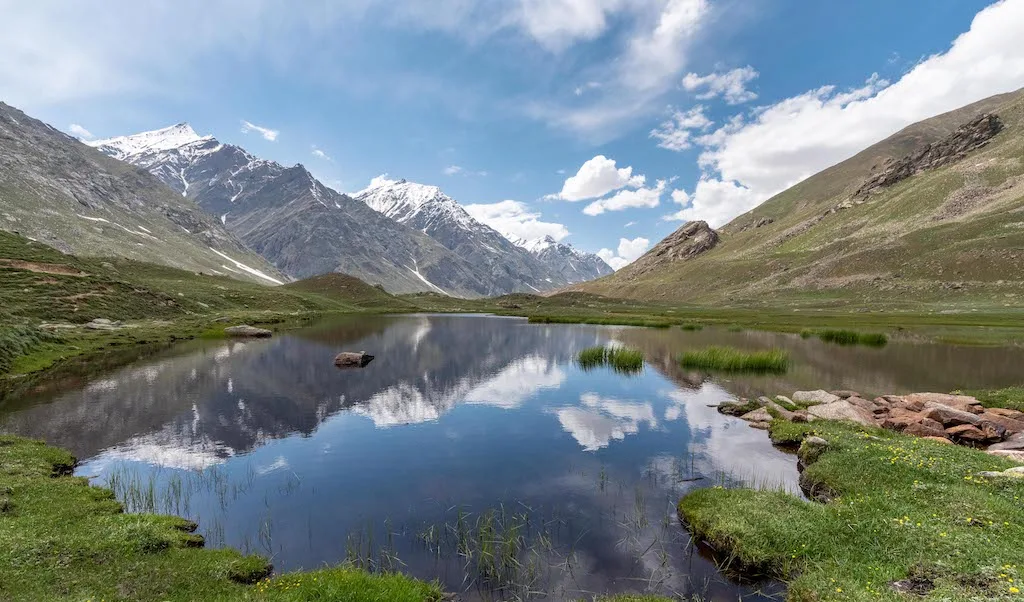
Miyar Valley sits in the rain-shadow of the Pir Panjal range, meaning it receives significantly less rainfall than Manali. Late summer (August to September) is the absolute best time, offering blooming meadows and stable walking conditions.
Season at a Glance
Editor's Notes
Month by Month
What each month looks like
January
Conditions
Valley completely snowbound. Approach roads from Manali (Atal Tunnel/Rohtang) are largely blocked or highly risky.
Crowds
none
Extreme winter, deep snowpack, sub-zero temperatures.
Route inaccessible due to massive snowpack.
February
Conditions
Peak winter. Villages are isolated. Avalanche risk on higher slopes is extreme.
Crowds
none
Extreme winter and avalanche risk.
Route inaccessible.
March
Conditions
Heavy late-winter snow. No trail visibility. Only suitable for specialized ski-mountaineering.
Crowds
none
Impassable trail conditions.
Deep snow still covers the valley floor.
April
Conditions
Snow begins to melt, causing dangerously swollen, icy rivers. Trails are muddy and unstable.
Crowds
none
High water levels and unstable snow bridges.
Snow melting, rivers dangerously high.
May
Conditions
Pre-season. Lower valley is accessible but higher camps like Zardong still hold deep, soft snow.
Crowds
none
Soft snow makes boulder-hopping treacherous.
Soft snow makes boulder walking risky.
June
RecommendedConditions
Trekking season opens. Snow lines recede. Rivers are fast-flowing due to peak glacial melt.
Crowds
low
Great time to go. Rivers are high; cross early in the day.
July
RecommendedConditions
Monsoon hits Manali, but Lahaul stays relatively dry. Flora begins to bloom. River crossings are challenging.
Crowds
low
Flora blooming. Pack good rain gear for the transit through Manali.
August
RecommendedConditions
The absolute peak season. Endless fields of wildflowers. Days are pleasant, nights are crisp. Rain shadow protects the valley.
Crowds
low
Peak wildflower season. Highly recommended.
September
RecommendedConditions
Autumn arrives. The green valley turns golden. Skies are crystal clear, offering sharp views of Menthosa.
Crowds
low
Post-monsoon window opens. Crystal clear skies and golden grass.
October
RecommendedConditions
Very cold but exceptionally clear. Snowfall can start mid-month, closing the higher camps abruptly.
Crowds
low
Stunning clarity but rapidly dropping temperatures. Streams begin to freeze.
November
Conditions
Winter sets in rapidly. Streams freeze over. High risk of hypothermia.
Crowds
none
Extreme wind chill and trail closure.
Winter sets in. Trekking discouraged due to extreme cold.
December
Conditions
Deep freeze. The valley enters its long winter hibernation.
Crowds
none
Inaccessible and dangerously cold.
Route entirely closed off.
Plan Your Trek:
Still deciding?
Compare routes side-by-side to find the perfect match for your fitness, dates, and budget.
Timing makes or breaks a trek. Send this to your group before you decide.
Step 3: Route Intelligence
You've chosen a season.
Now see exactly how the route unfolds day by day, including terrain types and daily altitude profiles.
Explore the Itinerary