
Explore
Intelligence
Season & Weather Guide
Best Time for Marinda Tal Trek — Month-by-Month Guide
Pre-monsoon (May-June) for blooming flowers, and post-monsoon (September-November) for crystal clear mountain views.
Seasonal Verdict
When should you go?
The trek is best enjoyed during the pre-monsoon summer months (May and June) when the valley is lush green and flowers are blooming, and the post-monsoon autumn months (September to November) for crystal clear skies and sharp mountain views.
Season at a Glance
Editor's Notes
Month by Month
What each month looks like
January
Conditions
Deep winter. The trail beyond Osla is typically buried under heavy snow, making it a difficult winter expedition.
Crowds
none
Heavy snow and extreme cold.
Lake is usually inaccessible due to deep snow.
February
Conditions
Peak winter. High snow accumulation makes the 3km stretch to Marinda Tal inaccessible for standard trekking.
Crowds
none
Impassable trails.
Lake inaccessible.
March
Conditions
Spring begins. Lower trails clear up, but Har Ki Dun and Marinda Tal still hold significant, slushy snow.
Crowds
none
Slushy snow and unpredictable weather.
Slushy snow near the top. Hard trekking.
April
RecommendedConditions
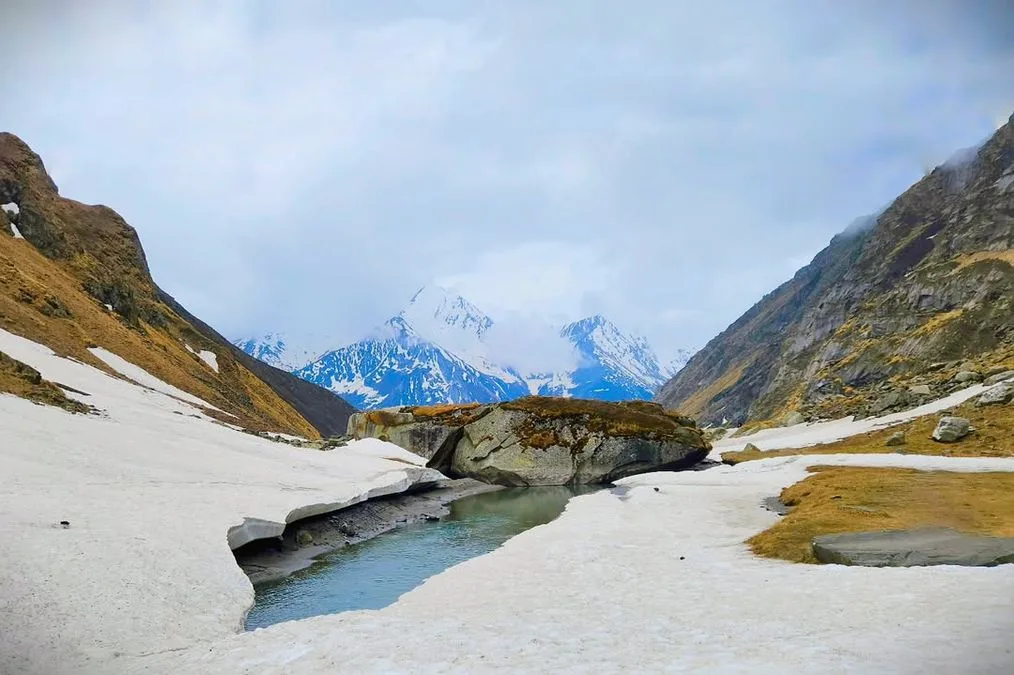
Late April is possible, but expect hard snow near the lake requiring microspikes.
Crowds
low
Great time. Lingering snow adds beauty to the lake.
May
RecommendedConditions
Excellent trekking conditions. The snow clears, meadows turn green, and daytime temperatures are pleasant.
Crowds
low
Peak season. Excellent weather and green valleys.
June
RecommendedConditions
Prime summer window. Wildflowers bloom across the valley. Expect occasional afternoon showers as the monsoon approaches.
Crowds
low
Lush and vibrant. Carry rain gear for afternoon showers.
July
Conditions
Monsoon hits the region. Trails become extremely muddy, slippery, and infested with leeches.
Crowds
none
Heavy rain and landslides.
Avoid. Heavy monsoon rains and leeches.
August
Conditions
Peak monsoon. Rivers swell dangerously. Roads to Sankri often get blocked by landslides.
Crowds
none
Dangerous road/trail conditions.
Avoid. Landslide risks.
September
RecommendedConditions
Post-monsoon clearing. The skies are washed clean, offering the sharpest views of Swargarohini. The valley is vibrantly green.
Crowds
low
Best season. Crystal clear views of Swargarohini.
October
RecommendedConditions
Autumn colors take over. Days are clear and sunny, but temperatures drop significantly at night.
Crowds
low
Perfect skies, but prepare for freezing nights.
November
RecommendedConditions
Early winter. Crisp air, golden meadows, but it gets very cold. Late November may see the first snowfalls.
Crowds
low
Very cold. Early snowfalls possible.
December
Conditions
Winter sets in. Har Ki Dun is accessible as a winter trek, but the final push to Marinda Tal often becomes too snowed in.
Crowds
none
Winter conditions.
Winter trek to Har Ki Dun is fine, but the lake extension may get blocked.
Plan Your Trek:
Still deciding?
Compare routes side-by-side to find the perfect match for your fitness, dates, and budget.
Timing makes or breaks a trek. Send this to your group before you decide.
Step 3: Route Intelligence
You've chosen a season.
Now see exactly how the route unfolds day by day, including terrain types and daily altitude profiles.
Explore the Itinerary