
Difficulty & Readiness Guide
Is Kang Yatse 2 Peak Expedition Difficult? — Fitness & Altitude Guide
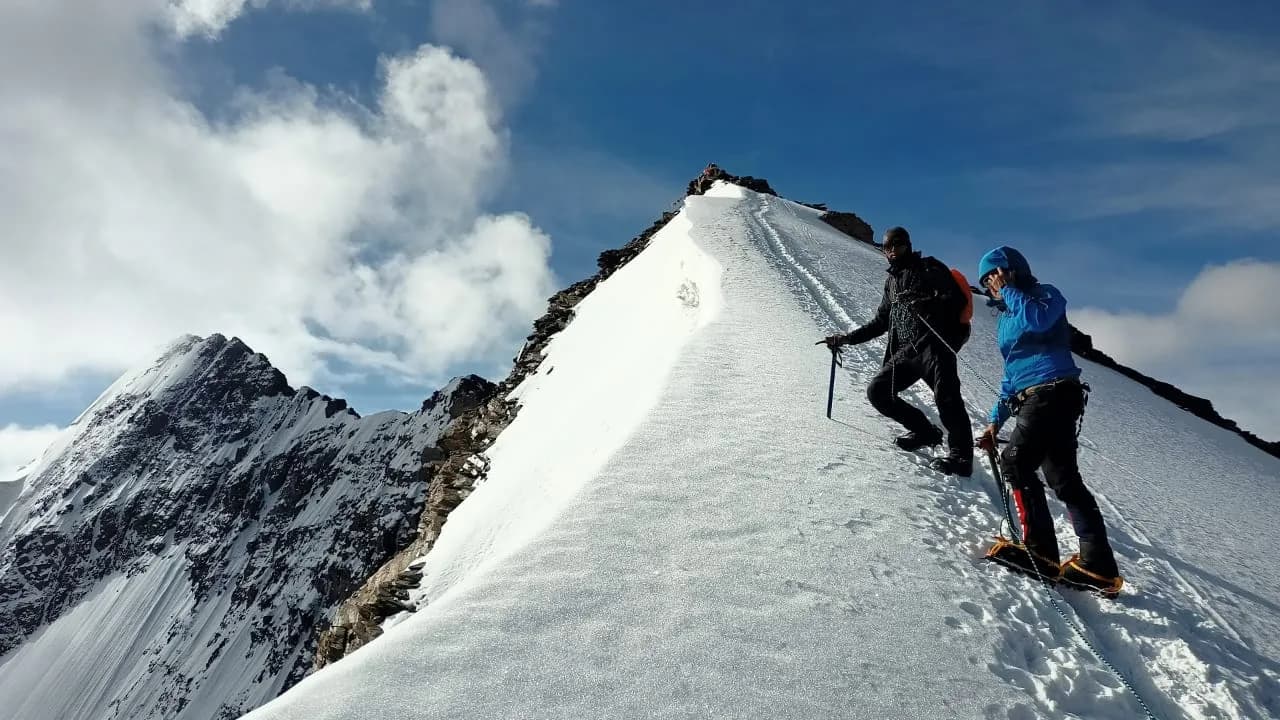
PD grade — India's most accessible 6,000m peak. Requires crampon and ice-axe basics but no roped technical climbing.
Preparation Required
Advanced
Prior Experience
Required: At least 2-3 moderate Himalayan treks (above 13,000ft).
Score Engine v3
Why This Score?
Stamina
55/100
Based on average nightly altitude gain, highest campsite, and daily distance. Reflects how hard the average day feels.
Spike Day
50/100
Based on max altitude reached, summit day elevation gain, and summit day distance. Reflects the hardest single day.
Why Kang Yatse 2 Peak Expedition Feels Difficult
A demanding expedition with extreme joint & muscle impact, cumulative fatigue, and altitude exposure. This route will push every dimension of your physical and mental endurance to the limit.
Physiological Demand
Steep, punishing ascents and descents that will heavily tax your knees, ankles, and overall joint stability.
Deep wilderness isolation and cumulative fatigue. The mental challenge of enduring days on end in harsh conditions is extreme.
Extreme high altitude exposure. Severe oxygen depletion requires careful acclimatization and peak cardiovascular health.
Expect long, exhausting days of sustained climbing at high intensity. Your cardiovascular system will be pushed to its absolute limit.
Rough, uneven trails with occasional scrambling or minor exposure.
Crux Section
Day 9 — Oxygen Peak
Highest exposure point at 20,505ft.
Expedition Grading Context
The 74/100 score reflects the physical endurance required for this expedition, which can be deceptive. While some 10-day treks score higher due to their length, this is a technical mountaineering peak that requires specialized skills.
Kang Yatse 2 Peak Expedition/ 74
Physical Challenge
Caution
Implement the 'Rest Step' above 18,000ft — lock your back knee fully straight for a split second on each step to use your skeleton instead of muscles.
Terrain Breakdown
High-altitude snowfield approach with gentle scree in the lower sections.
Summit Day Notes
Non-technical summit push on snow. Good conditions required.
The Descent
Same route descent. Easy but requires careful footing on scree.
Preparation
Must be able to trek 6-8 hrs per day with a heavy pack at altitude.
Route Stress Forecast
Highest exposure point at 20,505ft.
Deep 4,105ft descent will test joint stability.
Day 3 requires the highest sustained output.
*Forecast derived from route geometry and altitude profile. External variables (weather/group) remain the final authority.
Trail Performance Data
Max Gradient
55%
Hydration
1.5L per km recommended
Loose Surface Sections
- •Base camp to Summit is entirely loose scree and hard ice
Common Mistakes on Kang Yatse 2 Peak Expedition
Most injuries and failures on this trail can be avoided by making smarter decisions early on.
Going too fast at altitude
Underestimating cold at summit
Safety & Medical Risks
Key Risks
AMS / HACE above 16,000ft
Rockfall on descent
Whiteout on summit ridge
AMS (Altitude Sickness)
Mandatory 2-day acclimatization in Leh before trekking. SpO2 monitoring daily from Nimaling.
Evacuation Route
Return to Nimaling — horse evacuation to Chilling — vehicle to Leh SNM Hospital
Solo Trekking
Not permitted under IMF regulations without a registered guide.
Common Trail Ailments
🏥 Nearest ICU: SNM Hospital, Leh
Tactical Emergency Hub
> Immediate vehicle evacuation back down to Keylong if AMS strikes at Base Camp.
Who Can Do This Trip?
Min Age
18+
Max Age
55
Western Toilets at Base
No
Solo Female Travelers
Must join an established, registered IMF expedition group.
Expert Verdict
Highly technical peak requiring physical and mental preparation.
Ready to book? Compare verified operators for Kang Yatse 2 Peak Expedition — transparent pricing, no paid rankings.
Want to know which operators carry certified guides and medical support? See operator safety ratings for Kang Yatse 2 Peak Expedition
Also on this trek
Still deciding?
Compare routes side-by-side to find the perfect match for your fitness, dates, and budget.
Still think it's doable? Share this with your trek mate and see if they agree.
Fit for the challenge?
For challenging treks, safety is paramount. Find operators prioritizing medical support and guide expertise.
Compare operator safety scores