
Explore
Intelligence
Season & Weather Guide
Best Time for Kalicho Pass Trek — Month-by-Month Guide
A tiny late-summer window (mid-August to September) is the only safe period to dodge deadly monsoons and winter blizzards.
Seasonal Verdict
When should you go?
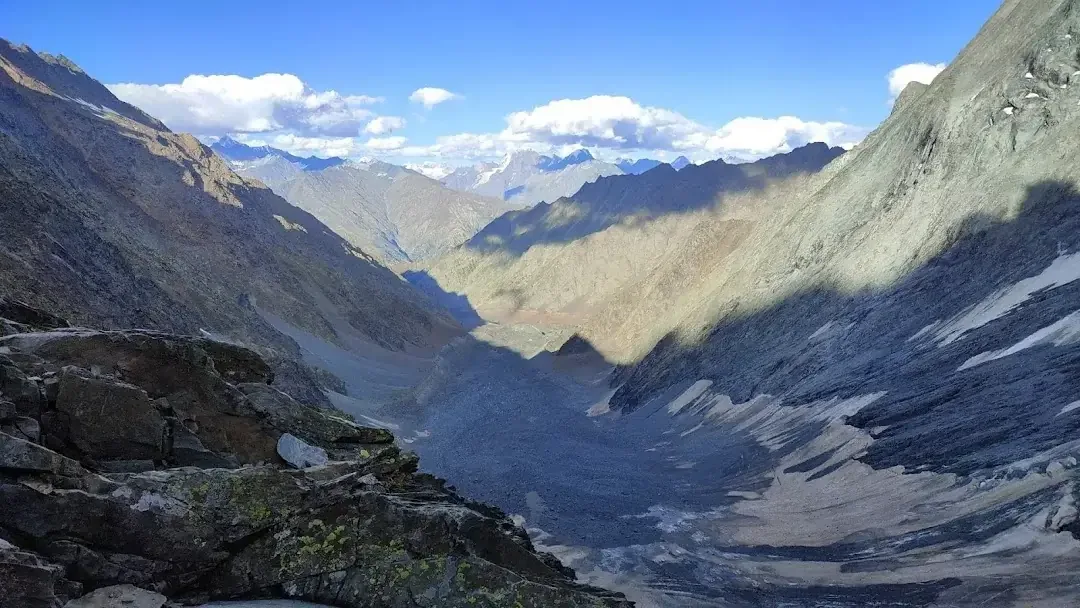
The pass opens very late due to its high altitude and geographic positioning. The only safe and viable window is from mid-August to late September. Any earlier invites avalanche risk; any later invites severe blizzards.
Season at a Glance
Editor's Notes
Month by Month
What each month looks like
January
Conditions
Pass completely closed and buried under several meters of snow.
Crowds
none
Lethal winter conditions, high avalanche danger.
Pass is dead to the world. Lethal conditions.
February
Conditions
Peak winter. Route inaccessible.
Crowds
none
Extreme winter, deep snowpack.
Extreme winter. Route inaccessible.
March
Conditions
Heavy late-winter snow. No trail visibility.
Crowds
none
High avalanche risk, impassable.
Avalanche danger at its absolute peak.
April
Conditions
Snow begins melting at lower altitudes, but the pass is entirely snowbound.
Crowds
none
Avalanche danger.
Snow melting lower down, but pass remains buried.
May
Conditions
Spring in Chamba, but the pass at 16,370 ft remains locked in treacherous snow.
Crowds
none
Deep, unstable snowpack on steep gradients.
Glaciers are unstable and dangerous.
June
Conditions
Snow starts clearing, but glaciers are highly unstable with hidden crevasses.
Crowds
none
Crevasse danger and snow-melt floods.
Crevasses opening up. Still highly risky.
July
Conditions
Monsoon hits Chamba. Landslides are common on approach roads. The pass is still risky.
Crowds
none
Heavy rain, landslides, and slippery moraine.
Monsoon rains make the Chamba approach muddy and landslide-prone.
August
RecommendedConditions
Post mid-August, the monsoon recedes. The route opens. Gaddi shepherds cross during this time.
Crowds
low
Late August opens the window. Trekking is viable.
September
RecommendedConditions
The absolute best window. Clear skies, stable rocks, and hardened ice. Safe river crossings early morning.
Crowds
low
The golden window. Stable ice, clear skies, and cold nights.
October
Conditions
Early October is feasible but extremely cold. By mid-October, sudden snowstorms can trap trekkers.
Crowds
none
High risk of sudden blizzards and extreme wind chill.
Too cold. Sudden blizzards can trap teams.
November
Conditions
Winter arrives. Pass completely closes.
Crowds
none
Sub-zero temperatures and snow accumulation.
Winter sets in. Trekking impossible.
December
Conditions
Deep freeze. The mountain goes into hibernation.
Crowds
none
Inaccessible.
Pass is closed.
Plan Your Trek:
Still deciding?
Compare routes side-by-side to find the perfect match for your fitness, dates, and budget.
Timing makes or breaks a trek. Send this to your group before you decide.
Step 3: Route Intelligence
You've chosen a season.
Now see exactly how the route unfolds day by day, including terrain types and daily altitude profiles.
Explore the Itinerary