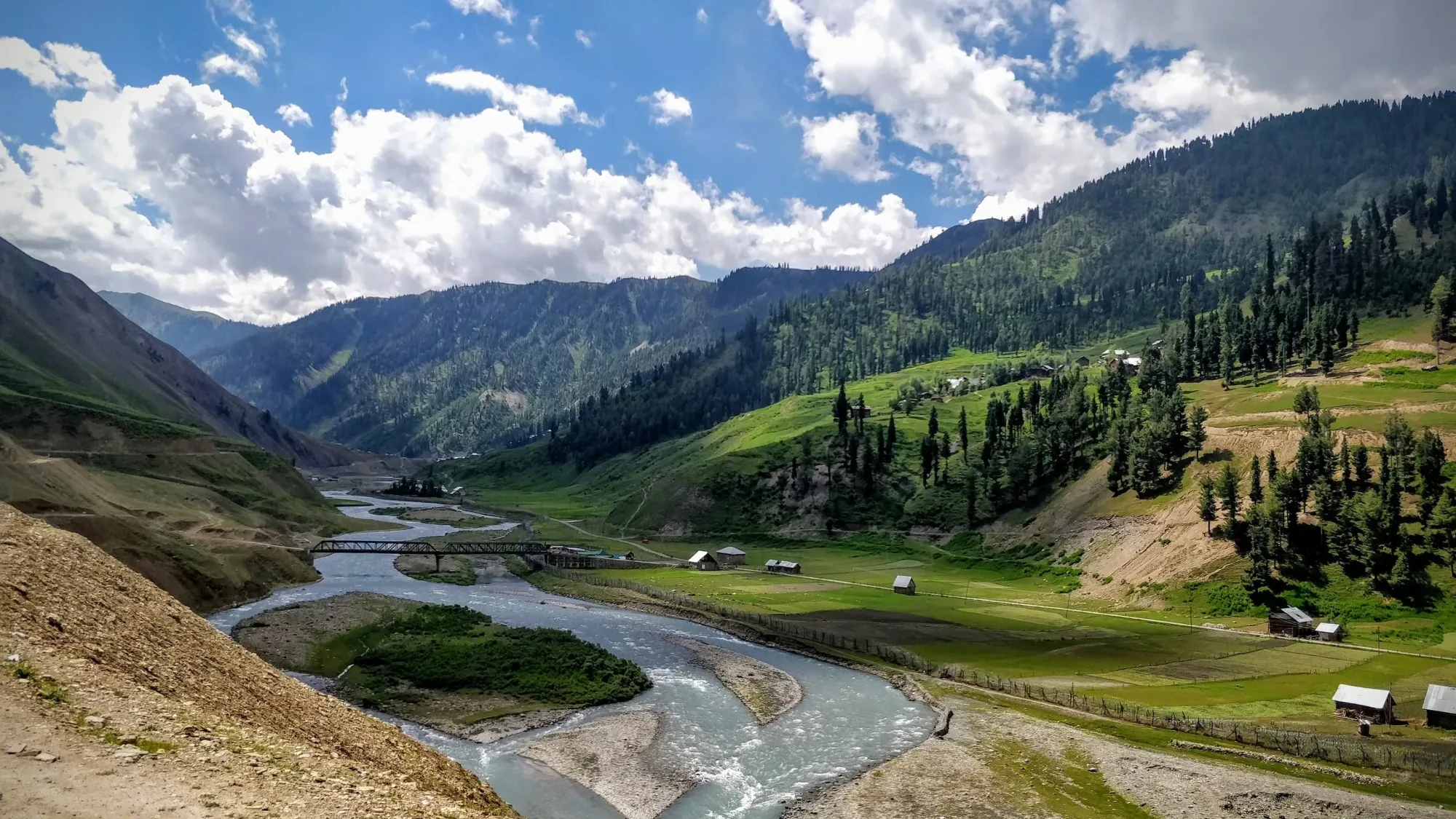
The Gurez Valley Trek leads into one of Kashmir's most remote mountain regions, culminating at the high-altitude Patalwansar Lakes. Traversing pine forests, alpine meadows, and glacial terrain beneath the iconic Habba Khatoon peak, the trek combines wilderness, Dard-Shin culture, and spectacular Himalayan scenery in a little-visited border valley.
Trek Highlights
Patalwansar Lakes
Twin crystal-clear alpine lakes sitting in a desolate, rocky basin at 13,000 ft.
Habba Khatoon Peak
A massive, symmetrical limestone pyramid that towers over the Gurez valley.
Khaari Meadows
Endless rolling green grasslands dotted with wildflowers and grazing sheep.
Is it safe to trek in Gurez given its proximity to the Line of Control (LoC)?
Yes, provided you follow the rules. The Indian Army heavily heavily monitors the region. You must stay on the designated trekking routes, carry your Inner Line Permit at all times, and avoid photographing military installations. The area itself is extremely peaceful.
How difficult is the trek to Patalwan Lakes?
It is rated as Moderate to Difficult. While the gradient is generally gradual compared to Himachal treks, the isolation, lack of defined trails, and high altitude (13,000 ft) make it physically demanding. You must be completely self-sufficient.
Do I need a special permit for the Gurez Trek?
Yes. An Inner Line Permit (ILP) is mandatory for all civilians entering the Gurez Valley. This must be obtained from the District Commissioner's office in Bandipora or Srinagar before starting your journey.
Will my mobile phone work during the trek?
No. Gurez is a communication black hole. You might get a faint, unreliable BSNL or Jio signal in Dawar (the base village), but once you start the trek towards the lakes, you will have absolutely zero connectivity.
Are there any tea houses or local villages on the trail?
There are a few seasonal Gujjar (shepherd) settlements on the lower meadows, but no commercial tea houses. You must carry all your camping gear, stoves, and food from Srinagar or Dawar.
What is the risk of altitude sickness?
Moderate to High. You sleep at around 10,500 ft on Day 1 and push to 13,000 ft on Day 2. Proper acclimatization in Dawar before starting the trek is essential to minimize AMS risks.
Can I do this trek solo?
No. The Indian Army will likely not permit a solo trekker to wander near the LoC. Furthermore, the trails are unmarked shepherd routes. A registered local guide is strictly mandatory.
What wildlife might I encounter?
The region is home to the Himalayan Brown Bear, Snow Leopards (rarely seen in summer), Ibex, and Marmots. Always maintain a clean campsite to avoid attracting bears.
Is it safe to trek in Gurez given its proximity to the Line of Control (LoC)?
Yes, provided you follow the rules. The Indian Army heavily heavily monitors the region. You must stay on the designated trekking routes, carry your Inner Line Permit at all times, and avoid photographing military installations. The area itself is extremely peaceful.
How difficult is the trek to Patalwan Lakes?
It is rated as Moderate to Difficult. While the gradient is generally gradual compared to Himachal treks, the isolation, lack of defined trails, and high altitude (13,000 ft) make it physically demanding. You must be completely self-sufficient.
Do I need a special permit for the Gurez Trek?
Yes. An Inner Line Permit (ILP) is mandatory for all civilians entering the Gurez Valley. This must be obtained from the District Commissioner's office in Bandipora or Srinagar before starting your journey.
Will my mobile phone work during the trek?
No. Gurez is a communication black hole. You might get a faint, unreliable BSNL or Jio signal in Dawar (the base village), but once you start the trek towards the lakes, you will have absolutely zero connectivity.
Are there any tea houses or local villages on the trail?
There are a few seasonal Gujjar (shepherd) settlements on the lower meadows, but no commercial tea houses. You must carry all your camping gear, stoves, and food from Srinagar or Dawar.
What is the risk of altitude sickness?
Moderate to High. You sleep at around 10,500 ft on Day 1 and push to 13,000 ft on Day 2. Proper acclimatization in Dawar before starting the trek is essential to minimize AMS risks.
Can I do this trek solo?
No. The Indian Army will likely not permit a solo trekker to wander near the LoC. Furthermore, the trails are unmarked shepherd routes. A registered local guide is strictly mandatory.
What wildlife might I encounter?
The region is home to the Himalayan Brown Bear, Snow Leopards (rarely seen in summer), Ibex, and Marmots. Always maintain a clean campsite to avoid attracting bears.
Are you a local operator?
Join our platform to list your verified packages for this trek.