We are currently vetting local partners for Khatling Glacier Expedition to ensure the highest safety standards. Be the first to know when it's open for booking.
Are you a local operator?
Join our platform to list your verified packages for Khatling Glacier Expedition and reach thousands of climbers directly.
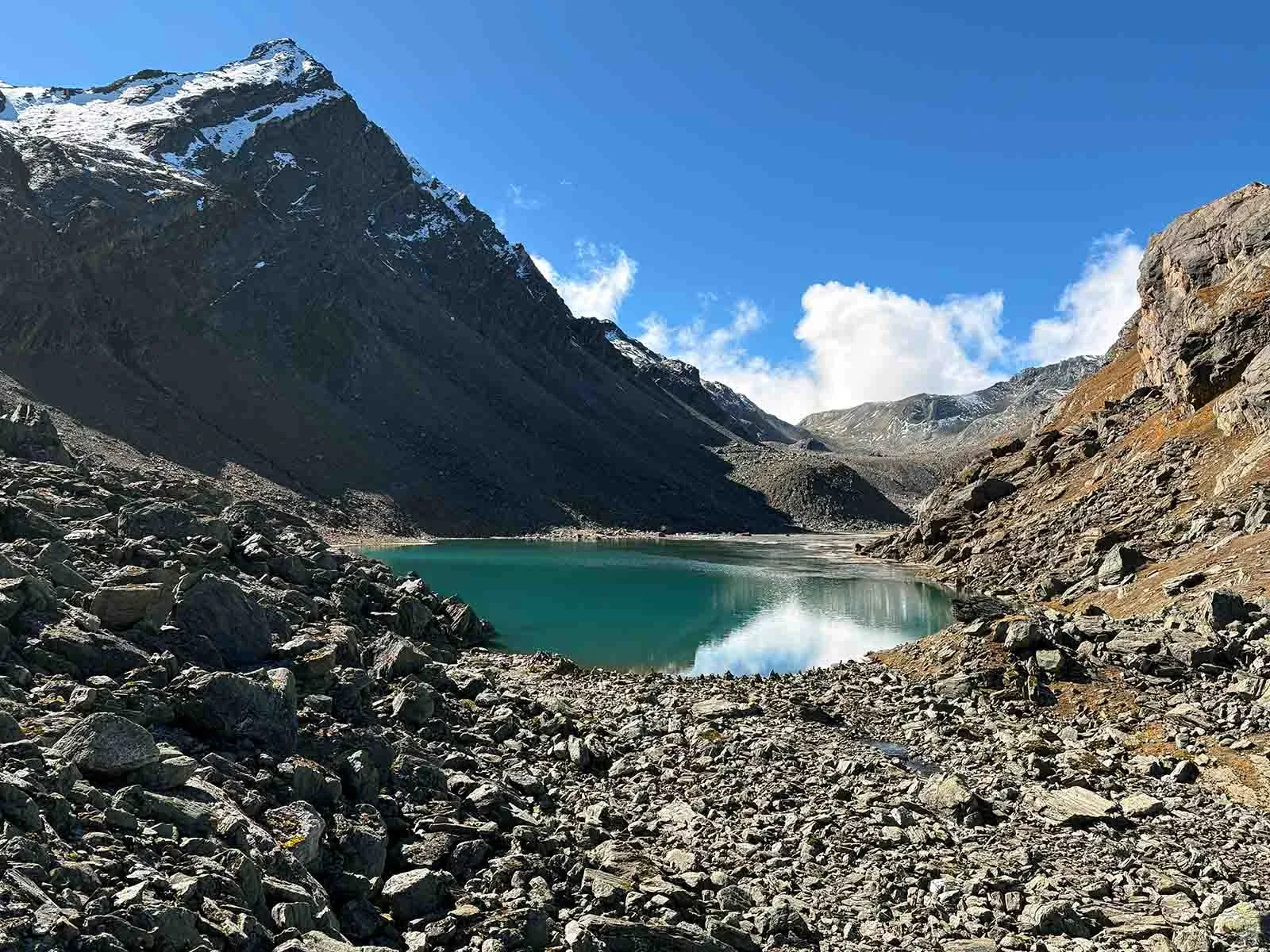
Khatling Glacier is the birthplace of the Bhilangana River — a massive glacier at 12,140 ft flanked by the twin peaks of Jogin I and Jogin II. This 9-day hard trek from Ghuttu is one of Garhwal's most remote and untouched glacier expeditions, passing through ancient shepherd trails, steep moraines, and river crossings that demand expert-level fitness. With zero commercial traffic and no phone signal for days, Khatling is the Himalayan wilderness at its most raw and unfiltered.
It is rated as an advanced, highly demanding route. You will be navigating glacier, snow, moraine, forest, meadow and reaching a maximum altitude of 17388 ft. Prior high-altitude trekking or mountaineering experience is strictly required.
What is the best time of year to attempt this?
The most recommended weather windows are typically june and september. During these periods, the snow is stable and the skies are clear. You must absolutely avoid the monsoon months of july and august and november due to severe objective hazards and washed-out roads.
Where does the expedition officially start?
The primary logistical hub and starting point is the base camp. For transit, trekkers usually fly into Jolly Grant Airport, Dehradun (DED) or take a train to Dehradun (DDN) / Haridwar (HW) before driving up to the base.
Are permits strictly required?
Yes. Because this route traverses sensitive and high-altitude regions in Uttarakhand, official forest permits (and potentially Inner Line Permits) are mandatory. Your expedition operator will typically manage the complex documentation.
What kind of fitness preparation is necessary?
You need peak cardiovascular endurance. We recommend rigorous cardiovascular training and load-bearing hikes. The ability to carry an 8-10kg backpack over steep inclines in thin air is critical for success.
Will there be mobile network connectivity?
Connectivity is extremely limited to non-existent. You may get a faint signal at the base camp, but beyond that, the trail is completely off-grid. Reputable operators carry satellite communicators for emergencies.
What is the risk of Acute Mountain Sickness (AMS)?
At heights reaching 17388 ft, the air is incredibly thin, making AMS a severe risk. The itinerary is designed with acclimatization days, but you must stay hydrated and communicate any symptoms like headaches or nausea immediately.
What specialized gear is strictly mandatory?
High-ankle insulated mountaineering boots, a sleeping bag rated to at least -20°C (preferably -40°C for expeditions), and a heavily wind-resistant hardshell jacket are non-negotiable for survival and comfort.
How are emergency evacuations handled in this terrain?
Manual stretcher evacuation to the nearest road-head is the primary and most reliable method. Helicopter rescue is feasible in this region, but it is strictly dependent on clear weather conditions and military clearance.
What are the primary objective hazards on the route?
Beyond sheer exhaustion, trekkers must be mentally prepared for crevasses, rockfall, ams risk, whiteout, avalanches, exposure. Listening to your technical guide and adhering to strict turn-around times is essential for safety.
How difficult is the The Khatling route?
It is rated as an advanced, highly demanding route. You will be navigating glacier, snow, moraine, forest, meadow and reaching a maximum altitude of 17388 ft. Prior high-altitude trekking or mountaineering experience is strictly required.
What is the best time of year to attempt this?
The most recommended weather windows are typically june and september. During these periods, the snow is stable and the skies are clear. You must absolutely avoid the monsoon months of july and august and november due to severe objective hazards and washed-out roads.
Where does the expedition officially start?
The primary logistical hub and starting point is the base camp. For transit, trekkers usually fly into Jolly Grant Airport, Dehradun (DED) or take a train to Dehradun (DDN) / Haridwar (HW) before driving up to the base.
Are permits strictly required?
Yes. Because this route traverses sensitive and high-altitude regions in Uttarakhand, official forest permits (and potentially Inner Line Permits) are mandatory. Your expedition operator will typically manage the complex documentation.
What kind of fitness preparation is necessary?
You need peak cardiovascular endurance. We recommend rigorous cardiovascular training and load-bearing hikes. The ability to carry an 8-10kg backpack over steep inclines in thin air is critical for success.
Will there be mobile network connectivity?
Connectivity is extremely limited to non-existent. You may get a faint signal at the base camp, but beyond that, the trail is completely off-grid. Reputable operators carry satellite communicators for emergencies.
What is the risk of Acute Mountain Sickness (AMS)?
At heights reaching 17388 ft, the air is incredibly thin, making AMS a severe risk. The itinerary is designed with acclimatization days, but you must stay hydrated and communicate any symptoms like headaches or nausea immediately.
What specialized gear is strictly mandatory?
High-ankle insulated mountaineering boots, a sleeping bag rated to at least -20°C (preferably -40°C for expeditions), and a heavily wind-resistant hardshell jacket are non-negotiable for survival and comfort.
How are emergency evacuations handled in this terrain?
Manual stretcher evacuation to the nearest road-head is the primary and most reliable method. Helicopter rescue is feasible in this region, but it is strictly dependent on clear weather conditions and military clearance.
What are the primary objective hazards on the route?
Beyond sheer exhaustion, trekkers must be mentally prepared for crevasses, rockfall, ams risk, whiteout, avalanches, exposure. Listening to your technical guide and adhering to strict turn-around times is essential for safety.
Are you a local operator?
Join our platform to list your verified packages for this expedition.