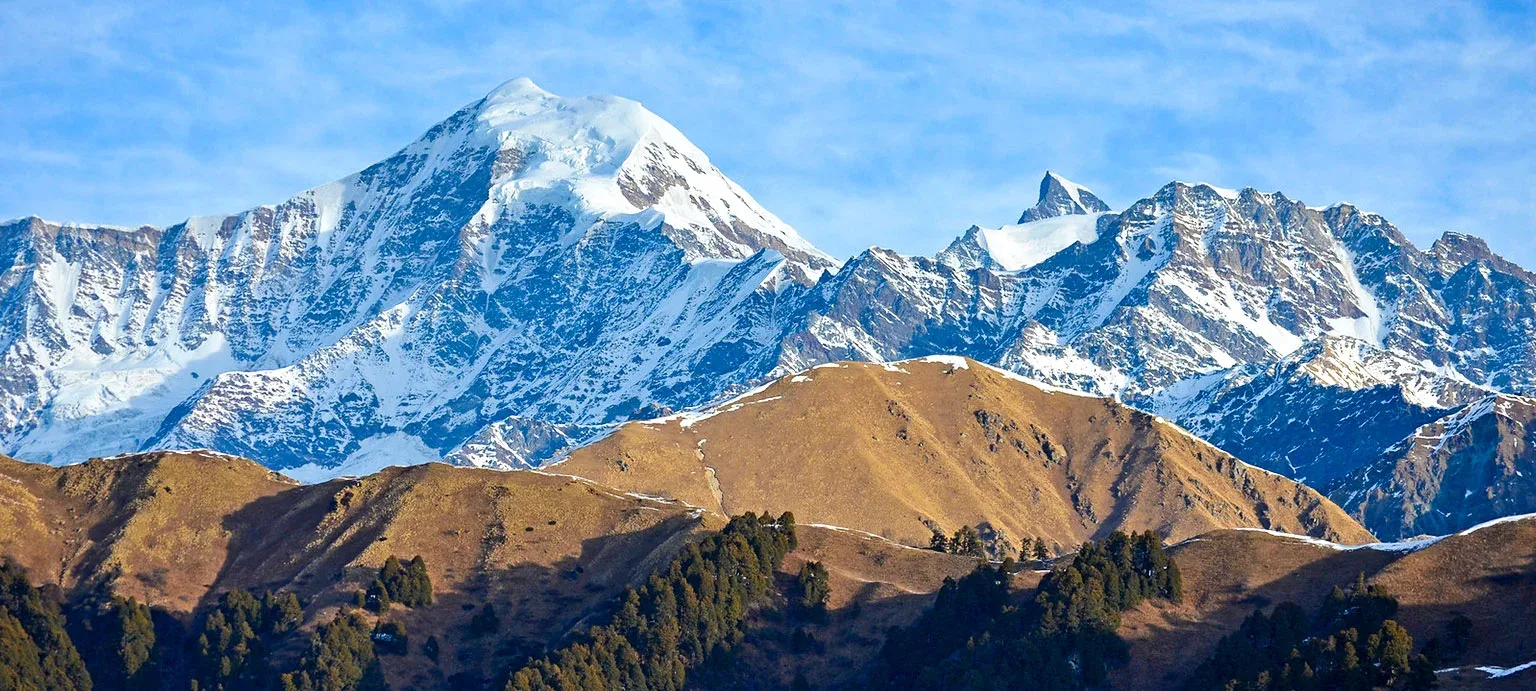
The Black Peak Expedition is a classic Himalayan climbing objective to the highest summit of the Saraswati Range, renowned for its elegant pyramid and demanding alpine ascent.
Expedition Highlights
Ruinsara Tal
High altitude lake surrounded by alpine vegetation.
Absolutely not. Black Peak is a technical mountaineering expedition. The final 400-meter push to the summit involves a near-vertical ice wall (70-75 degrees). It requires prior high-altitude experience and proficiency in using ice axes, crampons, and jumars on fixed ropes.
Do I need to complete a mountaineering course (BMC/AMC) to attempt it?
While not strictly enforced by law, reputable operators require you to have completed at least an Advanced Mountaineering Course (AMC) or possess verifiable experience climbing a technical 6,000m peak. Your life depends on your rope skills.
What is the summit success rate?
The success rate hovers around 60%. The primary reasons for turning back are unpredictable weather near the summit crest and physical exhaustion on the steep headwall above Camp 1.
What is the best time to attempt Black Peak?
There are two main windows: Pre-monsoon (mid-May to late June) and Post-monsoon (September to early October). June offers the best, most consolidated snow conditions. September offers clearer skies but the ice wall is much harder and more exposed.
Where is the Base Camp located?
The base camp is set up at Kyarkoti, a beautiful expansive meadow situated at approximately 12,460 feet. The approach trek via Ruinsara Tal is stunning and acts as a great acclimatization phase.
How cold does it get at the higher camps?
At Summit Camp (approx. 18,000 ft), night temperatures can plummet to -20°C or lower. High wind chill on the summit ridge can make it feel significantly colder. Heavy expedition-grade down gear is mandatory.
Is there mobile network connectivity?
No. The last reliable mobile network (usually BSNL or Jio) is at Sankri or Purola. Beyond Sankri, you will be completely disconnected. Expedition teams rely on VHF radios and Satellite phones for emergencies.
Are fixed ropes used on the route?
Yes. The lead climbing team (Guides and Sherpas) will fix dynamic ropes on the heavily crevassed glacier sections and static lines on the final 400m summit face. You must know how to ascend using a Jumar.
What is the most dangerous part of the climb?
The route between Advance Base Camp (ABC) and Camp 1 involves navigating a heavily crevassed glacier. Additionally, the summit push involves crossing a massive bergschrund before committing to the steep ice wall.
Can I rent technical gear at Sankri?
Gear rental in Sankri is highly limited and mostly catered to basic treks like Kedarkantha. You must arrange for B3 boots, technical crampons, and climbing hardware in Dehradun, Uttarkashi, or bring your own.
What permits are required for the expedition?
You need an official expedition permit from the Indian Mountaineering Foundation (IMF) in Delhi, as well as local forest entry permits for the Govind Pashu Vihar National Park. Your operator usually handles this.
How does the evacuation process work in case of an emergency?
Helicopter rescues are incredibly difficult above Base Camp due to terrain and weather. If an emergency occurs at high camps, the team must execute a manual rope-assisted rescue to lower the casualty to Kyarkoti Base Camp, where a heli-evac or manual stretcher carry can be arranged.
Is Black Peak (Kalanag) suitable for beginners?
Absolutely not. Black Peak is a technical mountaineering expedition. The final 400-meter push to the summit involves a near-vertical ice wall (70-75 degrees). It requires prior high-altitude experience and proficiency in using ice axes, crampons, and jumars on fixed ropes.
Do I need to complete a mountaineering course (BMC/AMC) to attempt it?
While not strictly enforced by law, reputable operators require you to have completed at least an Advanced Mountaineering Course (AMC) or possess verifiable experience climbing a technical 6,000m peak. Your life depends on your rope skills.
What is the summit success rate?
The success rate hovers around 60%. The primary reasons for turning back are unpredictable weather near the summit crest and physical exhaustion on the steep headwall above Camp 1.
What is the best time to attempt Black Peak?
There are two main windows: Pre-monsoon (mid-May to late June) and Post-monsoon (September to early October). June offers the best, most consolidated snow conditions. September offers clearer skies but the ice wall is much harder and more exposed.
Where is the Base Camp located?
The base camp is set up at Kyarkoti, a beautiful expansive meadow situated at approximately 12,460 feet. The approach trek via Ruinsara Tal is stunning and acts as a great acclimatization phase.
How cold does it get at the higher camps?
At Summit Camp (approx. 18,000 ft), night temperatures can plummet to -20°C or lower. High wind chill on the summit ridge can make it feel significantly colder. Heavy expedition-grade down gear is mandatory.
Is there mobile network connectivity?
No. The last reliable mobile network (usually BSNL or Jio) is at Sankri or Purola. Beyond Sankri, you will be completely disconnected. Expedition teams rely on VHF radios and Satellite phones for emergencies.
Are fixed ropes used on the route?
Yes. The lead climbing team (Guides and Sherpas) will fix dynamic ropes on the heavily crevassed glacier sections and static lines on the final 400m summit face. You must know how to ascend using a Jumar.
What is the most dangerous part of the climb?
The route between Advance Base Camp (ABC) and Camp 1 involves navigating a heavily crevassed glacier. Additionally, the summit push involves crossing a massive bergschrund before committing to the steep ice wall.
Can I rent technical gear at Sankri?
Gear rental in Sankri is highly limited and mostly catered to basic treks like Kedarkantha. You must arrange for B3 boots, technical crampons, and climbing hardware in Dehradun, Uttarkashi, or bring your own.
What permits are required for the expedition?
You need an official expedition permit from the Indian Mountaineering Foundation (IMF) in Delhi, as well as local forest entry permits for the Govind Pashu Vihar National Park. Your operator usually handles this.
How does the evacuation process work in case of an emergency?
Helicopter rescues are incredibly difficult above Base Camp due to terrain and weather. If an emergency occurs at high camps, the team must execute a manual rope-assisted rescue to lower the casualty to Kyarkoti Base Camp, where a heli-evac or manual stretcher carry can be arranged.
Are you a local operator?
Join our platform to list your verified packages for this expedition.