
Explore
Intelligence
Essential Planning Guide
Sham Valley Trek — Complete Guide (2026)
Vibe & Scenery
The Experience
Introduction
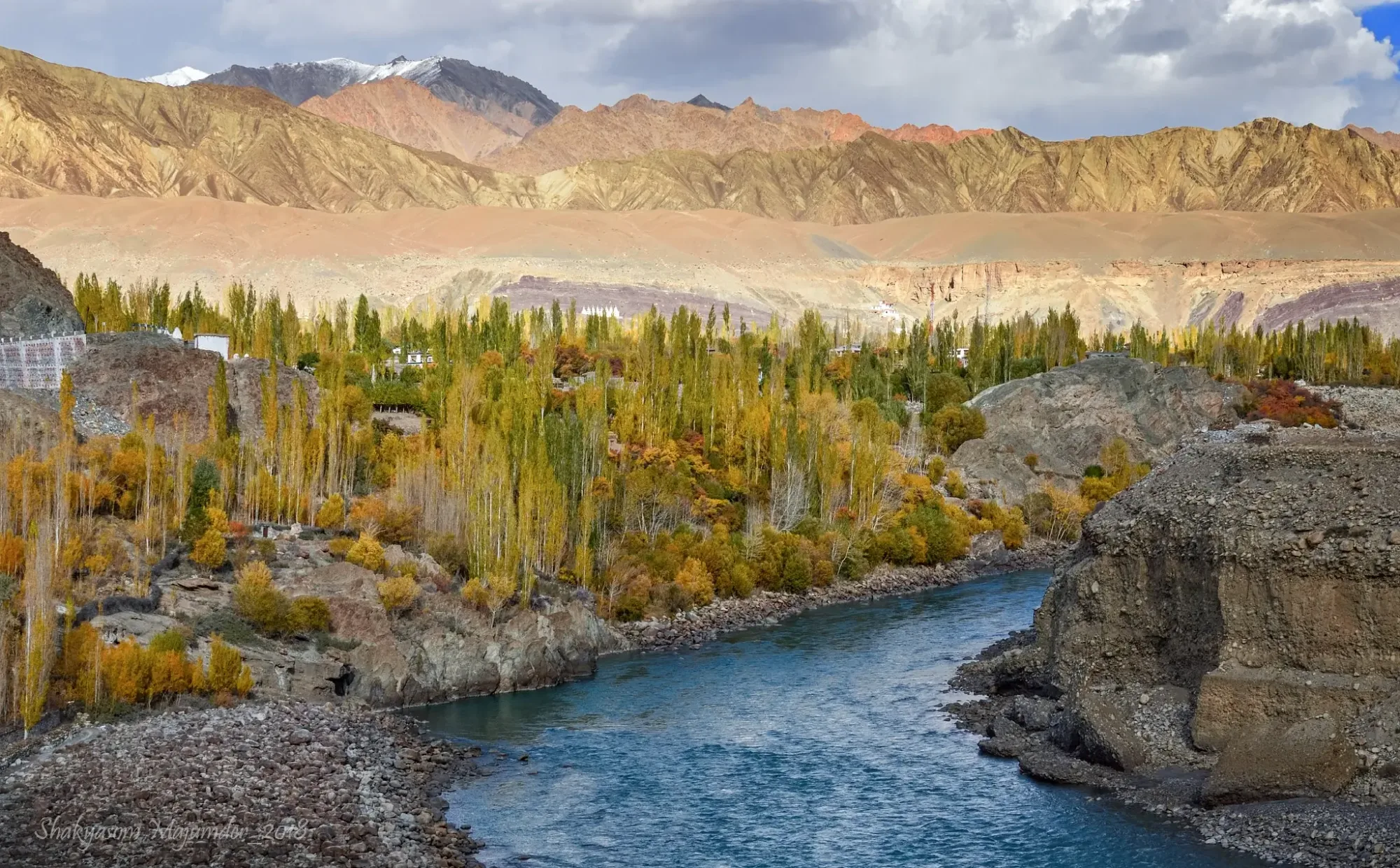
The Sham Valley Trek is widely regarded as the ideal introduction to trekking in Ladakh. Remaining at relatively modest elevations, it allows trekkers to experience the region's spectacular landscapes without crossing the extreme passes found on longer expeditions.
The trail links traditional villages including Likir, Yangthang, Hemis Shukpachan, and Tingmosgang, where many trekkers stay in family-run homestays. Ancient monasteries, barley fields, apricot orchards, and whitewashed villages create a cultural experience that is very different from Ladakh's more remote wilderness routes.
Suitable for beginners, families, and trekkers acclimatizing before higher expeditions, Sham Valley combines easy walking with rich cultural immersion.
Quick Facts
Duration
Max Altitude
Difficulty
Best Time
Trek Distance
Trail Atmosphere
Stargazing
Class 2 Dark Sky
Scent Profile
Silence Level
~25 dB
Vertigo Factor
1 / 10
Iconic Spots
Likir Monastery
Hemis Shukpachan Oasis
Environment
Nature & Culture
Flora & Fauna
Flora
Fauna
The 'Sham' region roughly translates to 'lower' in Ladakhi. Tingmosgang was briefly the capital of Ladakh in the 15th century and holds massive historical significance.
— Local folklore
Spiritual & Cultural Significance
Deeply Tibetan Buddhist. You will pass numerous ancient Chortens (stupas) and Mani walls carved with prayers.
🕐 Shrine Timings: Monasteries are usually open from 8 AM to 5 PM.
Temple Protocols
- •Always walk clockwise around Chortens and Mani walls.
- •Dress modestly when entering monasteries (shoulders and knees covered).
Festivals & Dates
Technical Details
Challenge & Preparation
Primarily a cardio demand challenge
A capable trekker's route that balances cardio demand and terrain ruggedness.
Personal Readiness
Am I ready?
Planning
Logistics & Trail Intel
Getting There
Route to Base
Fly directly into Kushok Bakula Rimpochee Airport in Leh
Alternatively, a 2-day drive via Manali-Leh or Srinagar-Leh highways
Base Village
Leh
11,500 ft
Last ATM
Leh. Do not expect to find any ATMs in the Sham Valley villages.
Nearest Medical Facility
SNM Hospital Leh (The primary medical hub with hyperbaric chambers).
Mobile Signal
Mostly dead zones. Enjoy the digital detox.
Water Sources
Every homestay provides unlimited boiled water. There are no natural springs on the dry trail sections.
Charging
Available in the homestays, but load shedding/power cuts are common in these remote villages.
For Drivers
Road Condition
The drive from Leh to Likir is on the excellent, fully paved NH1 (Leh-Kargil highway).
Leh
Trail Culinary & Diet
Don't miss the Skyu (a traditional Ladakhi pasta stew with root vegetables).
Buy specialized diet items at Leh
The Content & Remote Hub
No DronesDrones are strictly banned across the entire Union Territory of Ladakh due to its proximity to international borders.Top Vlog Spots
Video Calls
none
UPI Reliability
2/10
Base WiFi Available
Permits and Regulations
Indian nationals do not require an Inner Line Permit (ILP) for the Sham Valley. Foreign nationals must pay the standard Ladakh Environmental Fee and obtain a Protected Area Permit (PAP) through a registered travel agent in Leh. Homestays operate on a rotational basis managed by the village committee to ensure fair income distribution.
Learn more about how we vet operators and ensure transparency on our why MountRoutes page.
Packing List
High-Desert Clothing
- Lightweight, breathable long-sleeve shirts (sun protection is critical)
- UPF 50+ trekking pants (convertible to shorts is ideal)
- Medium fleece jacket for the chilly evenings
- Lightweight windcheater/softshell jacket
- Wide-brimmed sun hat with neck protection
- 3 pairs of lightweight, moisture-wicking socks
Footwear & Gear
- Comfortable trail running shoes or lightweight hiking boots (heavy boots are overkill)
- 1 anti-shock trekking pole (useful for the short pass descents)
- 30L daypack (since homestays provide bedding, you don't need a massive pack)
- Silk sleeping bag liner (homestays provide heavy blankets, but a liner adds hygiene)
Health & Utilities
- Category 4 UV Polarized Sunglasses (the Ladakhi sun is blindingly intense)
- High SPF Sunscreen (50+) and zinc oxide lip balm (reapply every 2 hours)
- Personal First Aid Kit (Diamox, rehydration salts, blister tape)
- 2 reusable 1-liter water bottles (homestays provide boiled water)
- Wet wipes and hand sanitizer
- Power bank (homestays have electricity, but power cuts are common)
Deep Dives
Explore Further
Editor's Notes
Explore In Detail
Day by Day Itinerary
3-day route reaching 12,565ft. Covers 30.0km of varied terrain.
→ See full itinerary with altitude profileDifficulty & Fitness
Rated moderate. The trail is mostly dry, dusty, and barren. It is well-defined and features very gradual ascents to the passes. There are no technical scree slopes or glacier crossings.
→ See difficulty breakdown and fitness guideCost & Pricing
Packages range from ₹9,000 – ₹15,000. Inclusions and hidden costs vary by operator tier.
→ See full cost breakdownFrequently Asked Questions
Why is it called the 'Baby Trek'?
It earned this nickname because it rarely exceeds 12,800 ft (low by Ladakh standards) and the daily walking distances are short and manageable. It is highly popular among families and older trekkers.
Do I need to carry camping gear?
No. The entire trek is designed around a well-established homestay network. You will sleep in clean, traditional Ladakhi homes where dinner and breakfast are provided.
Will I get Altitude Sickness (AMS)?
While the trek is relatively low for Ladakh, Leh itself is at 11,500 ft. You must spend at least 2 days resting and acclimatizing in Leh before starting this trek to ensure safety.
Is it completely flat?
No. While easy, you still cross several minor mountain passes (La) every day, such as Phobe La and Mebtak La. There are constant ascents and descents, but the gradients are gentle.
Can I drink the local water?
Never drink directly from the streams as they pass through agricultural villages. Your homestay hosts will provide safe, boiled water every morning to fill your bottles.
Do the homestays have attached bathrooms?
Most homestays offer traditional Ladakhi dry composting toilets, which are located outside the main sleeping area. They are extremely clean and eco-friendly.
How hot does it get during the day?
In July and August, the barren desert terrain reflects the sun, pushing perceived temperatures to 30°C+. The lack of tree cover means you are fully exposed; sun protection is vital.
Do I need a guide?
The trail is quite obvious, but a local Ladakhi guide bridges the language barrier with your homestay hosts, enriching the cultural experience immensely.
Still deciding?
Compare routes side-by-side to find the perfect match for your fitness, dates, and budget.
Everything you need to know, in one place. Someone else in your group needs to see this.
Planning Sham Valley Trek?
Get route conditions, operator updates, and season windows before booking.
Don't miss out! Follow us for route updates@mountroutes|LinkedIn
No spam. Only useful trek updates.
Ready to walk this route?
You’ve read the guide, now find the perfect local team to take you there. Compare our verified list of operators.
Compare verified operators