Saptkund Trek — compare operators and pricing

Compare operators for Saptkund Trek

UttarakhandChallenging

Interested in this trek?

We are currently vetting local partners for Saptkund Trek to ensure the highest safety standards. Be the first to know when it's open for booking.

Are you a local operator?

Join our platform to list your verified packages for Saptkund Trek and reach thousands of trekkers directly.

Apply to join

Found the right operator? Share this list with whoever's coming with you.

About Saptkund Trek

7 Days
16,400 FT
Challenging

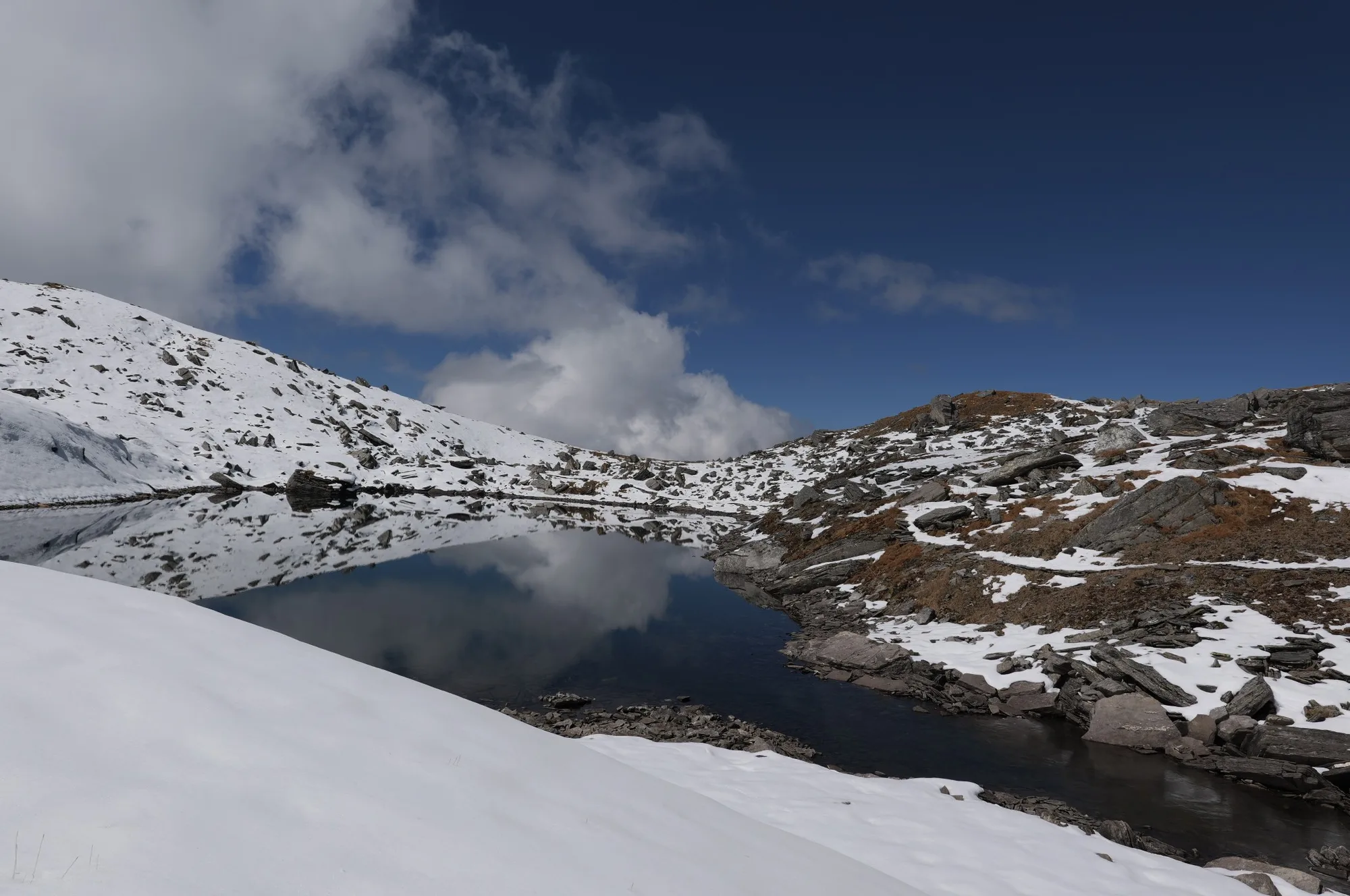
The Saptkund Trek is a demanding expedition in the Garhwal Himalayas leading to a group of seven sacred glacial lakes below Nanda Ghunti. Crossing forests, bugyals, and rugged moraine terrain, the route offers a remote wilderness experience for experienced Himalayan trekkers.

Trek Highlights

Saptkund Lakes

A mystical cluster of seven turquoise and emerald glacial pools sitting in a desolate bowl.

Nanda Ghunti Face

The massive, imposing ice walls of the 6,309m Nanda Ghunti peak towering directly above the lakes.

Simbe Bugyal

Rolling, pristine alpine meadows offering panoramic views of the Garhwal Himalayas.

View Complete Trek Guide

Common Questions

Is this trek suitable for beginners?
Absolutely not. This is classified as a 'Hard' expedition. The trail is often non-existent, the altitude gain is severe (reaching 16,400 ft), and the final push over moraine to the lakes requires high physical and mental endurance.
What are the seven lakes?
The Saptkund (Seven Lakes) group includes Parvati Kund, Ganesh Kund, Narada Kund, Shiv Kund (the largest), Nandi Kund, and Bhairav Kund. They are considered highly sacred by the local villagers.
Are there any tea-houses on the trail?
No. Once you leave the roadhead at Jhinji or Ghat, you are entirely in the wilderness. You must carry all tents, sleeping bags, and food for the 5-day mountain loop.
Do I need a local guide?
Yes, it is practically mandatory. Because it is an offbeat trek, the trail is completely unmarked and frequently disappears into dense forests or across boulder fields. A local guide from Jhinji or Ramni is essential.
Is there a risk of altitude sickness (AMS)?
Yes, a very high risk. You will sleep at altitudes around 14,000 ft at the base camp (Jittukudi) and climb to over 16,000 ft for the lakes. Proper acclimatization days built into the itinerary are crucial.
Can we camp right next to the lakes?
Generally, no. The lakes are considered sacred, and camping directly on their shores is discouraged by locals. Trekkers usually camp slightly lower at Jittukudi and do a day-hike to the lakes.
Is there mobile connectivity?
You will lose all mobile network shortly after leaving the base village (Jhinji). The trek is a complete digital detox.
What kind of wildlife might we encounter?
The lower forests are dense and home to Himalayan black bears, leopards, and various deer. Higher up, you may spot Himalayan Monal, Bharal (Blue Sheep), and Himalayan Marmots.
Is this trek suitable for beginners?
Absolutely not. This is classified as a 'Hard' expedition. The trail is often non-existent, the altitude gain is severe (reaching 16,400 ft), and the final push over moraine to the lakes requires high physical and mental endurance.
What are the seven lakes?
The Saptkund (Seven Lakes) group includes Parvati Kund, Ganesh Kund, Narada Kund, Shiv Kund (the largest), Nandi Kund, and Bhairav Kund. They are considered highly sacred by the local villagers.
Are there any tea-houses on the trail?
No. Once you leave the roadhead at Jhinji or Ghat, you are entirely in the wilderness. You must carry all tents, sleeping bags, and food for the 5-day mountain loop.
Do I need a local guide?
Yes, it is practically mandatory. Because it is an offbeat trek, the trail is completely unmarked and frequently disappears into dense forests or across boulder fields. A local guide from Jhinji or Ramni is essential.
Is there a risk of altitude sickness (AMS)?
Yes, a very high risk. You will sleep at altitudes around 14,000 ft at the base camp (Jittukudi) and climb to over 16,000 ft for the lakes. Proper acclimatization days built into the itinerary are crucial.
Can we camp right next to the lakes?
Generally, no. The lakes are considered sacred, and camping directly on their shores is discouraged by locals. Trekkers usually camp slightly lower at Jittukudi and do a day-hike to the lakes.
Is there mobile connectivity?
You will lose all mobile network shortly after leaving the base village (Jhinji). The trek is a complete digital detox.
What kind of wildlife might we encounter?
The lower forests are dense and home to Himalayan black bears, leopards, and various deer. Higher up, you may spot Himalayan Monal, Bharal (Blue Sheep), and Himalayan Marmots.

Are you a local operator?

Join our platform to list your verified packages for this trek.

Apply to join
MountRoutes Dispatch

Planning Saptkund Trek?

Get route conditions, operator updates, and season windows before booking.

Don't miss out! Follow us for route updates@mountroutes|LinkedIn

No spam. Only useful trek updates.

Explore Collections

Not sure where to go next?

View all