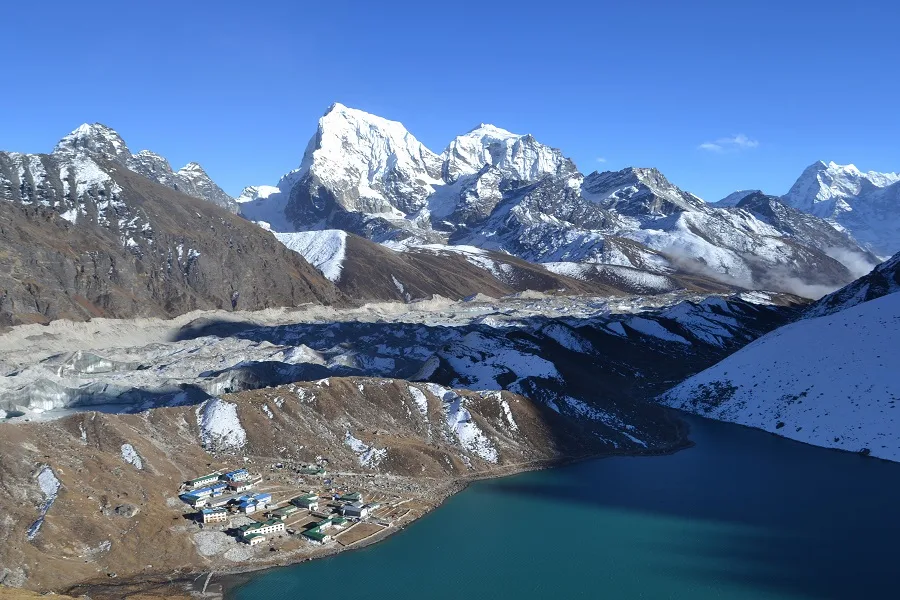
The Padum to Darcha Trek is a historic trans-Himalayan traverse connecting Zanskar with Himachal Pradesh across the 16,700 ft Shingo La. Combining remote monasteries, river valleys, traditional villages, and a major Himalayan pass, it remains one of the classic long-distance trekking routes of the western Himalayas.
Trek Highlights
Phuktal Monastery
An ancient, whitewashed monastery clinging to the inside of a massive cave high above the Lungnak river.
Gumburanjon Peak
A massive, vertical rock monolith that dominates the valley approach to Lakham.
Shingo La Pass
The 16,700 ft saddle dividing the arid Zanskar desert from the green alpine valleys of Lahaul.
The new Nimmu-Padum-Darcha road has definitely altered the experience. You will be walking on or adjacent to a dirt road for several sections, especially near Padum and Darcha. However, the sheer scale of the landscape and the isolation of the high camps near Shingo La remain spectacular.
Why start in Padum and end in Darcha instead of the other way around?
Starting in Padum allows for a much better acclimatization profile. You spend 4-5 days gradually gaining altitude in the Zanskar valley before hitting the 16,700 ft pass. If you start in Darcha, you hit the pass on day 3, leading to a massive spike in AMS cases.
Is the detour to Phuktal Monastery worth it?
Absolutely. Phuktal is built directly into a massive cave on a cliff face. Taking an extra day at Purne to hike to the monastery is often considered the cultural highlight of the entire expedition.
Are there homestays available?
Yes, for the first few days in the Lungnak valley (Mune, Ichar, Purne, Kargyak), basic homestays are available. However, for the high camps near Shingo La (Lakham, Chuminakpo), you must have camping equipment.
How difficult is the Shingo La pass crossing?
The crossing is non-technical but physically exhausting due to the 16,700 ft altitude. The descent toward Chuminakpo on the Lahaul side is steep and filled with loose scree, requiring careful footing.
Is it safe to drink the river water?
Do not drink directly from the main rivers, as they carry heavy glacial silt and run-off from the new road construction. Filter and purify water from side streams.
How do I get to Padum to start the trek?
You must fly into Leh, acclimatize, and then take a 2-day drive via Kargil and the Suru Valley to reach Padum. Alternatively, the new Nimmu-Padum road allows for a much faster direct drive from Leh.
Will I encounter snow?
If you trek in late June or early July, expect significant snow on both sides of Shingo La. By August, the pass is generally a dry, rocky scree slope.
Has the new road ruined the trek?
The new Nimmu-Padum-Darcha road has definitely altered the experience. You will be walking on or adjacent to a dirt road for several sections, especially near Padum and Darcha. However, the sheer scale of the landscape and the isolation of the high camps near Shingo La remain spectacular.
Why start in Padum and end in Darcha instead of the other way around?
Starting in Padum allows for a much better acclimatization profile. You spend 4-5 days gradually gaining altitude in the Zanskar valley before hitting the 16,700 ft pass. If you start in Darcha, you hit the pass on day 3, leading to a massive spike in AMS cases.
Is the detour to Phuktal Monastery worth it?
Absolutely. Phuktal is built directly into a massive cave on a cliff face. Taking an extra day at Purne to hike to the monastery is often considered the cultural highlight of the entire expedition.
Are there homestays available?
Yes, for the first few days in the Lungnak valley (Mune, Ichar, Purne, Kargyak), basic homestays are available. However, for the high camps near Shingo La (Lakham, Chuminakpo), you must have camping equipment.
How difficult is the Shingo La pass crossing?
The crossing is non-technical but physically exhausting due to the 16,700 ft altitude. The descent toward Chuminakpo on the Lahaul side is steep and filled with loose scree, requiring careful footing.
Is it safe to drink the river water?
Do not drink directly from the main rivers, as they carry heavy glacial silt and run-off from the new road construction. Filter and purify water from side streams.
How do I get to Padum to start the trek?
You must fly into Leh, acclimatize, and then take a 2-day drive via Kargil and the Suru Valley to reach Padum. Alternatively, the new Nimmu-Padum road allows for a much faster direct drive from Leh.
Will I encounter snow?
If you trek in late June or early July, expect significant snow on both sides of Shingo La. By August, the pass is generally a dry, rocky scree slope.
Are you a local operator?
Join our platform to list your verified packages for this trek.