
Explore
Intelligence
Essential Planning Guide
Manimahesh Kailash Parikrama Trek — Complete Guide (2026)
Vibe & Scenery
The Experience
Introduction
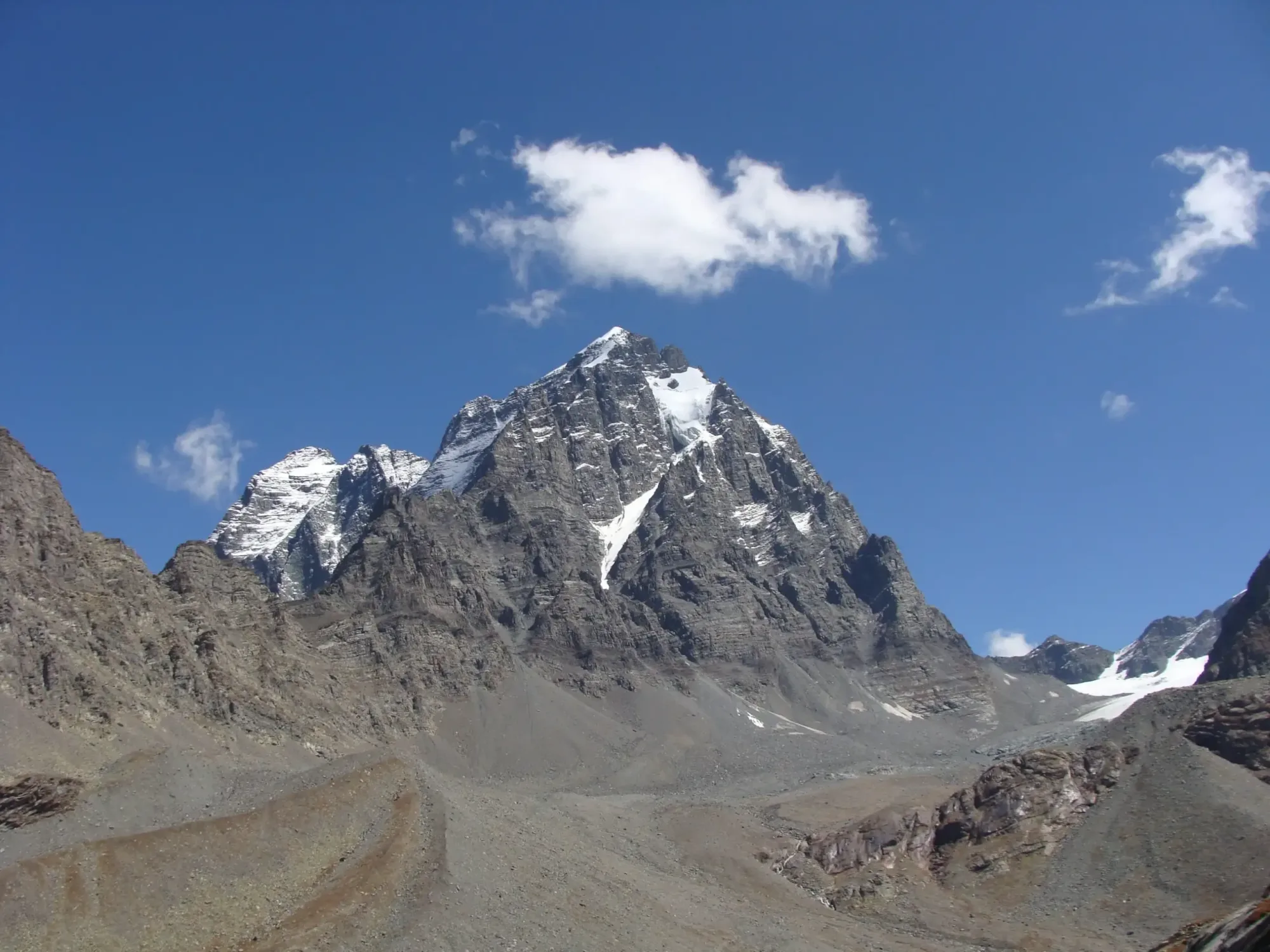
The Manimahesh Parikrama is among the most demanding pilgrimage expeditions in the western Himalayas, combining religious significance with a challenging high-altitude circuit around the sacred Manimahesh Kailash massif. Unlike the standard pilgrimage to Manimahesh Lake, the full parikrama continues beyond the lake to cross the rugged Kugti Pass before descending into the Kugti Valley.
Throughout the journey, trekkers experience dramatic changes in terrain—from forests and traditional Gaddi settlements to glacial valleys, alpine meadows, and rocky mountain passes. The route offers exceptional views of Manimahesh Kailash while providing insight into the pastoral traditions and religious heritage of the Chamba region.
With long trekking days, sustained altitude, and remote mountain conditions, the Manimahesh Parikrama is recommended for experienced trekkers with good endurance and previous high-altitude experience.
Quick Facts
Duration
Max Altitude
Difficulty
Best Time
Trek Distance
Trail Atmosphere
Stargazing
Class 2 Dark Sky
Scent Profile
Silence Level
~55 dB
Vertigo Factor
4 / 10
Iconic Spots
Lake Sunrise
Environment
Nature & Culture
Flora & Fauna
Flora
Fauna
The 'Mani' (Jewel) on Lord Shiva's crown is said to be the brilliant reflection of the sun rays bouncing off the peak into the lake just before sunrise.
— Local folklore
Spiritual & Cultural Significance
One of the Five Kailashes of Lord Shiva. Highest sacred value in Himachal.
🕐 Shrine Timings: Always open
Temple Protocols
- •Strictly no leather
- •Holy dip should be done quickly to avoid hypothermia
- •Do not cross the barrier facing the peak
Festivals & Dates
Technical Details
Challenge & Preparation
Primarily a joint & muscle impact and cardio demand challenge
A demanding expedition with extreme joint & muscle impact and cardio demand.
Personal Readiness
Am I ready?
Planning
Logistics & Trail Intel
Getting There
Route to Base
Train to Pathankot, bus to Chamba, another bus/taxi deep into Bharmour
Base Village
Bharmour / Hadsar
7,000 ft
Last ATM
Bharmour
Nearest Medical Facility
Bharmour Civil Hospital
Mobile Signal
Drops immediately outside Hadsar.
Water Sources
Multiple glacial streams along the route. Free bottled water during Yatra.
Charging
Zero charging points after Hadsar.
For Drivers
Road Condition
Pathankot to Chamba is smooth. Chamba to Bharmour is a dizzying, narrow gorge road cut straight out of an overhang cliff.
Bharmour
Trail Culinary & Diet
Don't miss the Kadhi Chawal (served free in mountain Langars)
Buy specialized diet items at Pathankot
The Content & Remote Hub
No DronesStrictly banned during the festival due to helicopter flight paths and massive crowds.Top Vlog Spots
Video Calls
none
Est. 0 Mbps
UPI Reliability
2/10
Base WiFi Available
Permits and Regulations
During the Yatra, mandatory online medical registration and a physical fitness certificate are required by the Himachal State Government.
Learn more about how we vet operators and ensure transparency on our why MountRoutes page.
Packing List
High-Altitude Clothing
- Thick down jacket (Temperatures crash at the lake)
- Waterproof trousers
- Rain poncho (Mandatory during the August yatra)
Footwear
- Heavy-duty waterproof trekking boots (The trail is highly rocky and slippery)
- Extra pairs of woollen socks
Accessories
- Trekking poles with firm grips
- Headlamp (For pre-dawn starts)
- Basic First-Aid kit with painkillers
Deep Dives
Explore Further
Editor's Notes
The local Gaddi tribes believe you cannot see the peak unless Shiva invites you. Very often, heavy fog shrouds the mountain for days.
Explore In Detail
Day by Day Itinerary
4-day route reaching 13,500ft. Covers 26km of varied terrain.
→ See full itinerary with altitude profileDifficulty & Fitness
Rated challenging. Basically a sheer upward stone and dirt staircase for 13 kilometers.
→ See difficulty breakdown and fitness guideCost & Pricing
Packages range from ₹15,000 – ₹28,000. Inclusions and hidden costs vary by operator tier.
→ See full cost breakdownFrequently Asked Questions
Can anyone climb the Manimahesh Kailash peak?
No. The peak (18,547 ft) remains unclimbed. It is legally and culturally forbidden to climb it, as the local Daddi and Gaddi tribes consider the summit the sacred throne of Lord Shiva.
When is the official Yatra (Pilgrimage)?
The official Manimahesh Yatra usually takes place from late August (Janmashtami) to early September (Radhashtami). Expect massive, chaotic crowds of up to 500,000 pilgrims during this window.
Should I trek during the Yatra or avoid it?
If you want cultural immersion and free food (langars), go during the Yatra. If you want peace, nature photography, and clean camping conditions, you must trek strictly in mid-September after the crowds leave.
Is the trail difficult?
Yes. It is exceptionally steep. You gain 6,000 ft of altitude in just 13 kilometers. It is a continuous, relentless staircase of rocks.
Are there places to eat on the trail?
During the Yatra (Aug/Sept), there are hundreds of free-food tents (Langars). Outside the festival, you must carry your own tents, stoves, and food from Hadsar.
Can I take a horse/mule?
Yes. Hundreds of mules/horses and manual palanquins (dandis) are available for hire at the Hadsar starting point.
Is there a helicopter service?
During the official Yatra period, private helicopter operators run shuttles from Bharmour directly to Gauri Kund (1 km below the lake). Booking months in advance is required.
What is the AMS risk?
High. Climbing 6,000 ft in a single day or 1.5 days to reach 13,500 ft routinely causes acute mountain sickness in breathless pilgrims.
Can we take a dip in the lake?
Yes, taking a holy dip is the primary objective for pilgrims. However, the glacial water is violently cold and can cause immediate hypothermia shock.
Is there network on the trail?
You lose network precisely as you leave Hadsar. There is zero mobile signal at the lake.
What is the parikrama route of Manimahesh?
Unlike the standard direct pilgrim route from Hadsar, the Parikrama (circumambulation) route goes via Kugti village, climbs through Dhamdhar Pass, and descends to the sacred lake.
Can we take a holy dip in Manimahesh Lake?
Yes, taking a dip in the icy waters of Manimahesh Lake is considered highly sacred. Changing rooms are set up during the peak pilgrimage season in August-September.
Is there a helicopter service available for Manimahesh?
Yes, during the official Manimahesh Yatra (August-September), commercial helicopter services operate daily between Bharmour and Gauri Kund near the lake.
Do we need to carry camping tents for the parikrama?
Yes, while the direct route has public pilgrim tents, the wilder Parikrama route via Kugti requires fully self-sustained camping equipment and food supplies.
What is the significance of the Manimahesh Kailash Peak?
The peak (18,530 ft) remains unconquered. Local beliefs hold that Lord Shiva resides at the summit, and any attempts to climb it are met with divine intervention.
Still deciding?
Compare routes side-by-side to find the perfect match for your fitness, dates, and budget.
Everything you need to know, in one place. Someone else in your group needs to see this.
Planning Manimahesh Kailash Parikrama Trek?
Get route conditions, operator updates, and season windows before booking.
Don't miss out! Follow us for route updates@mountroutes|LinkedIn
No spam. Only useful trek updates.
Ready to walk this route?
You’ve read the guide, now find the perfect local team to take you there. Compare our verified list of operators.
Compare verified operators