
Explore
Intelligence
Season & Weather Guide
Best Time for Lambri Top Trek — Month-by-Month Guide
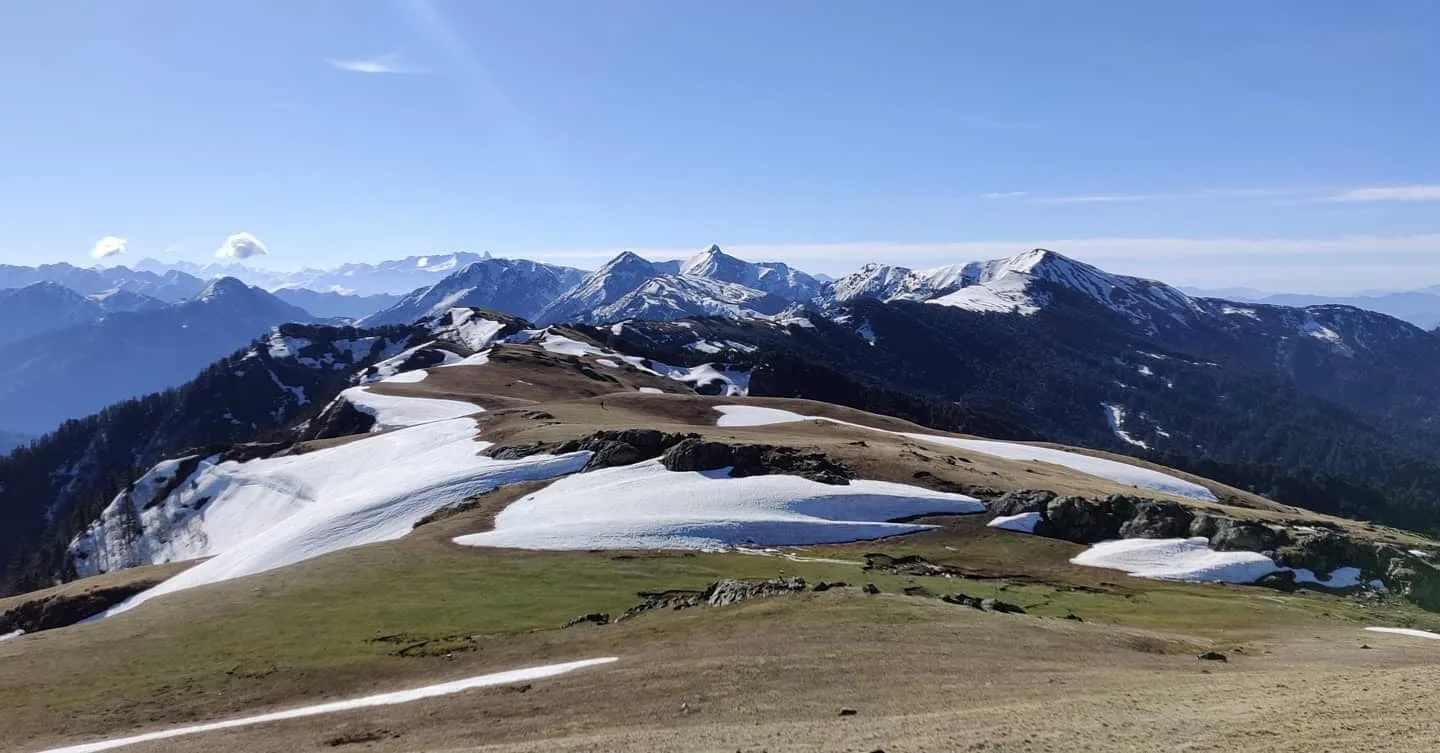
A spectacular ridge walk in the Great Himalayan National Park (GHNP).
Seasonal Verdict
When should you go?
A spectacular ridge walk in the Great Himalayan National Park (GHNP). The monsoon completely blocks the panoramic views, rendering the core experience pointless. Autumn provides unmatched clarity, while late winter buries the ridge in snow.
Season at a Glance
Editor's Notes
Most Shoja visitors come in October. By November, the crowds are gone, the air is crystal-sharp, the Deo Tibba snowfield gleams in low-angle autumn light, and you have Lambri Top entirely to yourself. November first week is the finest time to visit.
Month by Month
What each month looks like
January
Conditions
Deep winter. The exposed ridge is snowbound and swept by freezing winds.
Crowds
none
Freezing winds and deep snow accumulation.
Closed.
February
Conditions
Deep winter conditions persist on the high ridge.
Crowds
none
Freezing winds and deep snow accumulation.
Closed.
March
RecommendedConditions
Spring melt begins. Lower forest sections clear up, though snow remains on top.
Crowds
low
Muddy.
April
Peak SeasonConditions
Excellent spring trekking. The forests are vibrant and trails are accessible.
Crowds
medium
Opens. Good.
May
Peak SeasonConditions
Peak summer window. Wildflowers are blooming across the meadows.
Crowds
medium
Wildflowers.
June
Peak SeasonConditions
Stable weather before the heavy rains arrive.
Crowds
medium
Good.
July
Conditions
Monsoon rains obscure the views. The ridge is swathed in thick clouds.
Crowds
low
Zero visibility, destroying the primary reward of the trek.
Clouds. Avoid.
August
Conditions
Peak monsoon. Constant cloud cover and heavy rain.
Crowds
low
Zero visibility, destroying the primary reward of the trek.
Clouds.
September
Peak SeasonConditions
The rains withdraw, leaving the air washed clean.
Crowds
medium
Post-monsoon.
October
Peak SeasonConditions
Crisp autumn air provides excellent clarity for views of the GHNP core zone.
Crowds
medium
Best month.
November
Peak SeasonConditions
Temperatures drop, but the atmospheric clarity is at its absolute peak.
Crowds
medium
Superb clarity.
December
Conditions
Early winter storms cover the ridge in snow, closing the route.
Crowds
none
Snow accumulation and freezing winds.
Snow.
Plan Your Trek:
Still deciding?
Compare routes side-by-side to find the perfect match for your fitness, dates, and budget.
Timing makes or breaks a trek. Send this to your group before you decide.
Step 3: Route Intelligence
You've chosen a season.
Now see exactly how the route unfolds day by day, including terrain types and daily altitude profiles.
Explore the Itinerary