
Explore
Intelligence
Difficulty & Readiness Guide
Is Jhinda Bugyal Trek Difficult? — Fitness & Altitude Guide
A great beginner trek requiring moderate fitness and steady pacing.
The Question
Can I do this trek?
Preparation Required
Intermediate
Prior Experience
Recommended: 1-2 easy Himalayan treks or regular hiking experience.
Expert Verdict
Highly technical trek requiring physical and mental preparation.
Jhinda Bugyal Trek
Himalayan Placement · Index 36Route Knowledge
Why is it difficult?
Exertion Index
Primary Challenge
Route Identity
High-impact route characterised by steep gradients and heavy joint loading across a trek featuring loose moraine.
Primary Drivers
- Maximum sleeping altitude of 11,800 ft
- Grueling summit push with 4,600 ft of elevation gain
- 2 consecutive high-output trekking days
View Full Route Analysis
Physiological Demand
Steep, punishing ascents and descents that will heavily tax your knees, ankles, and overall joint stability.
Challenging daily distances and steady climbs. Good cardiovascular fitness is required.
Comfortable pacing with good recovery options.
Below the major effects of altitude sickness. Air remains relatively dense.
Well-defined, stable trails with no technical maneuvers required.
Terrain Breakdown
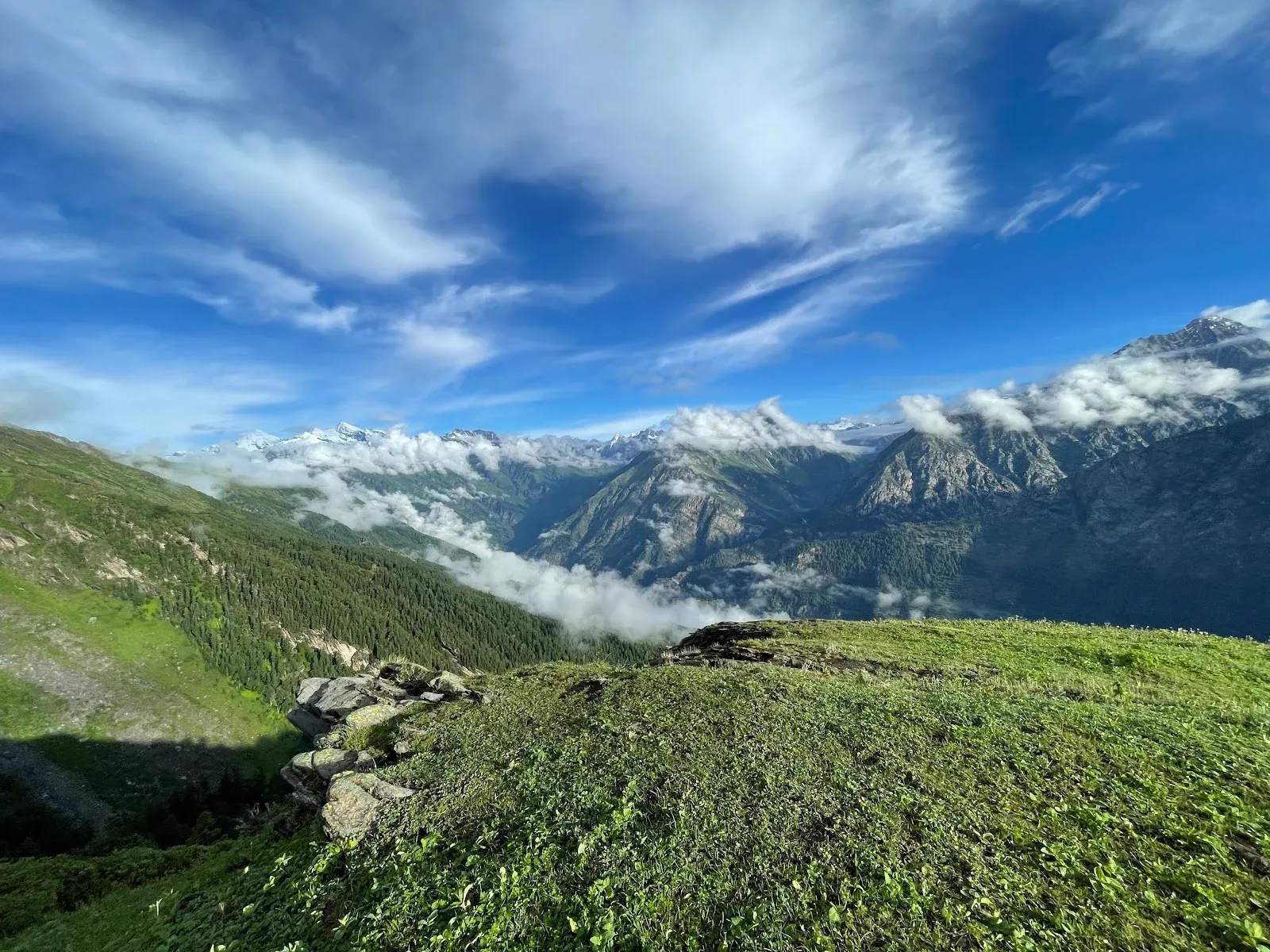
A pristine, offbeat trail through thick forests opening up to vast, undulating meadows (bugyals).
Summit Day Notes
No true 'summit', but reaching the highest point of the bugyal involves a steady, gradual climb.
The Descent
Generally easy descent, but can be slippery if the grass is wet.
Trail Performance Data
Max Gradient
30%
Hydration
0.4L per km recommended
Loose Surface Sections
- •Rocky pass scree zones
- •Forest slippery switchbacks
Personal Readiness
Am I ready?
What this route demands
People who feel comfortable on this route can usually:
Who Can Do This Trek?
Min Age
12+
Max Age
60
Western Toilets at Base
No
Solo Female Travelers
Safe community in Urgam. Guide recommended.
Hazard Profile
What goes wrong?
Common Mistakes on Jhinda Bugyal Trek
Most injuries and failures on this trail can be avoided by making smarter decisions early on.
Underestimating the lung-busting steepness of the initial forest climb.
Failing to stock up on water before reaching the dry bugyal.
Safety & Medical Risks
Key Risks
Mild AMS at 11,800 ft
Disorientation on foggy upper bugyal
AMS (Altitude Sickness)
Low risk. Gradual approach from 7,200 ft base.
Evacuation Route
Return to Urgam road (4-5 hrs).
Solo Trekking
Trail reasonably well-used to first shepherd camp. Guide recommended beyond.
Common Trail Ailments
🏥 Nearest ICU: AIIMS Rishikesh / Max Super Speciality Hospital, Dehradun
Tactical Emergency Hub
> Quick evacuation by mule to the roadhead.
Auditability
How is this calculated?
Understand This Route Further
Before attempting this route:
Still deciding?
Compare routes side-by-side to find the perfect match for your fitness, dates, and budget.
Still think it's doable? Share this with your trek mate and see if they agree.
Step 2: Seasonal Safety
You know how demanding this route is.
Now find the safest and most reliable season to attempt it.
Check Best Time to Go