
Explore
Intelligence
Essential Planning Guide
Poat La Expedition — Complete Guide (2026)
Vibe & Scenery
The Experience
Introduction
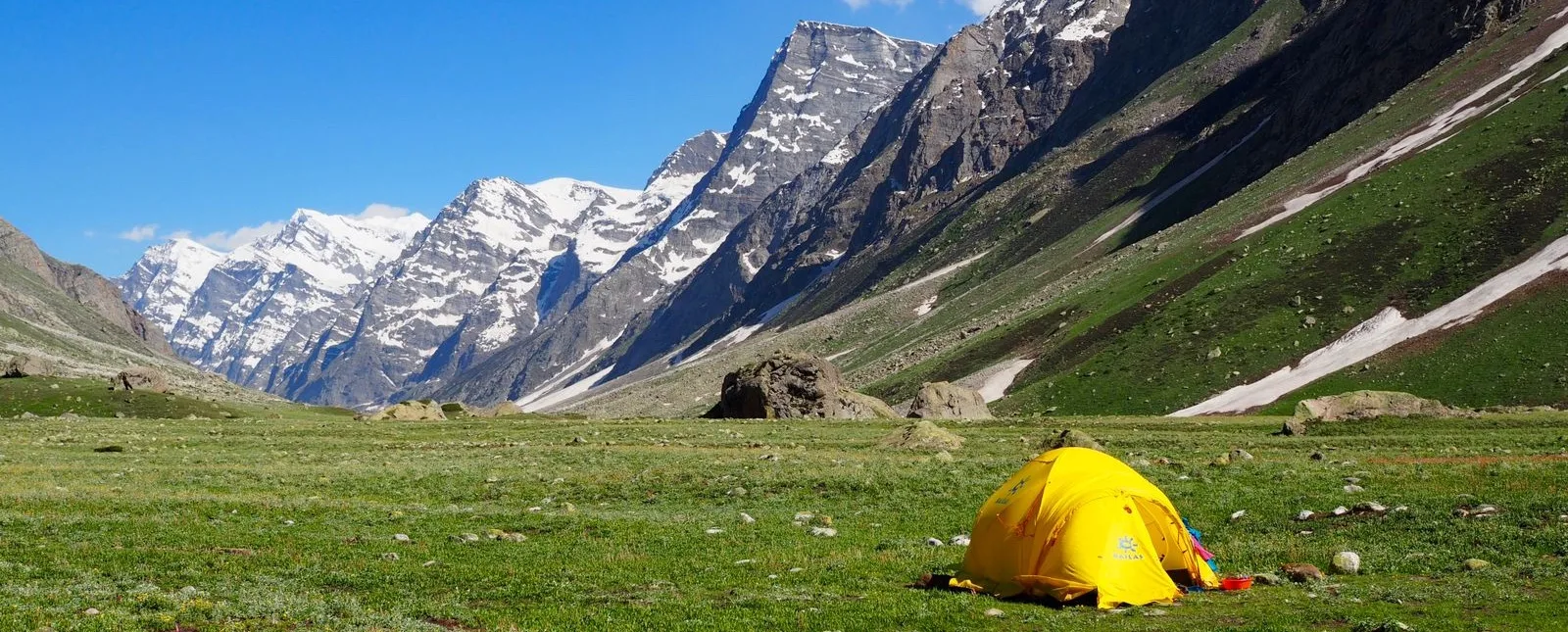
Poat La (5,490m / 18,011 ft) is one of the most formidable and remote trans-Himalayan pass crossings in India, spanning the Great Himalayan Range to connect the pristine, heavily forested valleys of Kishtwar (Jammu & Kashmir) with the stark, high-altitude Buddhist cold desert of Zanskar (Ladakh).
The expedition follows the wild Dharlang Nala gorge beneath legendary Kishtwar giants like Brammah and Sickle Moon before entering complex glacial territory. Trekkers navigate the immense Zanskar Kanthang Glacier over crevassed icefields to achieve the 18,011 ft pass col, descending into the dramatic canyons leading to Padum.
Demanding sustained autonomy, glacier travel skills, and physical resilience, the Poat La Expedition represents a true wilderness mountaineering traverse for seasoned Himalayan adventurers.
Quick Facts
Duration
Max Altitude
Difficulty
Best Time
Trek Distance
Trail Atmosphere
Iconic Spots
Kishtwar to Zanskar Transition
Zanskar Kanthang Glacier
Dharlang Nala Gorge
Bardan Gompa
Poat La Base Camp
Environment
Nature & Culture
Flora & Fauna
Flora
Fauna
An ancient trade and shepherd route linking Kishtwar to Zanskar. Historically near sapphire and emerald mines linked to King Zorawar Singh.
— Local folklore
Spiritual & Cultural Significance
Temple Protocols
Technical Details
Challenge & Preparation
Primarily a terrain ruggedness and cardio demand challenge
A demanding expedition with extreme terrain ruggedness and cardio demand.
Personal Readiness
Am I ready?
Planning
Logistics & Trail Intel
Getting There
Route to Base
Fly/train to Jammu, drive 7 hrs along Chenab river to Kishtwar, then drive to Gulabgarh
Base Village
Gulabgarh / Chisoti
8,700 ft
Nearest Railhead
Jammu Tawi Railway Station (JAT) / Udhampur
Nearest Airport
Jammu Airport (IXJ) / Kushok Bakula Rimpochee Airport, Leh (IXL)
Last ATM
Kishtwar
Nearest Medical Facility
District Hospital Kishtwar / Padum CHC
Mobile Signal
No signal on trail
For Drivers
Trail Culinary & Diet
The Content & Remote Hub
Permits and Regulations
Strict regulatory oversight due to remote border crossings between Jammu & Kashmir, Himachal, and Ladakh.
Learn more about how we vet operators and ensure transparency on our why MountRoutes page.
Packing List
17,600 ft Pass Crossing
- Crampons (snow on pass in July, clear in August-September)
- Ice axe (self-arrest capability on approach snowfield)
- Trekking poles — critical for both Baspa approach and Spiti descents
Sangla Valley to Spiti Transition
- Double layer insulation — Baspa valley night is warm (8-12C); Spiti night is cold (-5C to -15C)
- Culturally conservative clothing for Kinnauri village sections
- Buddhist greeting card or basic 'Tashi Delek' for Spiti village entry
Deep Dives
Explore Further
Editor's Notes
Crossing Poat La takes you from the dense, damp cedar forests of Kishtwar into the arid, sun-bleached Tibetan plateau canyons of Zanskar. It is one of the most dramatic ecological shifts in the Himalayas.
Explore In Detail
Day by Day Itinerary
7-day route reaching 18,012ft. Covers 56km of varied terrain.
→ See full itinerary with altitude profileDifficulty & Fitness
Rated challenging. Remote, rugged, and technically demanding. Traversing glaciers, steep ice slopes (requiring crampons), moraines, unstable rocks, and freezing glacial streams.
→ See difficulty breakdown and fitness guideCost & Pricing
Packages range from ₹36,000 – ₹61,000. Inclusions and hidden costs vary by operator tier.
→ See full cost breakdownFrequently Asked Questions
How difficult is the Poat La Expedition?
It is classified as an Extreme trans-Himalayan expedition spanning 13 days and reaching 18,011 ft (5,490m) over heavily crevassed glaciers. Trekkers must have solid mountaineering fitness and prior glacier travel experience.
Are crampons and ropes required for Poat La?
Yes. Trekkers cross the Zanskar Kanthang Glacier which features open and hidden crevasses. Roped team travel, crampons, ice axes, and guide supervision are mandatory.
When is the best season to cross Poat La?
July to September is the primary window. August and early September offer the most stable snow bridges and weather across the Great Himalayan divide.
Where does the Poat La expedition start and end?
The trek begins in Kishtwar / Gulabgarh (Jammu & Kashmir) and crosses over the Great Himalayan Range to conclude in Padum, Zanskar (Ladakh).
Is there mobile network on the Poat La route?
Complete digital isolation from Day 2 (Chisoti) until Day 11 when reaching Padum in Zanskar. Satellite communicators are carried by the expedition lead.
Route Intelligence
Routes With Similar Character
Routes that share the character of Poat La Expedition.
Still deciding?
Compare routes side-by-side to find the perfect match for your fitness, dates, and budget.
Everything you need to know, in one place. Someone else in your group needs to see this.
Planning Poat La Expedition?
Get route conditions, operator updates, and season windows before booking.
Don't miss out! Follow us for route updates@mountroutes|LinkedIn
No spam. Only useful trek updates.
Ready to walk this route?
You’ve read the guide, now find the perfect local team to take you there. Compare our verified list of operators.
Compare verified operators