
Explore
Intelligence
Detailed Route
Kanamo Peak Expedition Itinerary — Day by Day Route & Camps
A 7-day Spiti expedition starting from Manali, with mandatory acclimatization in Kaza and Kibber before the summit push.
Standard RouteThis is the baseline pacing strategy for this expedition. Expedition leaders frequently modify rotation schedules, add reserve weather days, or adjust high camps based on real-time mountain conditions. Consult the operator's expedition dossier for their precise approach.
Duration
7 Days
Total Distance
38 KM
Max Altitude
19,600 FT
Trek Type
circuit
Permits Required Before You Go
Permit Cost
Where to Get
Kaza SDM Office / Online (ILP)
Documents
Aadhaar / Passport, Medical fitness declaration
Foreign Nationals
ILP required; obtainable at Shimla or Rekong Peo. Apply at least 5 days in advance.
Foreigner Process
Inner Line Permit (ILP) required for Spiti. Apply online at hpilp.nic.in or at Rekong Peo/Shimla offices.
Nearest Embassy Hub
Delhi
Day by Day Breakdown
Camp Alt
12,500 ft
Day Gain
+5,800 ft
Drive to Kaza via Kunzum Pass
An epic drive through three distinct ecosystems. The road crosses Kunzum Pass at 14,931 ft — your first real acclimatization test. The landscape transitions from lush Kullu pine forests to the stark brown rock-desert of Spiti. Drink 3L of water during the drive. Safety: Do not rush. If you feel a headache at Kunzum, take a Diamox and rest.
Key Landmarks
Staying At
The motorable road navigates deeper into the Spiti river basin, where the landscape transitions from lower foothills into the steep, arid high-altitude desert.
Camp Alt
12,500 ft
Day Gain
0 ft
Today's Objective
☕ Acclimatization & Recovery
Critical rest day. Walk to Key Monastery (short drive + easy walk to 13,668 ft) and return. This gentle altitude exposure is mandatory. Oximeter check morning and evening. Target SpO2: 85%+. Stay hydrated.
Key Landmarks
Staying At
The team holds position within the alpine meadow basin, monitoring weather patterns and adapting to the thinning atmosphere.
Camp Alt
14,200 ft
Day Gain
+1,700 ft
Drive to Kibber & Acclimatization Hike
Drive to Kibber — one of the highest motorable villages in the world. In the afternoon, walk up the Kanamo trail to ~15,000 ft and return to Kibber to sleep low. This 'climb high, sleep low' protocol is the cornerstone of acclimatization.
Key Landmarks
Staying At
Vegetation gives way to barren glacial debris as the route enters the expansive moraine basin and ablation zone of the glaciated upper watershed.
Camp Alt
15,800 ft
Day Gain
+1,600 ft
Reach Kanamo Base Camp
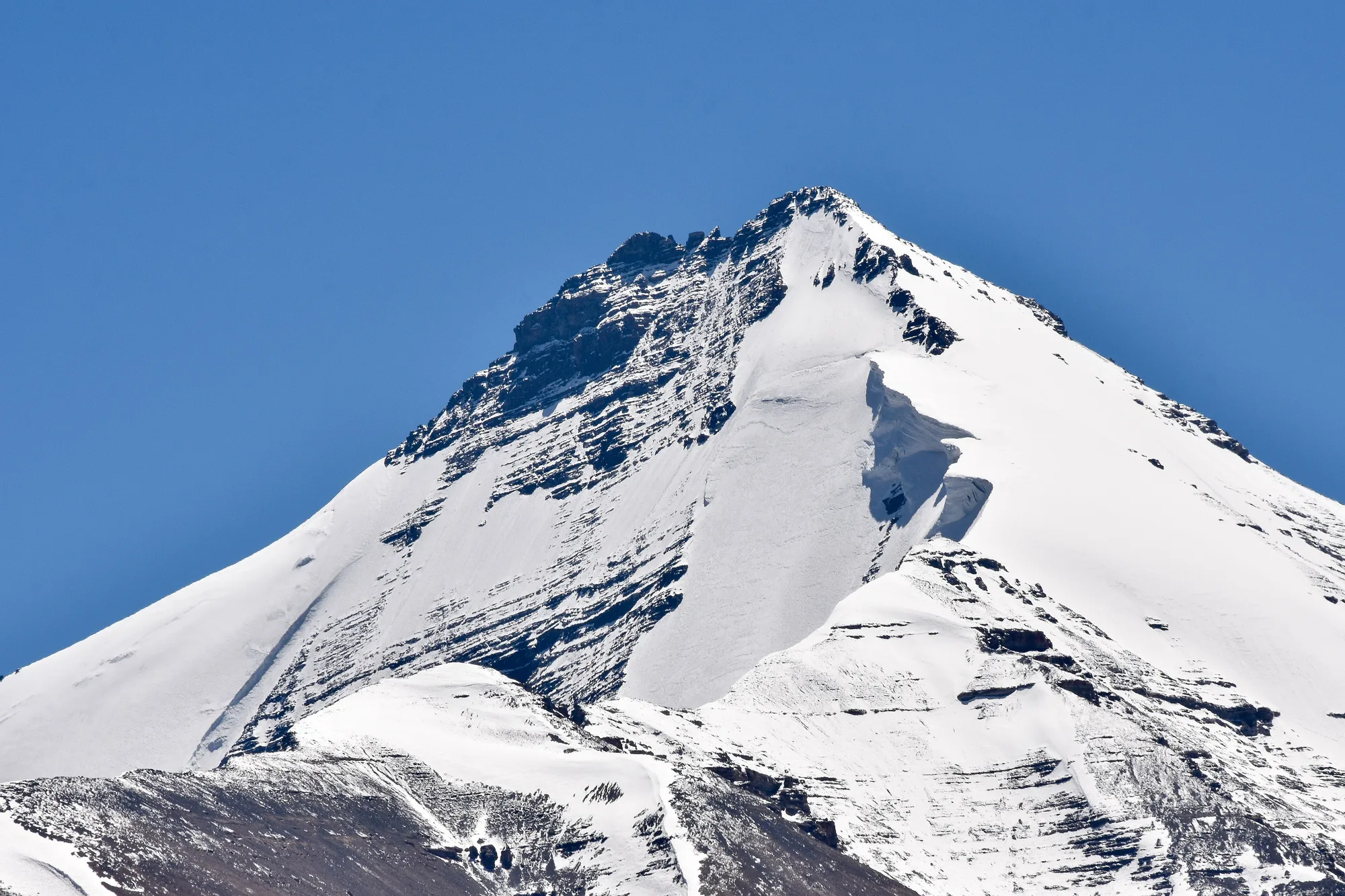
A gradual but relentless climb through the high-alpine desert of Spiti. The vegetation disappears above 15,000 ft, leaving only the stark mountain canvas. The Base Camp sits in a dramatic cirque with the summit pyramid towering above. Glacial stream water is available (filter mandatory). Safety: AMS monitoring. Oximeter check immediately on arrival. SpO2 below 80%: Do not proceed.
Key Landmarks
Staying At
Vegetation gives way to barren glacial debris as the route enters the expansive moraine basin and ablation zone of the Pin-Parvati watershed divide.
Field Notes
KEY ACTIONRiver Crossings
Plan to cross early in the day before snowmelt swells the water levels. Unclip backpack waist belts before crossing.
Use Trekking Poles
Trekking poles are highly recommended to save your knees on the descent.
INFOSlower Progress
Progress will be significantly slower and more taxing on your ankles than trail distance suggests.
Camp Alt
14,200 ft
Day Gain
-1,600 ft
Today's Objective
🏔 Summit Kanamo Peak
Start at 3 AM with headlamps. The first 2 hours are on the known trail. Above 17,500 ft the terrain opens into a vast scree bowl. The final ridge is narrow with exposure on both sides — micro-spikes may be needed depending on season. The summit view is unparalleled: Tibet to the east, Pin Valley below, and Kinner Kailash on the horizon. Descend all the way to Kibber for a celebratory hot meal. Safety: Hard turnaround time is 10 AM. Summit winds can hit 60 kmph after mid-morning.
Key Landmarks
Staying At
The final ascent leaves the upper glacial basin for the exposed summit ridges, offering panoramic views across the watershed divide before descending back to the icefields.
Field Notes
Stow Poles
Requires hands-on rock scrambling. Stow trekking poles to free up your hands.
INFOSlower Progress
Progress will be significantly slower and more taxing on your ankles than trail distance suggests.
Camp Alt
12,500 ft
Day Gain
-1,700 ft
Drive to Kaza
Expedition debrief and recovery day. Celebrate with local Spitian food. Descent to Kaza allows the body to naturally decompress.
Key Landmarks
Staying At
The motorable road navigates deeper into the Spiti river basin, where the landscape transitions from lower foothills into the steep, arid high-altitude desert.
Camp Alt
6,700 ft
Day Gain
-5,800 ft
Drive to Manali
Return drive. The descent from Spiti back into lush Kullu valley is a dramatic contrast. Recovery advised for 2 days post-expedition.
Key Landmarks
The motorable road navigates deeper into the Spiti river basin, where the landscape transitions from lower foothills into the steep, arid high-altitude desert.
Expedition Extensions & Add-ons
Pin Valley National Park Walk
+2 DaysDescend into the Pin Valley via a 2-day extension to spot Snow Leopards and Ibex in their natural habitat.
Chicham–Kibber Ridge Walk
+1 DayAcclimatization walk along the dramatic ridge connecting Chicham and Kibber with views of the gorge below.
Camp-by-Camp Details
Kanamo Base Camp
Base Camp
Water
Glacial stream (Jun–Sep), Snow melt (Sep–Oct)
Wind
High
Night Temp
-8°C
Toilet
Cat hole
Rocky moraine, requires clearing; protected on south side.
Navigation & Route Data
Key Waypoints
Critical Navigation Notes
In whiteout, descend the south ridge only — north face is a cliff.
Use cairns above Base Camp.
Plan Your Expedition:
Ready to book? Compare verified operators for Kanamo Peak Expedition — transparent pricing, no paid rankings.
Still deciding?
Compare routes side-by-side to find the perfect match for your fitness, dates, and budget.
Day by day, camp by camp. Send this to your group so everyone's on the same page.
Step 4: Safety & Framework
You understand the route.
Now understand the hazards, physiology, and Go/No-Go decision framework.
View Safety Framework