Compare operators for Dhumdhar Kandi Pass Expedition
12 Days18,012ft maxUttarakhandChallenging
No operators listed yet
Interested in this expedition?
We are currently vetting local partners for Dhumdhar Kandi Pass Expedition to ensure the highest safety standards. Be the first to know when it's open for booking.
Are you a local operator?
Join our platform to list your verified packages for Dhumdhar Kandi Pass Expedition and reach thousands of climbers directly.
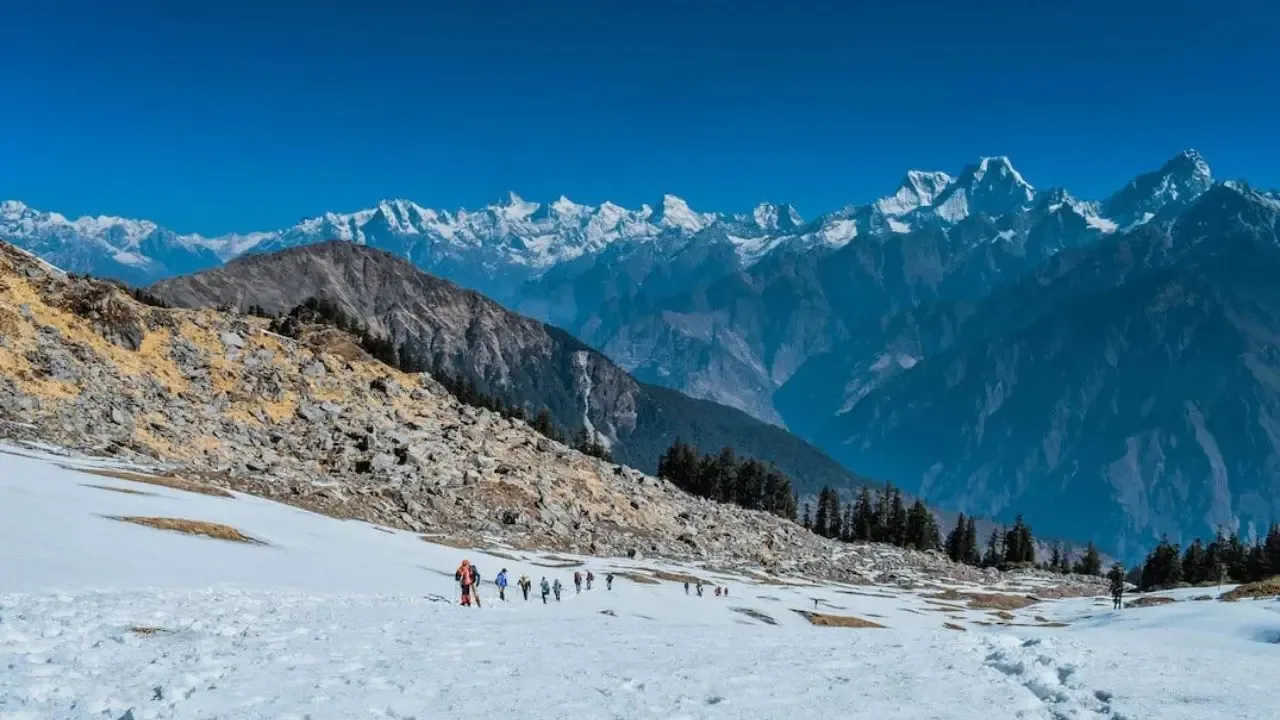
A high-octane expedition connecting Yamunotri and Gangotri. Crossing the Dhumdhar Kandi Pass at 18,000 ft involves navigating unstable boulder fields and torrential river crossings. Legend says this route was used by King Harsh Vardhan during his Himalayan ventures. Reserved for explorers who thrive on raw wilderness and navigational challenges.
Expedition Highlights
The Kalanag Ice Descent
Standing on the terrifying 18,000 ft edge, looking down at the massive, serpentine gashes of the Kalanag glacier curving towards the distant tree line.
It is in the exact same risk and difficulty upper-echelon. Both involve 18,000 ft altitudes, massive active glaciers, and technical rope usage. Dhumdhar is arguably less trafficked, meaning no preexisting trails exist.
Can regular trekkers do this?
Absolutely not. This is a technical expedition. You need verified mountaineering training (AMC/BMC) and prior exposure to ropes and crampons.
Is there mobile connectivity?
You lose all network shortly after leaving Jhala. You will remain in a total dark zone for 9 days until you reach the Har Ki Dun/Sankri region on the descent.
Are mules used?
Mules cannot cross the Kalanag glacier. You must rely entirely on specialized High Altitude Porters (HAPs) to carry expedition tents and ropes over the pass.
What is the peak altitude?
The saddle of Dhumdhar Kandi Pass sits at approximately 18,000 ft (5,500m).
What if the weather turns bad?
You turn back. Trying to force Dhumdhar Kandi in a blizzard guarantees fatalities. You must pack buffer days specifically to outwait storms at Base Camp.
Can I do this from Sankri to Jhala instead?
Yes, it can be crossed from either direction, but the Jhala to Sankri route is more common as it allows a slightly better acclimatization profile in the Siyan Gad gorge.
Do I see the Har Ki Dun valley?
Yes, upon descending from the pass into the Ruinsara valley, you eventually merge with the established paths leading from Har Ki Dun down to Taluka.
Which peaks are visible?
You get impossibly close to the Swargarohini massif and Kalanag (Black Peak). Bandarpoonch is also clearly visible.
Why is it so rarely done?
Because the approach is incredibly harsh, the glacier is heavily broken with hidden crevasses, and permits are hard to organize for a dual-valley crossing.
How does this compare to Auden's Col?
It is in the exact same risk and difficulty upper-echelon. Both involve 18,000 ft altitudes, massive active glaciers, and technical rope usage. Dhumdhar is arguably less trafficked, meaning no preexisting trails exist.
Can regular trekkers do this?
Absolutely not. This is a technical expedition. You need verified mountaineering training (AMC/BMC) and prior exposure to ropes and crampons.
Is there mobile connectivity?
You lose all network shortly after leaving Jhala. You will remain in a total dark zone for 9 days until you reach the Har Ki Dun/Sankri region on the descent.
Are mules used?
Mules cannot cross the Kalanag glacier. You must rely entirely on specialized High Altitude Porters (HAPs) to carry expedition tents and ropes over the pass.
What is the peak altitude?
The saddle of Dhumdhar Kandi Pass sits at approximately 18,000 ft (5,500m).
What if the weather turns bad?
You turn back. Trying to force Dhumdhar Kandi in a blizzard guarantees fatalities. You must pack buffer days specifically to outwait storms at Base Camp.
Can I do this from Sankri to Jhala instead?
Yes, it can be crossed from either direction, but the Jhala to Sankri route is more common as it allows a slightly better acclimatization profile in the Siyan Gad gorge.
Do I see the Har Ki Dun valley?
Yes, upon descending from the pass into the Ruinsara valley, you eventually merge with the established paths leading from Har Ki Dun down to Taluka.
Which peaks are visible?
You get impossibly close to the Swargarohini massif and Kalanag (Black Peak). Bandarpoonch is also clearly visible.
Why is it so rarely done?
Because the approach is incredibly harsh, the glacier is heavily broken with hidden crevasses, and permits are hard to organize for a dual-valley crossing.
Are you a local operator?
Join our platform to list your verified packages for this expedition.