
Explore
Intelligence
Essential Planning Guide
Tirthan Valley Trek — Complete Guide (2026)
Vibe & Scenery
The Experience
Introduction
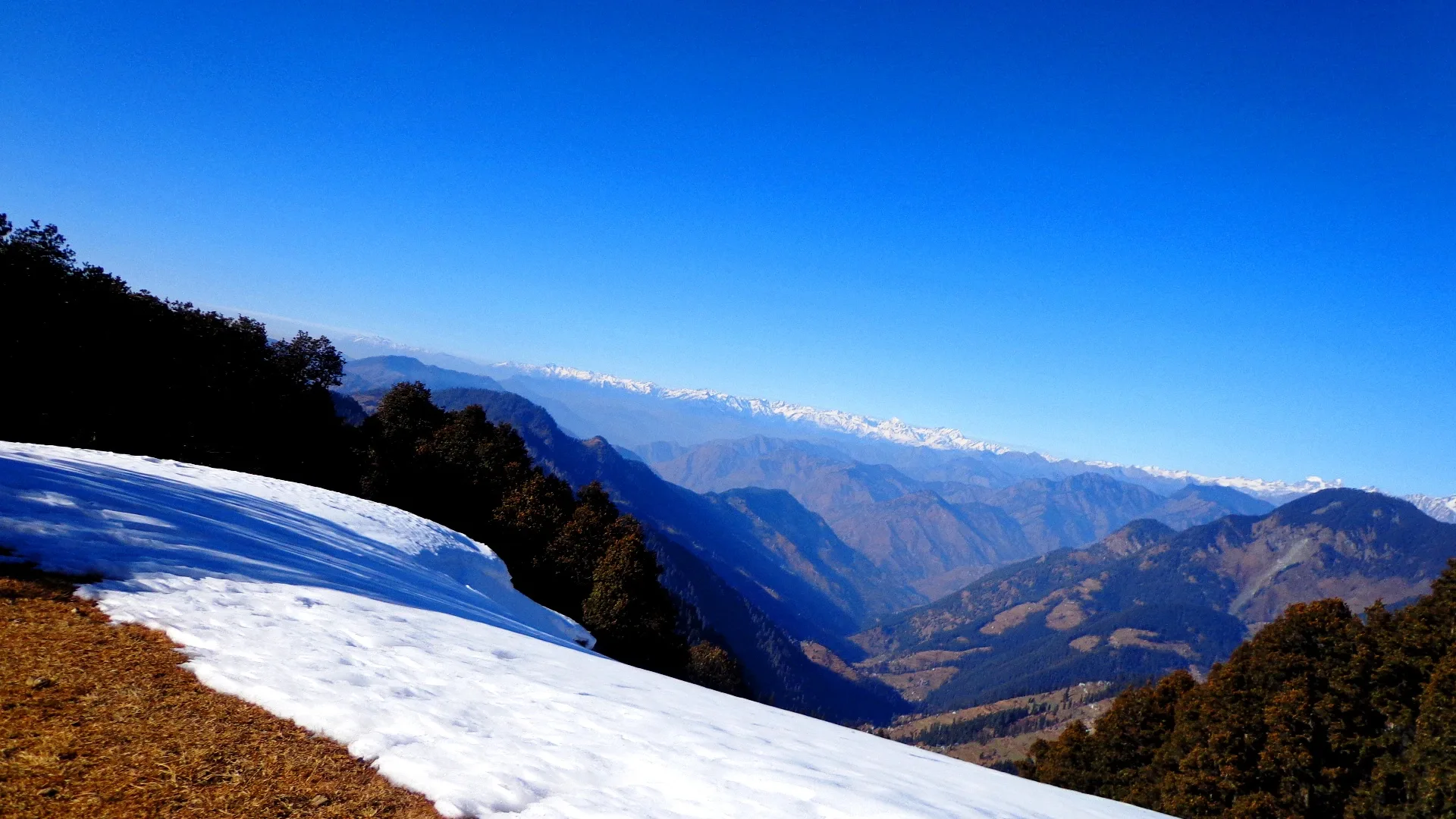
The Tirthan Valley Trek follows the Tirthan River into the protected wilderness of the Great Himalayan National Park, one of India's most important biodiversity reserves. Beginning from Gushaini, the trail gradually ascends through dense temperate forests, riverside camps, and traditional grazing areas toward the upper reaches of the valley.
As elevation increases, forests give way to alpine meadows and panoramic views of the surrounding Himalayan peaks, while the park provides habitat for species such as the Himalayan monal, western tragopan, Himalayan tahr, and black bear.
Combining moderate trekking with exceptional ecological richness, the route is ideal for nature enthusiasts seeking an authentic Himalayan wilderness experience.
Quick Facts
Duration
Max Altitude
Difficulty
Best Time
Trek Distance
Trail Atmosphere
Stargazing
Class 1 Dark Sky
Scent Profile
Silence Level
~25 dB
Vertigo Factor
1 / 10
Iconic Spots
Shilt Hut Ridge
Environment
Nature & Culture
Flora & Fauna
Flora
Fauna
The park is entirely uninhabited by humans as it is believed the inner mountains are the physical bodies of sleeping guardian deities.
— Local folklore
Spiritual & Cultural Significance
Locals believe the park is sacred.
🕐 Shrine Timings: N/A
Temple Protocols
Technical Details
Challenge & Preparation
Primarily a joint & muscle impact and cardio demand challenge
A capable trekker's route dominated by extreme joint & muscle impact.
Personal Readiness
Am I ready?
Planning
Logistics & Trail Intel
Getting There
Route to Base
Bus to Aut, switch to a local bus or taxi heading to Banjar and then Gushaini
Base Village
Gushaini (Tirthan Valley)
5,000 ft
Last ATM
Banjar
Nearest Medical Facility
Banjar Hospital
Mobile Signal
Jio/Airtel works in Gushaini, complete dark zone after the park gate.
Water Sources
The massive, pure Tirthan river. Best water in Himachal.
Charging
Zero charging points after Gushaini.
For Drivers
Road Condition
Highway to Aut is excellent. Tirthan valley road is thin.
Aut / Banjar
Trail Culinary & Diet
Don't miss the Standard mountain thali
Buy specialized diet items at Banjar
The Content & Remote Hub
No DronesStrictly, unequivocally banned everywhere inside the GHNP.Top Vlog Spots
Video Calls
none
Est. 0 Mbps
UPI Reliability
5/10
Base WiFi Available
Permits and Regulations
GHNP is the strictest national park in Himachal. Hard permits, plastic checks, and a mandatory registered guide are required before passing the core zone gate at Rolla.
Learn more about how we vet operators and ensure transparency on our why MountRoutes page.
Packing List
Clothing
- Fleece jacket (Required year-round)
- Waterproof trekking pants (Crucial for river crossings)
- Rain jacket/Poncho (The core zone receives high precipitation)
Footwear
- High-ankle waterproof trekking boots with excellent grip
- Gaiters (For early spring/late autumn)
Wilderness Survival Gear
- Headlamp with spare batteries
- High-powered Binoculars (Critical for wildlife spotting)
- Water purification tablets
Deep Dives
Explore Further
Editor's Notes
The guides here are mostly reformed poachers who turned to conservation. Their ability to spot wildlife through the dense canopy is super-human.
Explore In Detail
Day by Day Itinerary
4-day route reaching 11,000ft. Covers 31km of varied terrain.
→ See full itinerary with altitude profileDifficulty & Fitness
Rated moderate. Day 1 is flat. Day 2 is a phenomenally steep, unbroken 4,000 ft climb on slick mud and roots.
→ See difficulty breakdown and fitness guideCost & Pricing
Packages range from ₹6,000 - ₹12,000. Inclusions and hidden costs vary by operator tier.
→ See full cost breakdownFrequently Asked Questions
Will I definitely see a Snow Leopard?
If you trek in summer or monsoon, chances are absolute zero. In deep winter (Feb/March), if you camp at high altitudes in extreme conditions, you have a 10% chance.
Can I trek this without a local guide?
Absolutely NOT. The forest department strictly prohibits entering the core zone without a registered GHNP guide. The trails are deliberately kept unpaved to deter poachers.
Do I need a permit to enter the Great Himalayan National Park?
Yes, permits are mandatory to enter the GHNP core zone. You can obtain them at the park gate at Sai Ropa or Rolla. The cost varies for Indian nationals and foreigners.
Are there any homestays inside the GHNP core zone?
No, there are no permanent settlements or homestays inside the core zone of the park. You must carry tents, sleeping bags, and camping equipment. Homestays are only available outside the park gate in villages like Gushaini.
Is the Tirthan Valley trek safe for beginners?
Yes! The hike from Gushaini to Rolla is relatively flat and extremely well-marked, making it perfect for beginners, families, and nature enthusiasts.
Can we spot wildlife on this trek?
Yes, GHNP is a UNESCO World Heritage site known for its rich biodiversity. Trekkers often spot the Himalayan Thar, Monal pheasant, and Brown Bears, though spotting the elusive Snow Leopard is rare.
Is drinking water easily available on the trail?
Yes, the trail runs parallel to the Tirthan River and several fresh mountain streams. However, it is highly recommended to carry a water filter or purification tablets.
How cold does it get at night?
During spring and autumn, daytime temperatures hover around 15°C to 20°C, but night temperatures at campsites like Rolla or Shilt Hut can drop to 0°C to 5°C. Carry good thermal layers.
Are campfires allowed inside the National Park?
No, campfires are strictly prohibited inside the Great Himalayan National Park to protect the fragile ecosystem and prevent forest fires. You must cook using portable camping stoves.
Still deciding?
Compare routes side-by-side to find the perfect match for your fitness, dates, and budget.
Everything you need to know, in one place. Someone else in your group needs to see this.
Planning Tirthan Valley Trek?
Get route conditions, operator updates, and season windows before booking.
Don't miss out! Follow us for route updates@mountroutes|LinkedIn
No spam. Only useful trek updates.
Ready to walk this route?
You’ve read the guide, now find the perfect local team to take you there. Compare our verified list of operators.
Compare verified operators