
Explore
Intelligence
Season & Weather Guide
Best Time for Kanchani Tal Trek — Month-by-Month Guide
May-June or September-October. The trek is entirely dependent on the opening dates of the Madhyamaheshwar temple.
Seasonal Verdict
When should you go?
The trek has two short windows: Pre-monsoon (May to June) when the temple opens and alpine flowers bloom, and Post-monsoon (September to October) for the clearest skies and most stable weather. The route is snowbound and closed in winter.
Season at a Glance
Editor's Notes
Month by Month
What each month looks like
January
Conditions
Deep winter. The temple is closed, the village is evacuated, and the route to the lake is buried under massive snowdrifts.
Crowds
none
Extreme winter, impassable route.
Route and temple are completely closed.
February
Conditions
Peak winter conditions persist. Route is closed.
Crowds
none
Avalanche danger.
Route closed.
March
Conditions
Heavy snowpack remains. The temple is still closed.
Crowds
none
Temple closed, heavy snow.
Route closed. Heavy snowmelt.
April
Conditions
Snow begins to melt. The forest department usually clears the path to the temple, but the lake approach remains treacherous.
Crowds
none
Unstable snow near the lake.
Forest dept clears the path, but the lake is inaccessible.
May
RecommendedConditions
The Madhyamaheshwar temple opens. The window for Kanchani Tal begins. Expect residual snow patches and require microspikes.
Crowds
low
Temple opens. Lake hike requires microspikes for snow patches.
June
RecommendedConditions
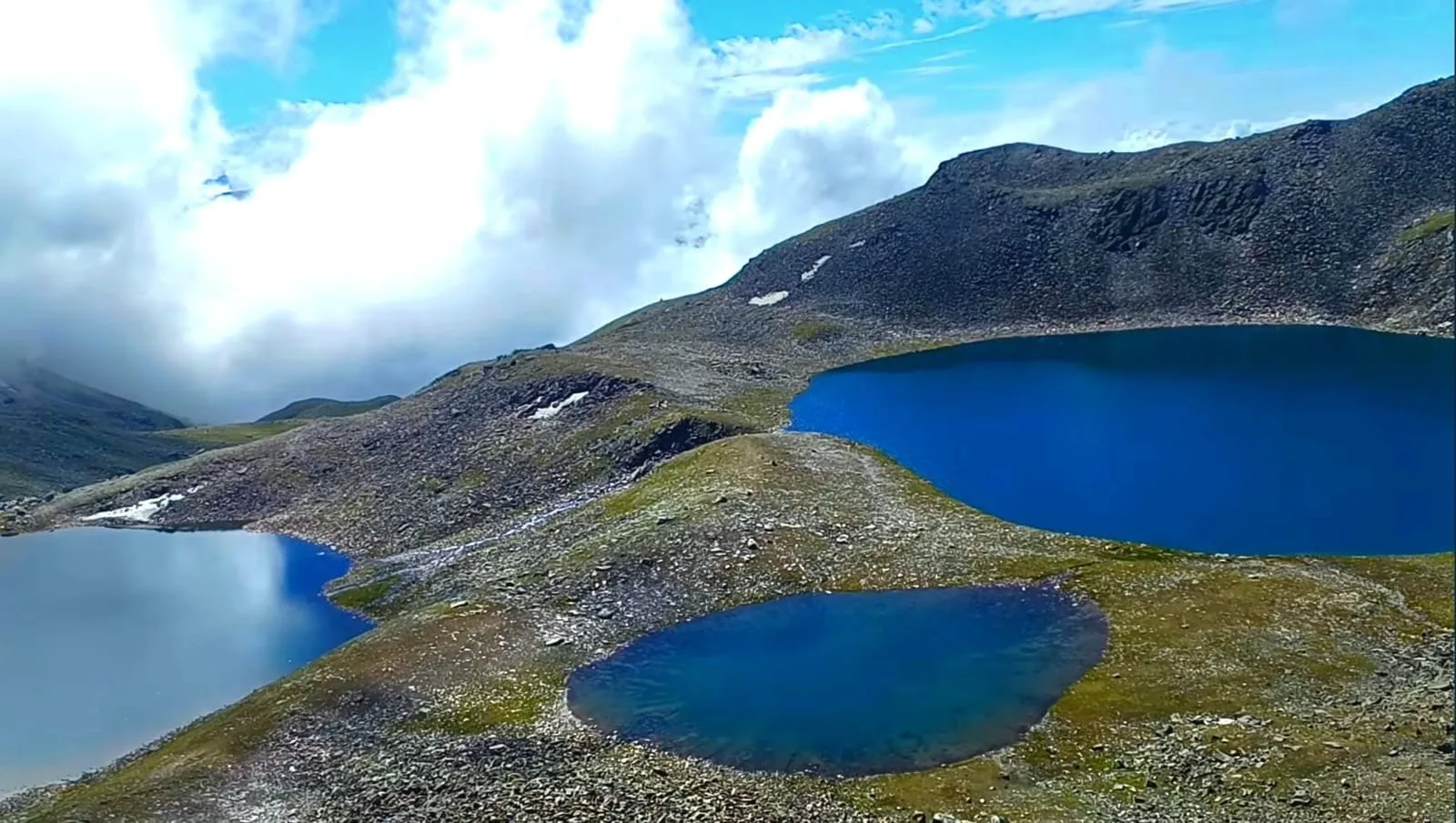
Excellent weather. The lake thaws, and the surrounding meadows bloom with Brahma Kamal and other alpine flowers.
Crowds
low
Excellent trekking window. Bugyals are green and flowers bloom.
July
Conditions
Monsoon hits. The trails become muddy, the Mandakini river swells dangerously, and landslides block the driving roads.
Crowds
none
Heavy rain, landslides, leeches.
Monsoon begins. Extremely dangerous landslides on driving routes. Avoid.
August
Conditions
Peak monsoon. Zero visibility, high risk of flash floods in the valleys.
Crowds
none
Monsoon washouts.
Peak monsoon. Route is unsafe.
September
RecommendedConditions
Post-monsoon window opens. The skies clear up, offering spectacular, razor-sharp views of Chaukhamba.
Crowds
low
Post-monsoon clearing. Best views of the year.
October
RecommendedConditions
The absolute best month. Flawless visibility and stable rock conditions for the scramble to the lake. Bitterly cold nights.
Crowds
low
Perfect visibility but bitterly cold nights at the temple.
November
Conditions
The temple closes in the second week. Early winter storms make the lake approach freezing and dangerous.
Crowds
none
Temple closes, early winter.
Temple closes. Route shuts down due to winter storms.
December
Conditions
Winter shuts down the sanctuary entirely.
Crowds
none
Deep winter snow.
Route closed.
Plan Your Trek:
Still deciding?
Compare routes side-by-side to find the perfect match for your fitness, dates, and budget.
Timing makes or breaks a trek. Send this to your group before you decide.
Step 3: Route Intelligence
You've chosen a season.
Now see exactly how the route unfolds day by day, including terrain types and daily altitude profiles.
Explore the Itinerary