
Explore
Intelligence
Essential Planning Guide
Hatu Peak Trek — Complete Guide (2026)
Vibe & Scenery
The Experience
Introduction
Rising above the hill town of Narkanda, Hatu Peak is among the most accessible high viewpoints in Himachal Pradesh. The trek follows well-defined forest trails through pine, spruce, fir, and rhododendron before reaching the summit ridge crowned by the historic Hatu Mata Temple.
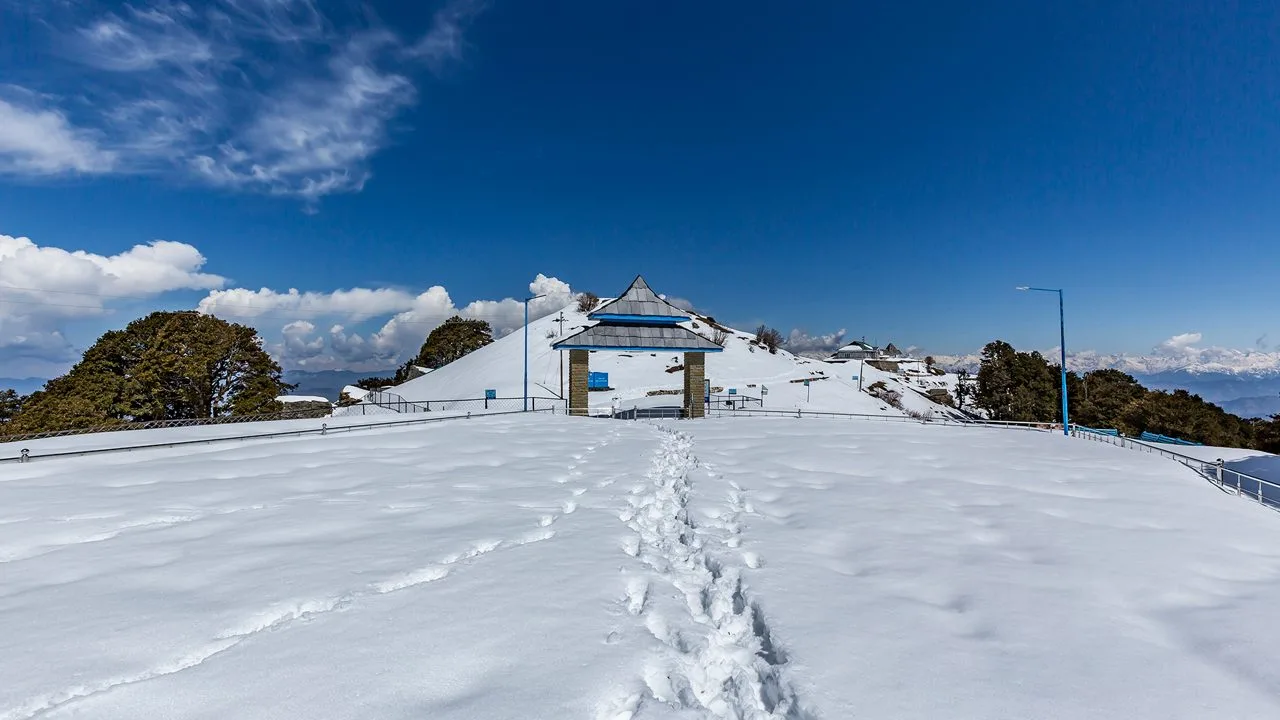
From the top, trekkers enjoy expansive views across the Sutlej Valley and the snow-covered ranges of Kinnaur and the central Himalayas. During winter, snowfall transforms the route into one of the state's most popular snow hikes.
Moderate gradients, straightforward navigation, and excellent scenery make Hatu Peak an ideal introduction to Himalayan trekking.
Quick Facts
Duration
Max Altitude
Difficulty
Best Time
Trek Distance
Trail Atmosphere
Stargazing
Class 4 Dark Sky
Scent Profile
Silence Level
~35 dB
Vertigo Factor
1 / 10
Iconic Spots
Hatu Mata Temple
360-Degree Panorama
The Winter Pine Forest
Environment
Nature & Culture
Flora & Fauna
Flora
Fauna
The Hatu Mata temple is dedicated to Mandodari, the wife of Ravana. The local architecture is a stunning example of traditional Himachali wood carving.
— Local folklore
Spiritual & Cultural Significance
The Hatu Mata temple is highly revered by locals. A major fair is held here in May.
🕐 Shrine Timings: Open all day, though priest availability varies.
Temple Protocols
- •Remove shoes before entering the temple premises.
- •Photography inside the main sanctum is usually prohibited.
Festivals & Dates
Technical Details
Challenge & Preparation
Primarily a cardio demand challenge
A capable trekker's route that balances cardio demand and altitude exposure.
Personal Readiness
Am I ready?
Planning
Logistics & Trail Intel
Getting There
Route to Base
Take a train/flight to Chandigarh, then drive or take a bus to Shimla
From Shimla, Narkanda is a 60 km (2.5 hr) drive on NH5
Base Village
Narkanda
9,000 ft
Last ATM
Narkanda (SBI/UCO ATMs available)
Nearest Medical Facility
Basic PHC in Narkanda. Major hospitals (IGMC) are in Shimla.
Mobile Signal
Excellent connectivity (Jio, Airtel) throughout the hike.
Water Sources
There are no reliable water sources on the trail. You must carry 1.5 to 2 liters of water from Narkanda.
Charging
None on the trail, but full access at your hotel in Narkanda.
For Drivers
Road Condition
The NH5 from Shimla to Narkanda is a wide, well-maintained highway, though it can experience minor delays during heavy winter snowfall.
Narkanda / Shimla
Trail Culinary & Diet
Don't miss the Siddu (Local steamed bread, widely available in Narkanda)
Buy specialized diet items at Shimla
The Content & Remote Hub
Top Vlog Spots
Video Calls
high
Est. 20 Mbps
UPI Reliability
5/10
Base WiFi Available
Permits and Regulations
No permits are required for the Hatu Peak trek. It is an open access trail. Please respect the sanctity of the Hatu Mata Temple at the summit.
Learn more about how we vet operators and ensure transparency on our why MountRoutes page.
Packing List
Core Clothing Layers
- Fleece jacket or warm sweater
- Waterproof/Windproof outer shell
- Trekking pants (water-resistant for winter)
- Thermal base layers (mandatory for winter treks)
- T-shirts (quick dry for summer)
Footwear & Protection
- Sturdy trekking boots with good ankle support
- Thick woolen socks (x2 pairs)
- Microspikes (highly recommended in Jan/Feb)
- Waterproof gaiters (for deep winter snow)
Head & Hands
- Warm woolen beanie
- UV protection sunglasses
- Waterproof insulated gloves (winter)
- Sun hat (summer)
Gear & Accessories
- 20-30 litre daypack
- Trekking poles (essential for snowy descents)
- Basic first aid kit with pain relief spray
- 1L reusable water bottle or thermos for hot tea
- High-energy snacks (chocolates, dry fruits)
Deep Dives
Explore Further
Editor's Notes
Explore In Detail
Day by Day Itinerary
2-day route reaching 11,152ft. Covers 14.0km of varied terrain.
→ See full itinerary with altitude profileDifficulty & Fitness
Rated moderate. The trail is a mix of a narrow paved road and steep forest shortcuts. In winter, the entire route is blanketed in snow, and the shortcuts become challenging ice chutes.
→ See difficulty breakdown and fitness guideCost & Pricing
Packages range from 1,500 - 3,500 INR. Inclusions and hidden costs vary by operator tier.
→ See full cost breakdownFrequently Asked Questions
Is this a good trek for absolute beginners?
Yes. Hatu Peak is an excellent introductory trek. The gradient is gradual, and the total walking time is only 5-7 hours round trip. It serves as a great confidence builder for winter trekking.
Is there a road to the top?
Yes, there is a narrow, steep tarmac road that goes all the way to the Hatu Mata temple. However, in winter (Dec-Feb), this road is completely buried in snow and impassable for vehicles, leaving trekking as the only way up.
Do I need a guide for this trek?
A guide is not strictly necessary in summer, as the trail and road are obvious. However, in deep winter, a local guide is highly recommended to safely navigate snow drifts and icy patches.
Are there food stalls on the trail?
There are usually a few small tea stalls near the summit during the summer months. In winter, everything is closed. You must carry all your water and food from Narkanda.
What is the risk of altitude sickness (AMS)?
Very low. While the peak is at 11,152 ft, the trek is completed in a single day, and you descend back to Narkanda (9,000 ft) to sleep. Mild headaches can occur but are easily managed with hydration.
Can I do this as a day trip from Shimla?
Yes, it is possible. Shimla to Narkanda is a 2.5-hour drive (60 km). You can drive up early, do the trek, and return to Shimla by evening, though staying in Narkanda is less tiring.
Will I see snow?
If you trek between late December and early March, you are almost guaranteed to trek through significant snow. Narkanda is a popular ski destination in winter.
Is there mobile connectivity on the top?
Yes, you will have excellent 4G connectivity (Jio/Airtel/BSNL) at the summit and throughout most of the trail.
Still deciding?
Compare routes side-by-side to find the perfect match for your fitness, dates, and budget.
Everything you need to know, in one place. Someone else in your group needs to see this.
Planning Hatu Peak Trek?
Get route conditions, operator updates, and season windows before booking.
Don't miss out! Follow us for route updates@mountroutes|LinkedIn
No spam. Only useful trek updates.
Ready to walk this route?
You’ve read the guide, now find the perfect local team to take you there. Compare our verified list of operators.
Compare verified operators